Alabama Social Studies SS24.US1.1b
The Standard
- SS24.US1.1
- Trace the events from 1754 to 1783 that led to the independence of the United States of America.
Analyze the means by which colonists protested British policies and the ideas communicated through colonists’ speeches and written pamphlets.
2024 Alabama Course of Study: Social Studies
Teacher's field guide
What This Standard Means
What Students Need to Do
- Students identify ways colonists protested British policies, including boycotts, petitions, and public demonstrations. They read short speech and pamphlet excerpts to explain the ideas behind those protests.
What Mastery Looks Like
- A student can connect a boycott to a specific British tax and explain how it put pressure on merchants. They can use words from a speech or pamphlet to explain an argument about liberty, representation, or self-government.
Common Misconceptions
- Students may think every protest was violent or that all colonists wanted independence from the start. They may also confuse opposition to taxation without representation with opposition to all taxes.
How to Assess It
- Exit ticket: Name one way colonists protested the Stamp Act. Then explain the idea in Thomas Paine’s line, “A government of our own is our natural right.”
Lesson moves
Ways to Teach It
Give pairs cards showing a boycott notice, a petition, and the Boston Tea Party; have them sort the tactics and name each target.
Read “Give me liberty, or give me death!” alongside Paine’s line about a government of our own, then ask what each speaker wants changed.
Play protest match: students pair Stamp Act, Townshend duties, and Tea Act cards with boycott, petition, or tea protest cards and explain their choices.
Have students write a two-sentence boycott notice about a school lunch price, then compare its tactic with a colonial nonimportation pledge.
Free download
Printable SS24.US1.1b Worksheet
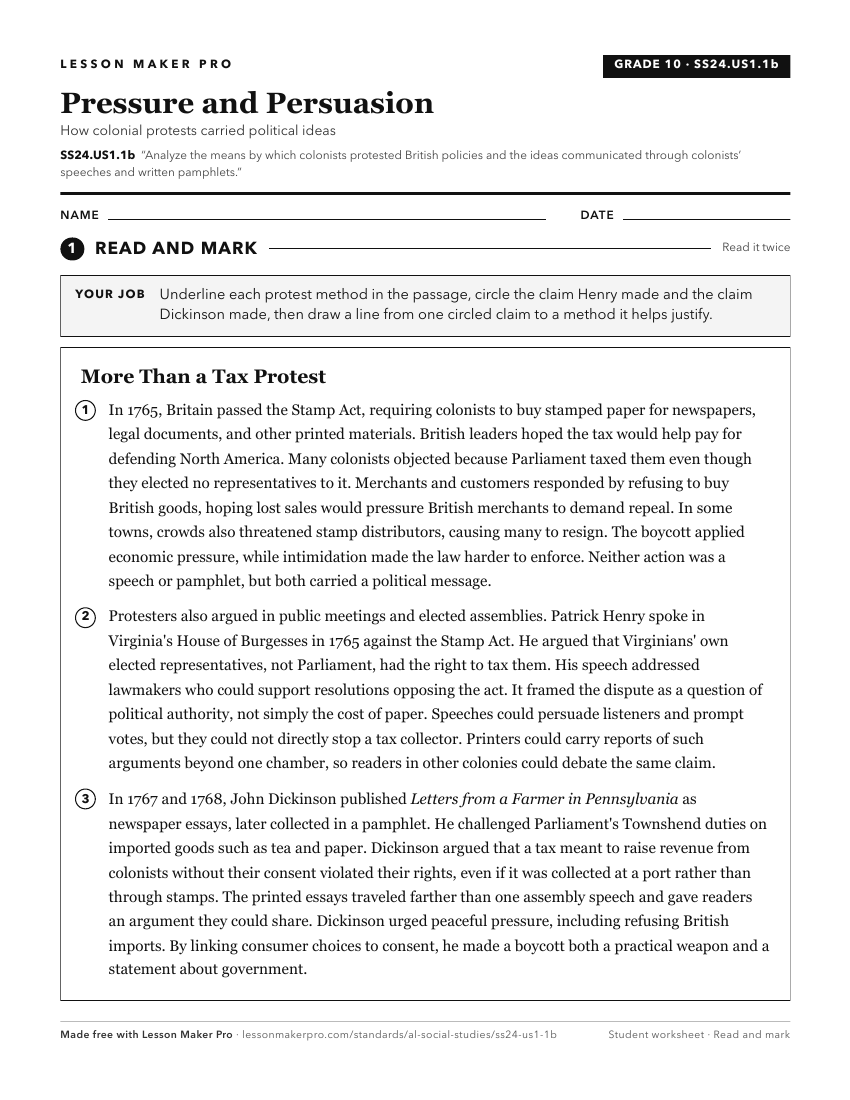
A ready-to-print activity worksheet aligned to SS24.US1.1b, with an answer key for the teacher on its own page. No account needed.
PDF, US Letter, prints cleanly in black and white.
Download the worksheetKeep exploring
Related Standards
- SS24.6.17a
Trace the origins of rights contained in the Bill of Rights to issues leading to the American Revolution and the concerns of colonists about unlimited governmen...
- SS24.6.7b
Compare and contrast methods of colonial activism and protest against British policies, including boycotts, craftwork, letters, petitions, poems, public oration...
- SS24.4.5b
Describe key events that caused tension and led American colonists to protest against Great Britain, including the Sugar Act, Stamp Act, Townshend Acts, Boston ...
- SS24.US1.4
Assess how the American Revolution and its rhetoric affected the status of slavery in the newly formed United States.
Turn this exact standard into a lesson
Grade, subject, topic, and the complete standard are prefilled. Create one free, no account needed.
Also for this standard:Make a WorksheetMake a QuizMake a Sub Lesson