Alabama Social Studies SS24.CWI.8
Standard Cluster
Identify and analyze recent incidents of human rights abuse across the world, utilizing a variety of sources. 8a Compare the individual rights, opportunities, and privileges of United States citizens to those of citizens of other countries. 8b Describe key rights and beliefs related to human rights as embedded in the Declaration of Independence, Geneva Conventions, and the Universal Declaration of Human Rights. 8c Critique how countries and international organizations respond to human rights violations, giving examples from recent history.
2024 Alabama Course of Study: Social Studies
Cluster contents
Standards in This Cluster
SS24.CWI.8 is a cluster heading. These are the individual standards under it.
- SS24.CWI.8a
Compare the individual rights, opportunities, and privileges of United States citizens to those of citizens of other countries.
- SS24.CWI.8b
Describe key rights and beliefs related to human rights as embedded in the Declaration of Independence, Geneva Conventions, and the Universal Declaration of Hum...
- SS24.CWI.8c
Critique how countries and international organizations respond to human rights violations, giving examples from recent history.
Teacher's field guide
What This Cluster Means
What Students Need to Do
- Use reports from different sources to explain a recent human rights abuse. Compare U.S. citizens' rights and opportunities with those in another country. Use founding principles, wartime rules, and global rights statements to judge responses.
What Mastery Looks Like
- Students identify who was affected and support their account with two sources. They distinguish rights on paper from access in daily life. They link the case to a relevant document and explain what a government or UN response did, and did not, change.
Common Misconceptions
- Students may treat the Declaration of Independence or the Universal Declaration of Human Rights as enforceable U.S. laws. They may apply the Geneva Conventions to every peacetime abuse. They may assume a right written in law is available to everyone, or that a UN statement ended an abuse.
How to Assess It
- Hand out short excerpts from a UNESCO report on Afghan girls' schooling, a U.S. school access page, and a UN statement condemning the ban. Ask students to name the right affected, compare access, and explain one limit of the UN response.
Lesson moves
Ways to Teach It
Give groups printed UN and news reports on attacks against civilians in Sudan; have them mark claims and supporting evidence in different colors.
Ask students to write which document addresses schooling, which sets rules during war, and which says governments must protect people's rights.
Give pairs six cards naming rights, opportunities, and privileges; have them sort the cards and defend one disputed choice with a source.
Use a UNESCO fact sheet and a U.S. Education Department page to compare girls' access to secondary school in Afghanistan and the United States.
Free download
Printable SS24.CWI.8 Worksheet
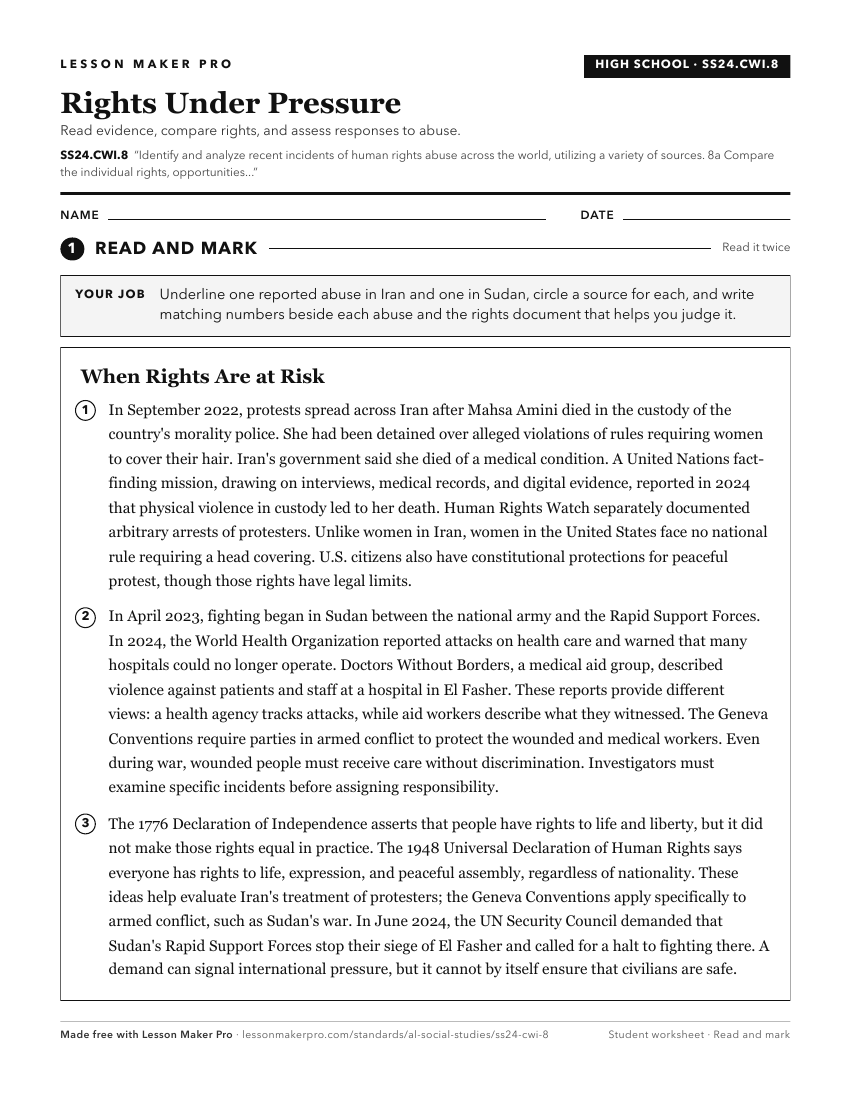
A ready-to-print activity worksheet aligned to SS24.CWI.8, with an answer key for the teacher on its own page. No account needed.
PDF, US Letter, prints cleanly in black and white.
Download the worksheetKeep exploring
Related Standards
- SS24.WH.16a
Critique the response of the world community to mass atrocities and violations of human rights and civil liberties in various nations and regions.
- SS24.HOS.22a
Analyze the causes and effects of modern-day genocides, and identify the groups involved.
- SS24.CWI.12
Research a current world issue or conflict and present information regarding its effects on the quality of life for individuals, groups, or countries.
Turn this cluster into a lesson
Grade, subject, topic, and the complete cluster are prefilled. Create one free, no account needed.
Also for this cluster:Make a WorksheetMake a QuizMake a Sub Lesson