Alabama Social Studies SS24.7.5
Standard Cluster
Explain common patterns that emerged in the shift from hunter-gatherer societies to permanent settlements in different regions of the world, including types and sizes of settlements. 5a Analyze the influence of physical geography on the locations of the early agrarian societies, including the early river valleys settlements. 5b Describe the settlement patterns, shift in gender roles, and job specialization associated with the development of agrarian societies. 5c Describe the agricultural innovations that developed as a result of the Neolithic Revolution, including the domestication of plants and animals.
2024 Alabama Course of Study: Social Studies
Cluster contents
Standards in This Cluster
SS24.7.5 is a cluster heading. These are the individual standards under it.
- SS24.7.5a
Analyze the influence of physical geography on the locations of the early agrarian societies, including the early river valleys settlements.
- SS24.7.5b
Describe the settlement patterns, shift in gender roles, and job specialization associated with the development of agrarian societies.
- SS24.7.5c
Describe the agricultural innovations that developed as a result of the Neolithic Revolution, including the domestication of plants and animals.
Teacher's field guide
What This Cluster Means
What Students Need to Do
- Compare temporary camps, farming villages, and larger towns in different regions. Explain why early farmers settled near water and workable soil. Describe how domestication, irrigation, and food storage changed work, including specialized jobs and gender roles.
What Mastery Looks Like
- A student can use a map to explain why a settlement grew near a river, while noting the risk of floods. They can compare a small village with a larger town and connect a food surplus to new jobs. They describe changes in gender roles without assuming every society worked the same way.
Common Misconceptions
- Students may think farming began all at once and everyone stopped hunting. They may assume all early settlements were cities or that every riverside site was safe. They may also assume women and men did the same work in every region.
How to Assess It
- Exit ticket: Mark a likely farming village site on a map showing a river, fertile soil, and flood zones. Explain your choice, then name one domesticated crop or animal and one job a food surplus could support.
Lesson moves
Ways to Teach It
Give pairs maps of the Nile, Indus, and Yellow River valleys; have them place paper villages and label nearby farmland and flood risks.
Show drawings of a camp and a farming village; ask, "How might farming change work for women and men, and what evidence supports your answer?"
Run a card sort with camps, villages, towns, canals, herding, pottery, and farming jobs; students explain which cards connect and why.
Use a local flood map and soil map; have students pick a farm site and compare their choice with a Nile River village.
Free download
Printable SS24.7.5 Worksheet
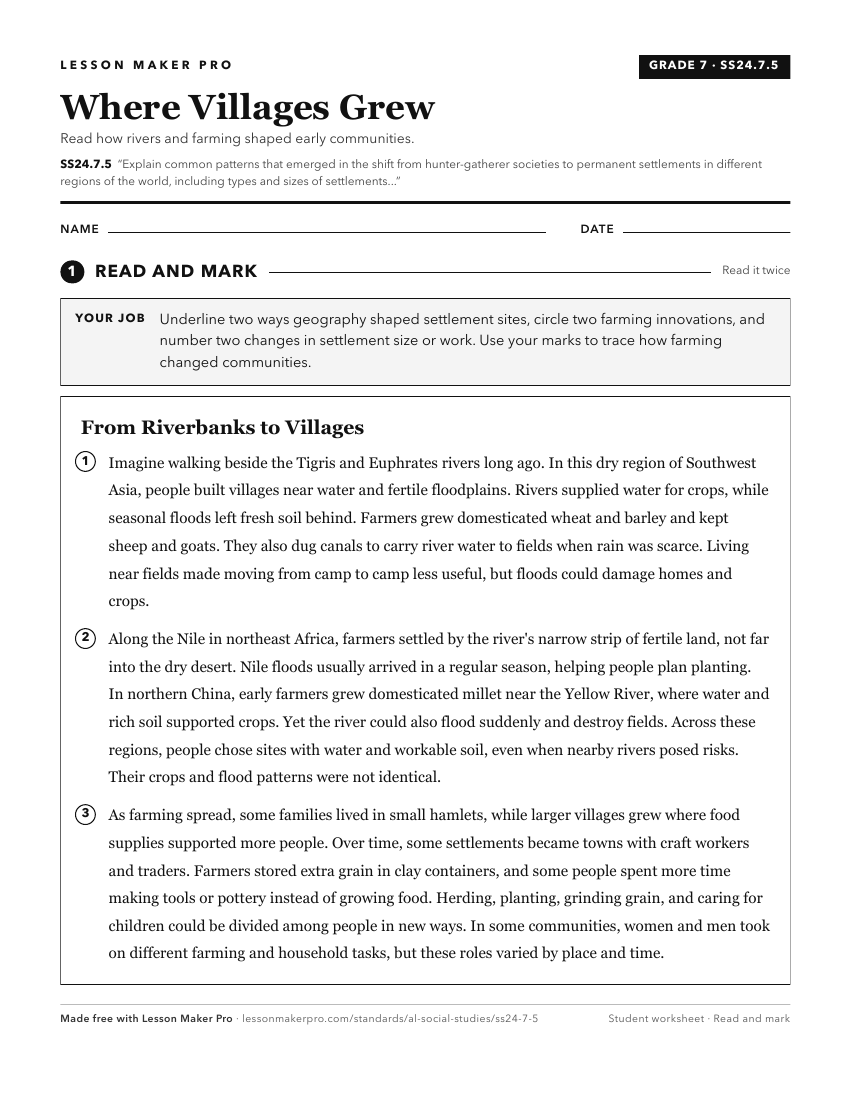
A ready-to-print activity worksheet aligned to SS24.7.5, with an answer key for the teacher on its own page. No account needed.
PDF, US Letter, prints cleanly in black and white.
Download the worksheetKeep exploring
Related Standards
Turn this cluster into a lesson
Grade, subject, topic, and the complete cluster are prefilled. Create one free, no account needed.
Also for this cluster:Make a WorksheetMake a QuizMake a Sub Lesson