Alabama Social Studies SS24.4.16
Standard Cluster
Describe how political and social changes of the late 1870s to 1900 affected Black and white Alabamians, including the introduction of Jim Crow laws, sharecropping, voting restrictions, and violence. 16a Describe how industry, trade, farming, and the rise of Populism changed Alabama after the Civil War and shaped its economy and communities in the late 1800s.
2024 Alabama Course of Study: Social Studies
Cluster contents
Standards in This Cluster
SS24.4.16 is a cluster heading. These are the individual standards under it.
Teacher's field guide
What This Cluster Means
What Students Need to Do
- Students explain how farming, mining, factories, and trade changed jobs and towns in Alabama. They describe how sharecropping, segregation laws, voting restrictions, and racial violence affected Black Alabamians. They explain why some farmers supported Populism.
What Mastery Looks Like
- A student can explain how cotton farming left many sharecroppers in debt and how coal and iron helped Birmingham grow. They can explain that Jim Crow laws separated people by race, voting rules shut out many Black voters, and violence was used to enforce discrimination. They can name a change Populists wanted for struggling farmers.
Common Misconceptions
- Students may think the end of slavery brought equal rights or that Jim Crow laws affected Black and white residents equally. They may think sharecroppers owned their land or that Populists ended racial discrimination.
How to Assess It
- On an exit ticket, ask: “How did sharecropping change a farmer’s life, and how did a voting restriction change a Black Alabamian’s life?”
Lesson moves
Ways to Teach It
Give pairs cotton, coal, iron, railroad, and sharecropping cards; have them build two cause-and-effect chains about work and trade.
Read a short summary of Alabama's separate rail car law; ask, “How would a Black family's train trip differ from a white family's?”
Play a match game pairing cotton, coal, railroads, sharecropping, and Populism with effects on jobs, debt, trade, and farmers' demands.
Compare an 1890s Alabama railroad map with a current road map; circle Birmingham and trace routes to other towns.
Free download
Printable SS24.4.16 Worksheet
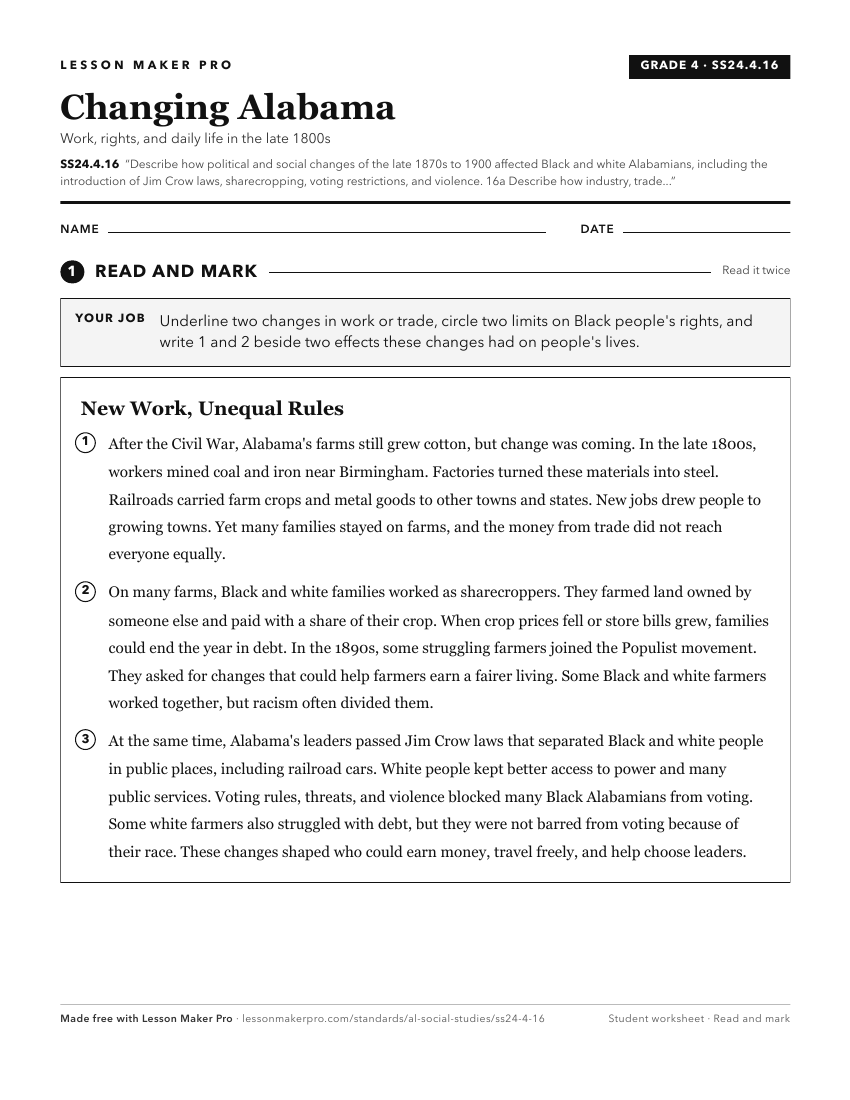
A ready-to-print activity worksheet aligned to SS24.4.16, with an answer key for the teacher on its own page. No account needed.
PDF, US Letter, prints cleanly in black and white.
Download the worksheetKeep exploring
Related Standards
- SS24.AS.14b
Evaluate the role of new labor systems, Black Codes, and violence in stemming civil rights progress following Reconstruction in Alabama.
- SS24.4.15a
Explain political changes in Alabama during Reconstruction, including new state constitutions, Black Codes, changes in political parties, voting rights, and cit...
- SS24.AS.15
Evaluate the extent to which civil rights reformers in Alabama at the turn of the twentieth century successfully challenged the emergence of the Jim Crow South.
Turn this cluster into a lesson
Grade, subject, topic, and the complete cluster are prefilled. Create one free, no account needed.
Also for this cluster:Make a WorksheetMake a QuizMake a Sub Lesson