Alabama Science ES.3.a
The Standard
- ES.3
- Construct an explanation of how biotic and abiotic factors affect biodiversity and populations in ecosystems.
Support a claim that biodiversity is a natural resource which fosters ecosystem resilience, including the role of keystone, invasive, native, endemic, and indicator species.
2023 Alabama Course of Study: Science · Unity and Diversity
Teacher's field guide
What This Standard Means
What Students Need to Do
- Students use evidence to argue that biodiversity is a natural resource that helps ecosystems withstand or recover from disturbance. They explain the roles of keystone, invasive, native, endemic, and indicator species.
What Mastery Looks Like
- Students compare recovery data from two habitats and cite numbers to support a claim. They explain how losing a keystone species or adding an invasive one could disrupt recovery. They distinguish native from endemic species and use an indicator species to spot a change in conditions.
Common Misconceptions
- Students may call any nonnative species invasive, even when it causes no harm. They may think endemic means endangered, or that an indicator species fixes a problem rather than signals it. More species does not guarantee recovery from every disturbance.
How to Assess It
- Exit ticket: After a flood, a marsh with 12 plant species regrows 80% of its vegetation, while a marsh with 3 species regrows 30%. Use both numbers to support a claim about biodiversity and resilience, then explain how an invasive plant could affect recovery.
Lesson moves
Ways to Teach It
Give groups sea otter, urchin, kelp, and fish cards; have them model what changes when otters disappear.
Ask students to explain why fewer mayfly larvae can warn of stream trouble without making mayflies the cause.
Give pairs short species fact cards to sort by native, endemic, invasive, keystone, and indicator roles; have them defend cards with overlapping roles.
Compare a local park plant list with the state invasive species list; identify matches and predict one effect on native plants.
Free download
Printable ES.3.a Worksheet
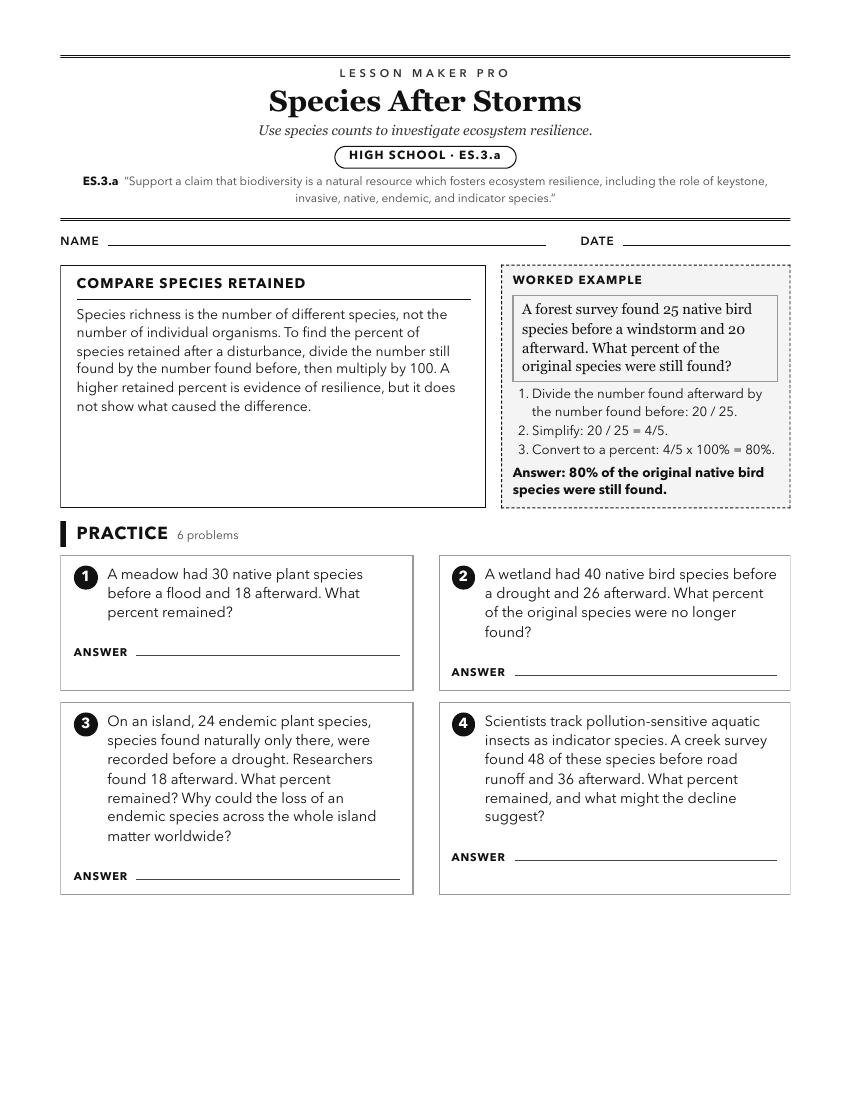
A ready-to-print activity worksheet aligned to ES.3.a, with an answer key for the teacher on its own page. No account needed.
PDF, US Letter, prints cleanly in black and white.
Download the worksheetKeep exploring
Related Standards
- BIO.10
Engage in argument from evidence to support the claim that characteristics of an ecosystem contribute to its resilience and stability, including ecological succ...
- 3.10
Make a claim from evidence that an organism's likelihood of survival depends upon access to sufficient resources in its habitat, including sunlight, air, water,...
- 7.9
Design a solution to maintain biodiversity and ecosystem services in a given scenario.
- ES.8
Construct or revise a claim based on evidence of the effects of human activities on Earth’s systems, natural resources, and ecosystem services.
Turn this exact standard into a lesson
Grade, subject, topic, and the complete standard are prefilled. Create one free, no account needed.
Also for this standard:Make a WorksheetMake a QuizMake a Sub Lesson