Alabama Science 7.9
The Standard
Design a solution to maintain biodiversity and ecosystem services in a given scenario.
2023 Alabama Course of Study: Science · Ecosystems: Interactions, Energy, and Dynamics
Teacher's field guide
What This Standard Means
What Students Need to Do
- Students design a fix for an ecosystem facing a specific threat. They show how it protects different species and keeps a benefit people use, such as clean water. They explain their choices using evidence and limits such as space or cost.
What Mastery Looks Like
- A student can describe a workable plan, such as planting native grasses beside a pond to catch runoff. They can name which organisms benefit, explain how the plan helps keep water clean, and identify one drawback.
Common Misconceptions
- Students may think adding more animals always helps, even if those animals eat native species. They may count only animals and overlook plants. They may assume a plan that helps one species will help every species.
How to Assess It
- Give students this prompt: A school pond gets muddy runoff from a parking lot, and frog and insect numbers are falling. Sketch one change, name two organisms it helps, and explain how it helps keep the water clean.
Lesson moves
Ways to Teach It
Tilt two trays of soil, cover one with rooted grass, pour equal amounts of water over both, and compare the runoff collected in cups.
Ask pairs: Should the school plant native grasses or add fish to a muddy pond? Defend the choice using frogs, insects, and water quality.
Give groups cards labeled runoff, algae, insects, frogs, and native grasses; have them arrange cause-and-effect chains, then add a rain garden card.
Walk to a school storm drain and mark a possible spot for a native planting strip on a campus map.
Free download
Printable 7.9 Worksheet
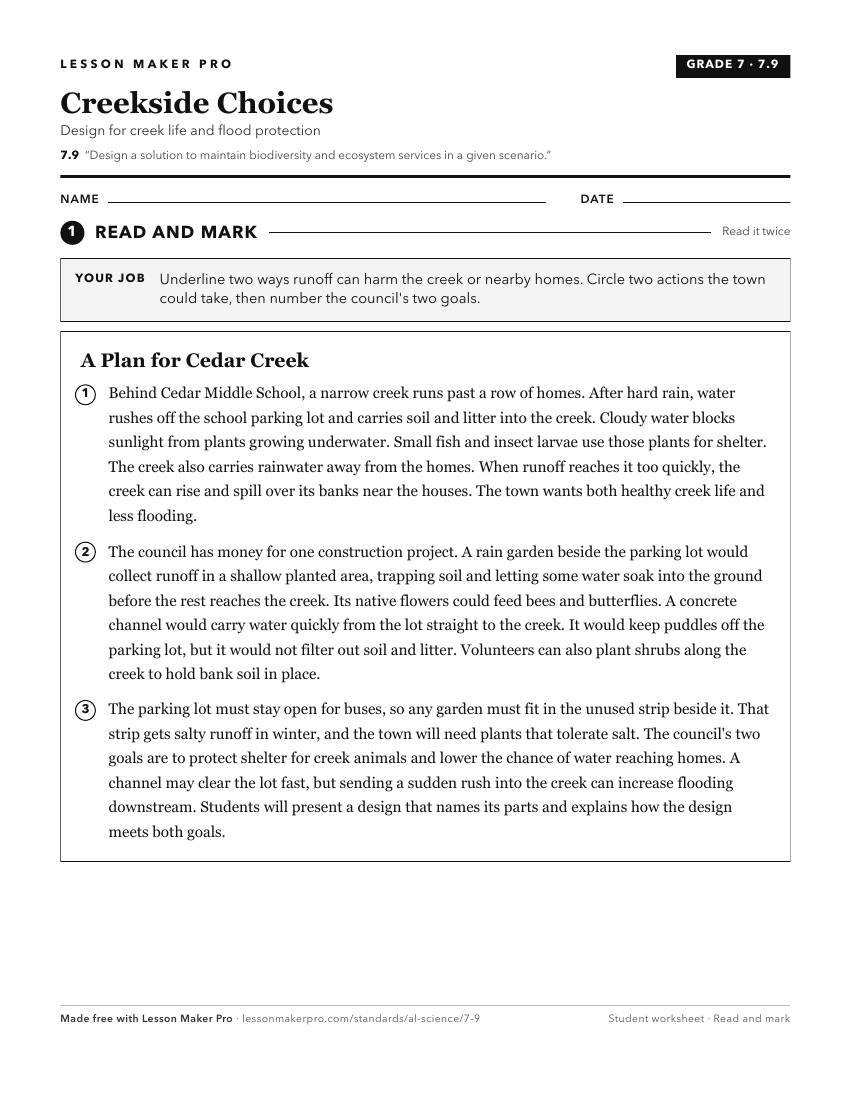
A ready-to-print activity worksheet aligned to 7.9, with an answer key for the teacher on its own page. No account needed.
PDF, US Letter, prints cleanly in black and white.
Download the worksheetKeep exploring
Related Standards
- K.11
Identify a problem and design possible solutions that lessen the human impact on the local environment.
- 6.11.a
Define problems and design solutions to monitor and mitigate human impact on the environment.
- 5.15
Design, test, and revise solutions to clean a polluted environment.
- ES.8.b
Use engineering practices to evaluate and refine a current solution designed to protect natural resources from anthropogenic sources of atmospheric, terrestrial...
Turn this exact standard into a lesson
Grade, subject, topic, and the complete standard are prefilled. Create one free, no account needed.
Also for this standard:Make a WorksheetMake a QuizMake a Sub Lesson