Alabama Science ES.13
The Standard
Design and defend a sustainability plan to reduce an individual’s ecological footprint, taking into account how market forces and societal demands influence personal choices.
2023 Alabama Course of Study: Science · Earth and Human Activity
Teacher's field guide
What This Standard Means
What Students Need to Do
- Students estimate an individual's footprint from travel, food, and energy data. They make a plan with measurable cuts. They explain how prices, available options, and social expectations shape those choices.
What Mastery Looks Like
- A student compares a baseline week with a proposed week and calculates the change in fuel use or estimated emissions. They defend two realistic changes with numbers. They explain how cost and a family or peer expectation could affect the plan.
Common Misconceptions
- Students may treat recycling one bottle as equal to avoiding a week of driving without comparing the amounts. They may assume the cheapest choice has the smallest footprint. They may overlook how bus routes or family obligations limit someone's options.
How to Assess It
- A student drives 50 miles weekly at 25 miles per gallon; a free bus could replace 25 miles, but the family expects an after-school pickup. Ask students to calculate fuel saved and explain how a rise in gas prices and the pickup affect their plan.
Lesson moves
Ways to Teach It
Give pairs cards showing weekly travel, food, and electricity emissions; have them sort the cards and choose two cuts.
Ask students to write: Would you pay $2 more weekly to cut travel emissions by 5 kg if friends expect you to drive?
Give pairs $10 to spend on bus rides ($4, saves 3 kg CO2), LEDs ($6, saves 2 kg), or meals ($3, saves 1 kg).
Use a local grocery flyer and a food emissions chart to compare the price and footprint of beef tacos and bean tacos.
Free download
Printable ES.13 Worksheet
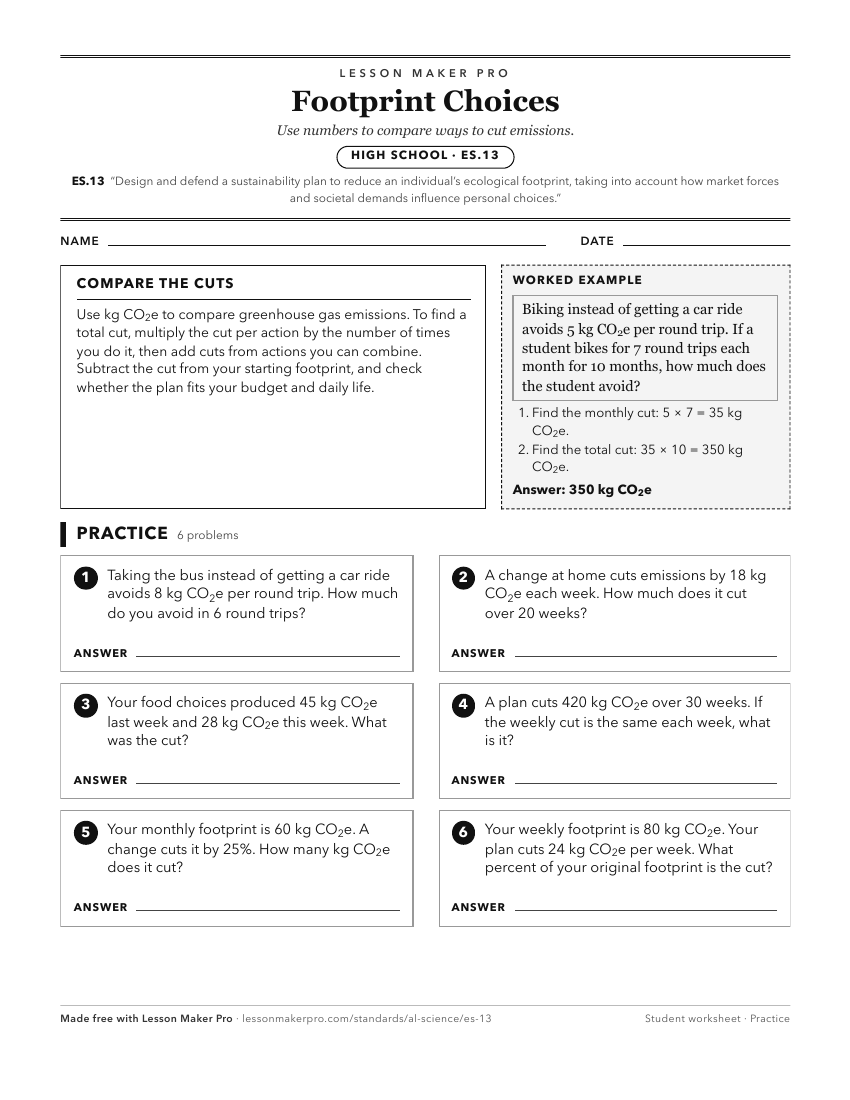
A ready-to-print activity worksheet aligned to ES.13, with an answer key for the teacher on its own page. No account needed.
PDF, US Letter, prints cleanly in black and white.
Download the worksheetKeep exploring
Related Standards
- K.11
Identify a problem and design possible solutions that lessen the human impact on the local environment.
- 7.9
Design a solution to maintain biodiversity and ecosystem services in a given scenario.
- ES.8
Construct or revise a claim based on evidence of the effects of human activities on Earth’s systems, natural resources, and ecosystem services.
- 6.11.a
Define problems and design solutions to monitor and mitigate human impact on the environment.
Turn this exact standard into a lesson
Grade, subject, topic, and the complete standard are prefilled. Create one free, no account needed.
Also for this standard:Make a WorksheetMake a QuizMake a Sub Lesson