Alabama Science 7.16
The Standard
Obtain, evaluate, and communicate evidence comparing patterns in the embryological development of multiple species to identify relationships not evident in the fully formed adult anatomy.
2023 Alabama Course of Study: Science · Heredity: Inheritance and Variation of Traits
Teacher's field guide
What This Standard Means
What Students Need to Do
- Students find labeled embryo images from several species and check that the images show comparable stages. They identify shared structures and explain a relationship that adult bodies may hide.
What Mastery Looks Like
- A student can point to hind limb buds in both whale and dog embryos, then note that adult whales lack visible hind legs. They use those images to support a claim about shared ancestry without saying whales came from dogs.
Common Misconceptions
- Students may call the pharyngeal arches in human embryos working gills. They may also think similar embryos are identical or that one living species came directly from another.
How to Assess It
- Show labeled whale and dog embryo diagrams with hind limb buds, plus adult photos. Ask: 'What shared embryonic feature suggests a relationship the adult photos hide? Point to evidence in both diagrams.'
Lesson moves
Ways to Teach It
Give groups printed whale, dog, and chicken embryo images at comparable stages; have them circle shared structures and compare adult photos.
Show a labeled embryo diagram and an uncaptioned drawing; ask students which better supports a relationship claim and why.
Play spot the evidence with embryo image cards; teams name one shared structure and write a claim it supports.
Show a museum photo of a whale skeleton beside a whale embryo diagram; students explain what the temporary hind limb buds reveal.
Free download
Printable 7.16 Worksheet
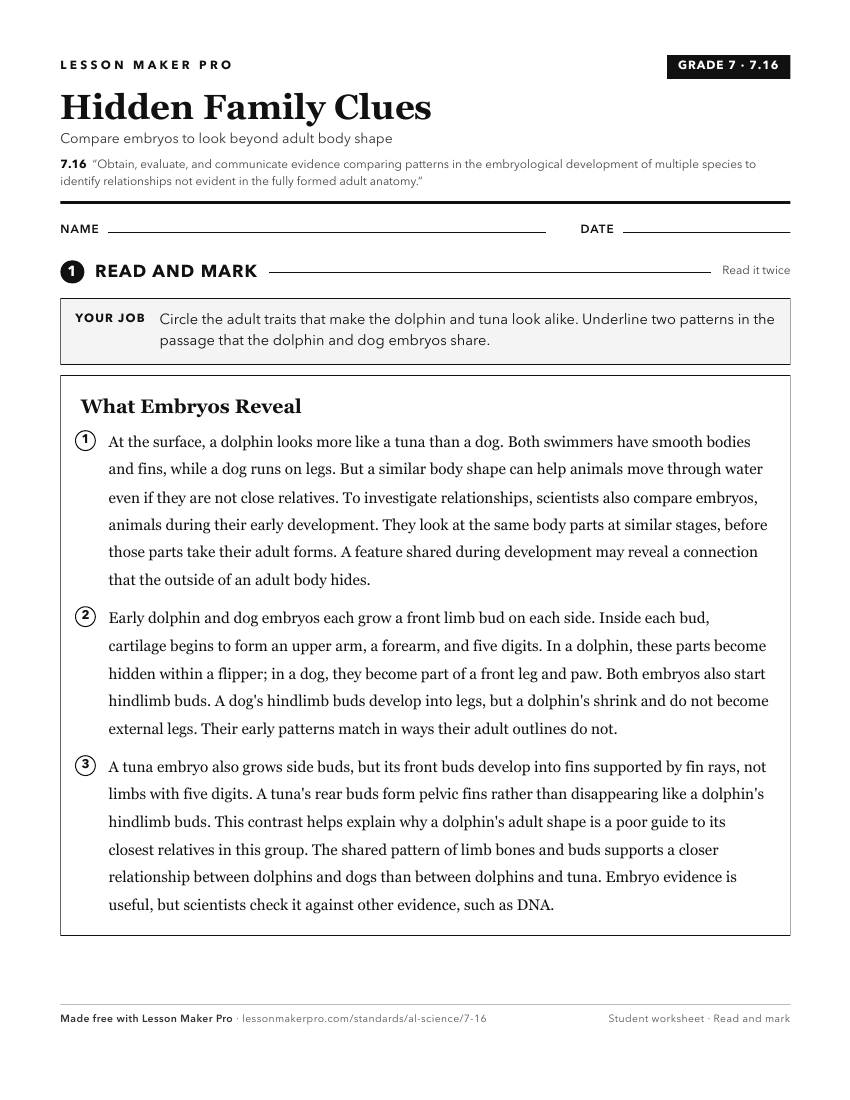
A ready-to-print activity worksheet aligned to 7.16, with an answer key for the teacher on its own page. No account needed.
PDF, US Letter, prints cleanly in black and white.
Download the worksheetKeep exploring
Related Standards
- 7.15
Analyze and interpret data from examination of fossils, relict species, and modern organisms to determine patterns of change in anatomical structures over time.
- BIO.13
Analyze and interpret data to support hypotheses of common ancestry and biological evolution illustrated by cladograms and phylogenetic trees.
- 1.6
Obtain information from text and other media to provide evidence that parents and their offspring engage in patterns of behavior that help the offspring survive...
Turn this exact standard into a lesson
Grade, subject, topic, and the complete standard are prefilled. Create one free, no account needed.
Also for this standard:Make a WorksheetMake a QuizMake a Sub Lesson