Alabama Science 7.15
The Standard
Analyze and interpret data from examination of fossils, relict species, and modern organisms to determine patterns of change in anatomical structures over time.
2023 Alabama Course of Study: Science · Heredity: Inheritance and Variation of Traits
Teacher's field guide
What This Standard Means
What Students Need to Do
- Students compare dated coelacanth fossils with diagrams of a living coelacanth and another living fish. They track features such as fins and tails, then describe patterns of similarity and change over time.
What Mastery Looks Like
- A student puts the fossils in age order and points to the same feature in each image. They use specific observations to explain what stayed similar and what changed, without claiming a living fish descended from another living fish.
Common Misconceptions
- Students may think a living coelacanth is identical to its fossil relatives. They may mistake a missing part of a damaged fossil for evidence that the animal lacked that structure.
How to Assess It
- Show dated drawings of two fossil coelacanths, a living coelacanth, and a tuna. Ask, “What pattern do you see in their fins? Name two details in the drawings that support your answer.”
Lesson moves
Ways to Teach It
Give pairs dated fossil coelacanth cards and living coelacanth and tuna diagrams; they sort the fossils by age and trace fin shapes.
Ask, “Is a living coelacanth exactly like its fossil relatives? Which fin or tail detail supports your answer?”
Play feature bingo with fossil and living fish diagrams; students mark shared or different fin, tail, and scale features.
Show a museum's online coelacanth fossil and living specimen; students write an exhibit caption naming one matching feature and one visible difference.
Free download
Printable 7.15 Worksheet
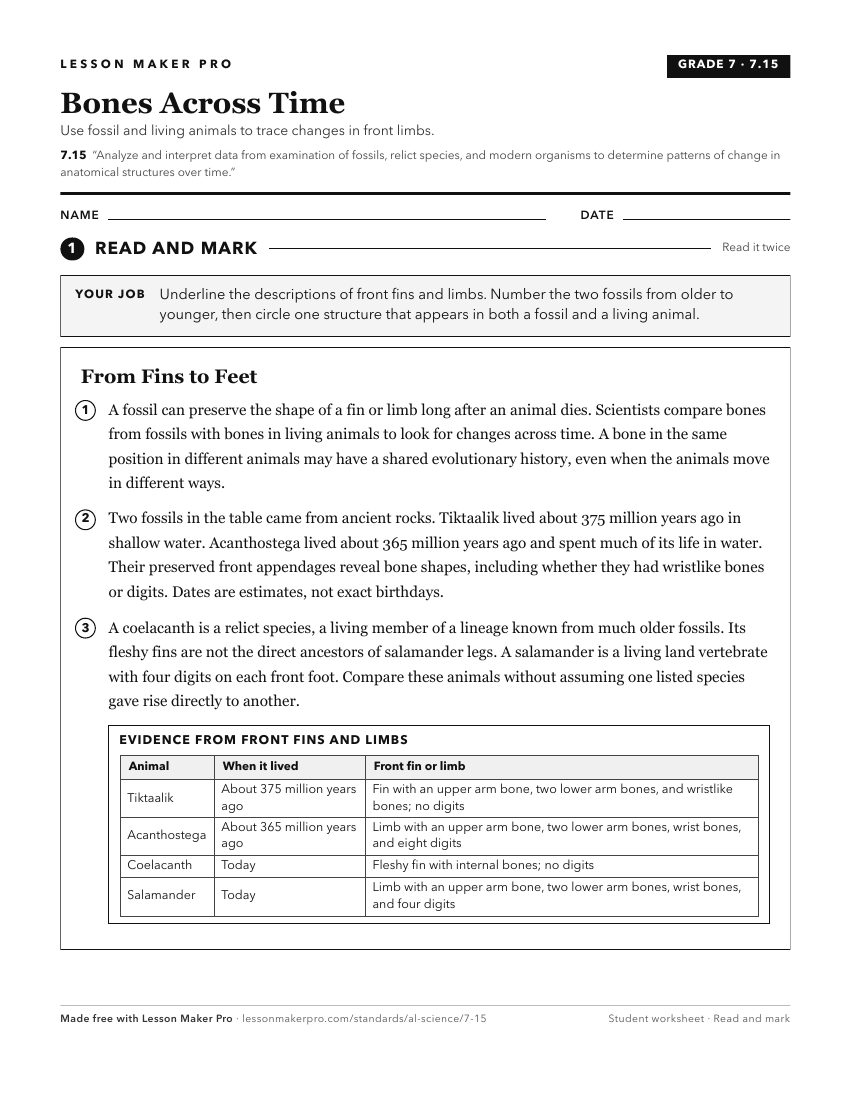
A ready-to-print activity worksheet aligned to 7.15, with an answer key for the teacher on its own page. No account needed.
PDF, US Letter, prints cleanly in black and white.
Download the worksheetKeep exploring
Related Standards
- BIO.13
Analyze and interpret data to support hypotheses of common ancestry and biological evolution illustrated by cladograms and phylogenetic trees.
- 6.7
Analyze data from rock strata and the fossil record to construct a chronology of occurrences in Earth’s history.
- 7.16
Obtain, evaluate, and communicate evidence comparing patterns in the embryological development of multiple species to identify relationships not evident in the ...
Turn this exact standard into a lesson
Grade, subject, topic, and the complete standard are prefilled. Create one free, no account needed.
Also for this standard:Make a WorksheetMake a QuizMake a Sub Lesson