Alabama Math 7A.DSP.A.26.b
The Standard
- 7A.DSP.A
- Make inferences about a population using random sampling.
- 7A.DSP.A.26
- Examine a sample of a population to generalize information about the population.
Compare sampling techniques to determine whether a sample is random and thus representative of a population, explaining that random sampling tends to produce representative samples and support valid inferences.
2019 Alabama Course of Study: Mathematics · Make inferences about a population using random sampling.
Teacher's field guide
What This Standard Means
What Students Need to Do
- Students decide whether people were chosen by chance from the whole group or picked for convenience. They compare survey plans and explain which results can better describe the group.
What Mastery Looks Like
- Given two survey plans, students can tell who had a chance to be picked and who was left out. They explain that a random sample is usually more representative, but one draw can still be unusual.
Common Misconceptions
- Students may call a sample random because the people surveyed seem different from one another. They may think a large volunteer survey is fair, or that every random sample perfectly matches the population.
How to Assess It
- Exit ticket: A school wants to know the grade's favorite lunch. Which gives a better estimate, asking 20 volunteers in the cafeteria or drawing 20 names from a complete grade roster? Explain why.
Lesson moves
Ways to Teach It
Make 20 cards, 12 blue and eight red; compare five chosen from a blue-first stack with five drawn from a bag.
Ask, "Would surveying the first ten students through the cafeteria door represent the whole grade? How could you choose fairly?"
Read four survey plans on cards, label each random or not, and name who could be missed.
For a school lunch poll, compare asking your friends with drawing names from a complete grade roster.
Free download
Printable 7A.DSP.A.26.b Worksheet
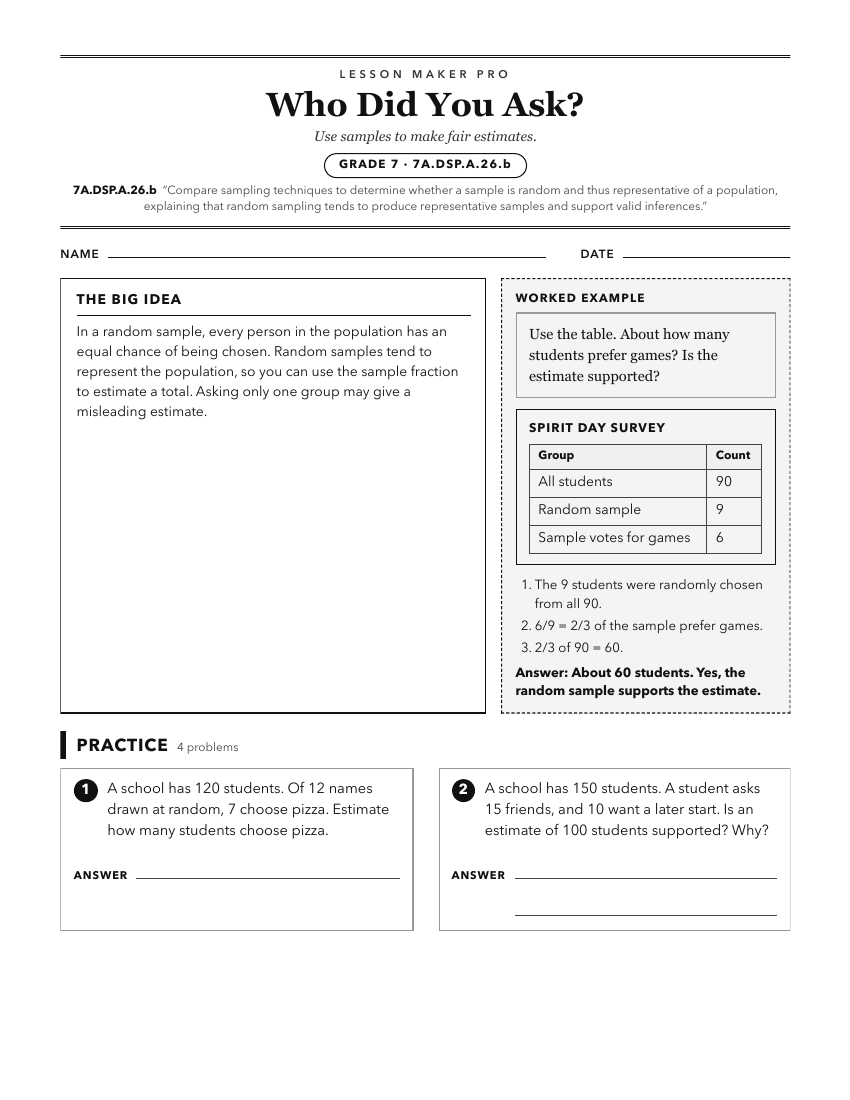
A ready-to-print activity worksheet aligned to 7A.DSP.A.26.b, with an answer key for the teacher on its own page. No account needed.
PDF, US Letter, prints cleanly in black and white.
Download the worksheetKeep exploring
Related Standards
- 7.DSP.A.10.b
Compare sampling techniques to determine whether a sample is random and thus representative of a population, explaining that random sampling tends to produce re...
- 7.DSP.A.10.d
Use data from a random sample to draw inferences about a population with an unknown characteristic of interest, generating multiple samples to gauge variation a...
- 7A.DSP.A.26.d
Use data from a random sample to draw inferences about a population with an unknown characteristic of interest, generating multiple samples to gauge variation a...
Turn this exact standard into a lesson
Grade, subject, topic, and the complete standard are prefilled. Create one free, no account needed.
Also for this standard:Make a WorksheetMake a QuizMake a Sub Lesson