Alabama Math 7.DSP.A.10.d
The Standard
- 7.DSP.A
- Make inferences about a population using random sampling.
- 7.DSP.A.10
- Examine a sample of a population to generalize information about the population.
Use data from a random sample to draw inferences about a population with an unknown characteristic of interest, generating multiple samples to gauge variation and making predictions or conclusions about the population.
2019 Alabama Course of Study: Mathematics
Teacher's field guide
What This Standard Means
What Students Need to Do
- Students take several random samples from a group whose makeup they do not know. They compare the results and use them to estimate a count or percentage for the whole group.
What Mastery Looks Like
- A student can use three sample results to make a reasonable prediction for the whole group. They can explain why another random sample might give a different result.
Common Misconceptions
- Students may choose nearby people and call that a random sample. They may treat one sample result as the exact result for the whole group, or think different random samples should match.
How to Assess It
- A bag holds 100 cubes. Three random samples of 10 contain 4, 6, and 5 red cubes. About how many cubes are red? Explain why your answer is not exact.
Lesson moves
Ways to Teach It
Fill a cloth bag with 100 red and blue counters; pairs draw 10 with replacement, repeat three times, and estimate the red total.
Ask, 'Why might three honest random samples from the same bag show different red counts?'
Run Estimate the Jar: show three counts, 4, 6, and 5 reds per 10 draws, and award points for a justified range.
Use the class roster to randomly choose three groups of eight; tally students with water bottles, then estimate the class total.
Free download
Printable 7.DSP.A.10.d Worksheet
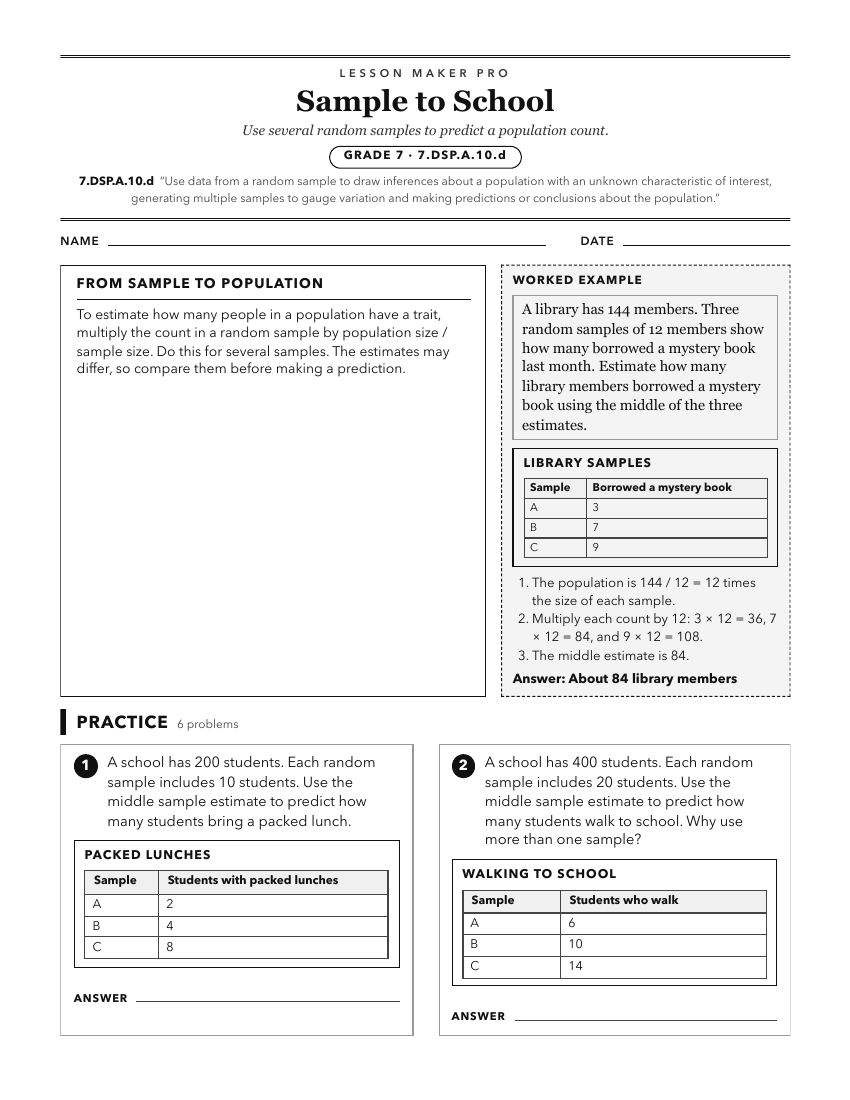
A ready-to-print activity worksheet aligned to 7.DSP.A.10.d, with an answer key for the teacher on its own page. No account needed.
PDF, US Letter, prints cleanly in black and white.
Download the worksheetKeep exploring
Related Standards
Turn this exact standard into a lesson
Grade, subject, topic, and the complete standard are prefilled. Create one free, no account needed.
Also for this standard:Make a WorksheetMake a QuizMake a Sub Lesson