Alabama Math 7.DSP.A.10.b
The Standard
- 7.DSP.A
- Make inferences about a population using random sampling.
- 7.DSP.A.10
- Examine a sample of a population to generalize information about the population.
Compare sampling techniques to determine whether a sample is random and thus representative of a population, explaining that random sampling tends to produce representative samples and support valid inferences.
2019 Alabama Course of Study: Mathematics
Teacher's field guide
What This Standard Means
What Students Need to Do
- Students compare how groups were chosen for a survey. They check whether every member of the population had an equal chance of selection and explain why random samples support better estimates.
What Mastery Looks Like
- A student spots why polling one homeroom cannot reliably describe the whole school. They choose names at random from the full roster and explain that the sample may still differ from the school as a whole.
Common Misconceptions
- Students may call a sample random because someone picked people without a plan, even if they only picked from one class. They may think a large volunteer poll is unbiased or that every random sample matches the population exactly.
How to Assess It
- Exit ticket: A principal wants to estimate how many seventh graders walk to school. Which gives a better estimate, asking 40 friends or drawing 40 names from the seventh-grade roster? Explain why.
Lesson moves
Ways to Teach It
Put 30 red and 10 blue counters in a bag; compare 10 blind draws with 10 counters chosen by sight, then record each color count.
Ask: Would surveying only students at soccer practice tell us what all seventh graders think about school lunch? Why or why not?
Play Sample Sort with cards reading 'roster names drawn from a hat,' 'friends asked at lunch,' and 'first students in line'; explain each choice.
Compare lunch preferences from pizza-line students and roster-drawn students; decide which sample better predicts schoolwide preferences.
Free download
Printable 7.DSP.A.10.b Worksheet
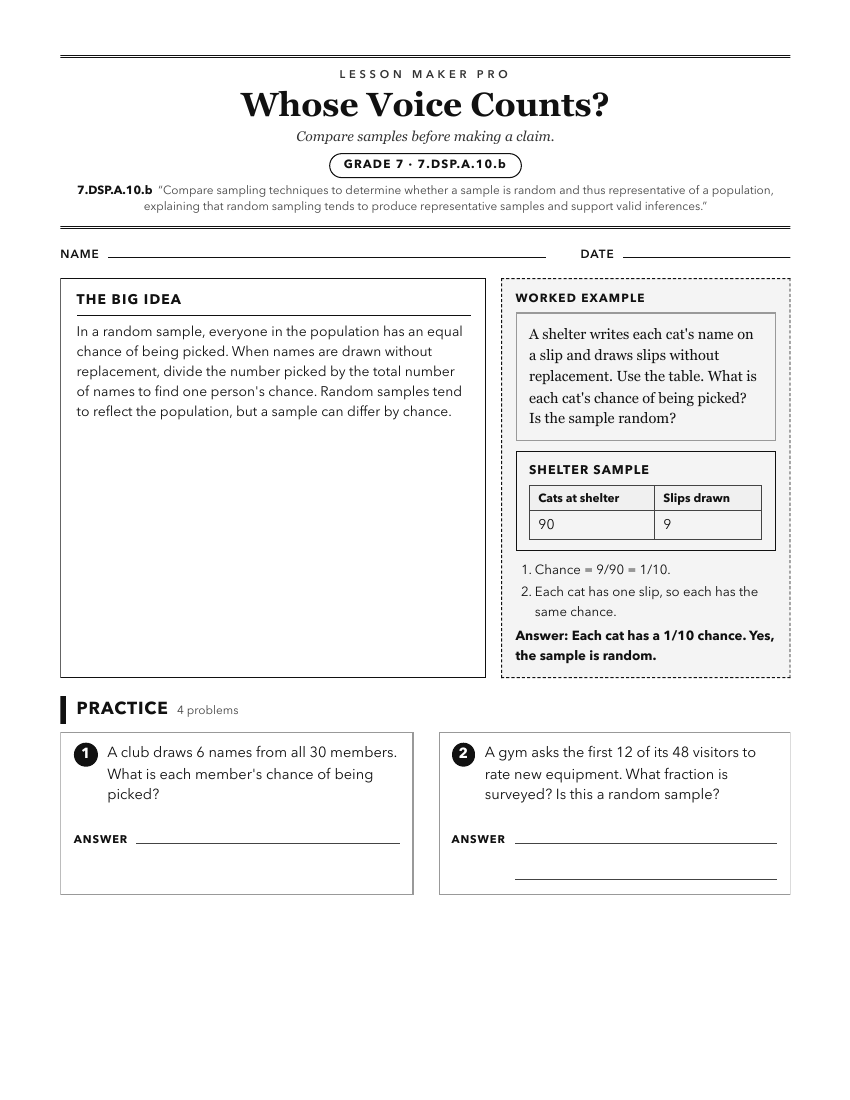
A ready-to-print activity worksheet aligned to 7.DSP.A.10.b, with an answer key for the teacher on its own page. No account needed.
PDF, US Letter, prints cleanly in black and white.
Download the worksheetKeep exploring
Related Standards
- 7A.DSP.A.26.b
Compare sampling techniques to determine whether a sample is random and thus representative of a population, explaining that random sampling tends to produce re...
- 7.DSP.A.10.d
Use data from a random sample to draw inferences about a population with an unknown characteristic of interest, generating multiple samples to gauge variation a...
- 7A.DSP.A.26.d
Use data from a random sample to draw inferences about a population with an unknown characteristic of interest, generating multiple samples to gauge variation a...
Turn this exact standard into a lesson
Grade, subject, topic, and the complete standard are prefilled. Create one free, no account needed.
Also for this standard:Make a WorksheetMake a QuizMake a Sub Lesson