Alabama ELA 7.CL.1
The Standard
Evaluate the contributions of informational text elements, including categories, point of view, purpose, and figurative, connotative, and technical word meanings, to develop central and supporting ideas.
2021 Alabama Course of Study: English Language Arts
Teacher's field guide
What This Standard Means
What Students Need to Do
- Students find a central idea and supporting details in an informational text. They explain how the writer groups facts, presents a viewpoint, and writes for a purpose. They show how figurative phrases, loaded words, and technical terms shape those ideas.
What Mastery Looks Like
- A student can explain how problem and solution sections group details around a central idea. They can name the writer's viewpoint and purpose using text evidence. They can explain what a figurative phrase, loaded word, or technical term adds to the message.
Common Misconceptions
- Students may mistake a heading for the central idea instead of seeing how that section supports it. They may read a figurative phrase literally or miss the feeling a word carries. They may also confuse what the writer believes with why the writer wrote.
How to Assess It
- Exit ticket: 'Problem: The cafeteria throws away a mountain of scraps. This shameful waste fills bins. Solution: Composting turns scraps into soil.' Ask how the sections and three key words build the central idea, then have students name one supporting detail and the writer's purpose.
Lesson moves
Ways to Teach It
Cut up a short recycling article by heading; have pairs sort its paragraphs, then underline details that build its central idea.
Ask, 'Why did the writer call food waste a crisis rather than a problem, and what viewpoint does that reveal?'
Play a three-column word sort using 'mountain of trash,' 'wasteful,' and 'composting'; partners explain each phrase's meaning and effect.
Compare a city composting flyer with a local news report; mark each writer's purpose and how its headings shape the main idea.
Free download
Printable 7.CL.1 Worksheet
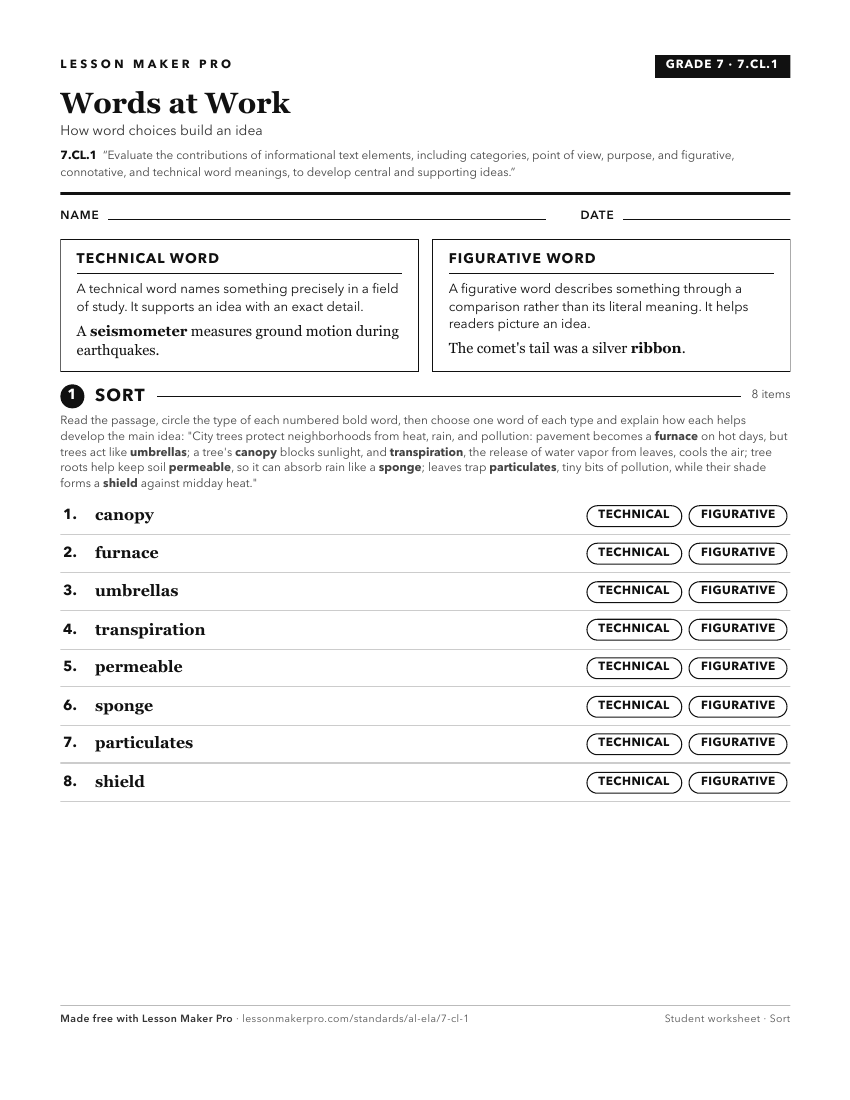
A ready-to-print activity worksheet aligned to 7.CL.1, with an answer key for the teacher on its own page. No account needed.
PDF, US Letter, prints cleanly in black and white.
Download the worksheetKeep exploring
Related Standards
- 8.CL.1
Analyze how informational and graphic text elements, including allusions, point of view, purpose, comparisons, categories, and figurative, connotative, and tech...
- 4.LF.23
Evaluate how text features and structures contribute to the meaning of an informational text.
- 6.CL.1
Identify and explain an author's rhetorical choices, including point of view, purpose, anecdotes, and figurative, connotative, and technical word meanings, to d...
- 2.LF.24
Identify the main idea and supporting details of literary and informational texts.
Turn this exact standard into a lesson
Grade, subject, topic, and the complete standard are prefilled. Create one free, no account needed.
Also for this standard:Make a WorksheetMake a QuizMake a Sub Lesson