Alabama ELA 6.CL.1
The Standard
Identify and explain an author’s rhetorical choices, including point of view, purpose, anecdotes, and figurative, connotative, and technical word meanings, to develop central and supporting ideas.
2021 Alabama Course of Study: English Language Arts
Teacher's field guide
What This Standard Means
What Students Need to Do
- Students find a writer’s main idea and the points that support it. They explain how the writer’s point of view, purpose, personal stories, and word choices develop those ideas.
What Mastery Looks Like
- A student can name a writer’s main claim and point to a detail that supports it. They can explain how a personal story, a metaphor, or a technical word helps make the point.
Common Misconceptions
- Students may spot a metaphor or technical word but not explain why the writer used it. They may treat a personal story as proof that something is true for everyone.
How to Assess It
- Exit ticket: Read, “At 6:30 a.m., my brother fell asleep over breakfast. Our school should start later so students arrive ready to learn.” Name the main claim and explain how the breakfast story supports it.
Lesson moves
Ways to Teach It
Hand out sentence strips from a school lunch argument; have pairs sort the main claim, supporting reasons, personal story, and loaded words.
Ask, “Why might a writer call cafeteria food ‘fuel’ instead of ‘lunch’?” Have students write two sentences about the effect.
Play “name the move”: show “Lunch was a battlefield” and “The meal contained 800 calories”; partners label the figurative and technical language.
Bring in a cereal box; students circle a health term and a feeling word, then explain how each supports the box’s selling point.
Free download
Printable 6.CL.1 Worksheet
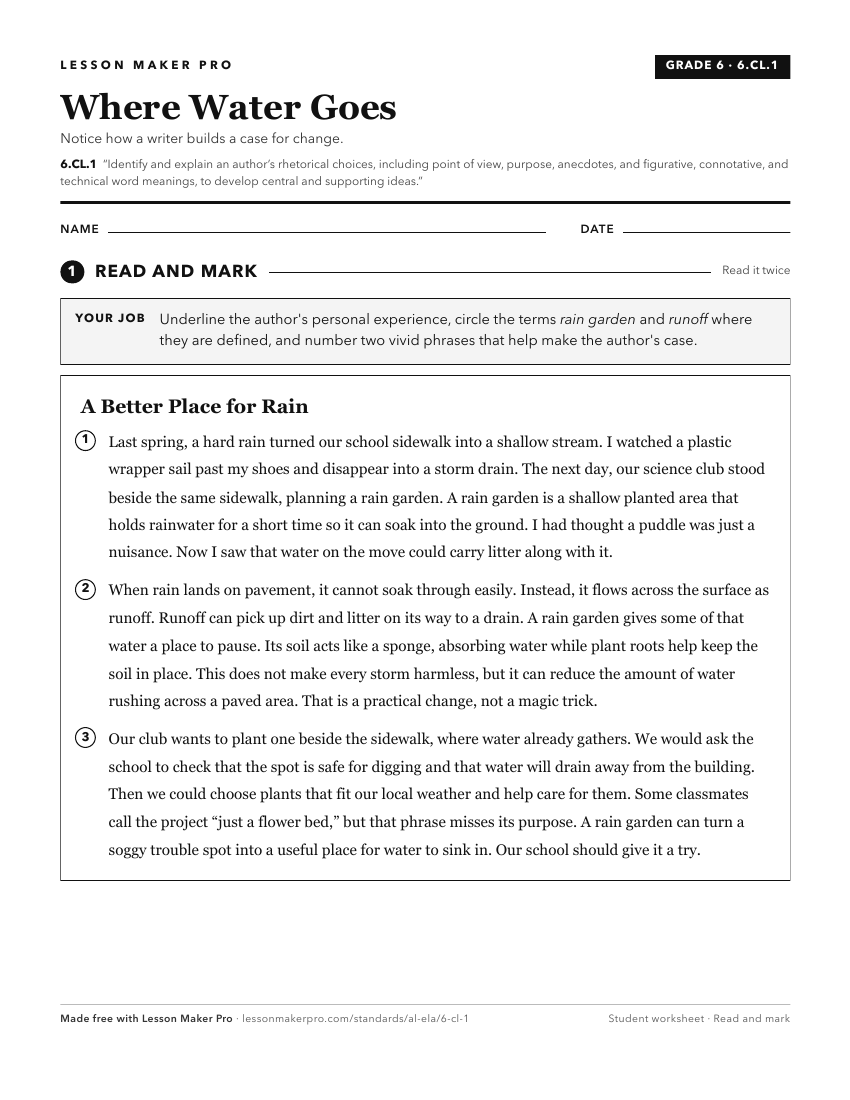
A ready-to-print activity worksheet aligned to 6.CL.1, with an answer key for the teacher on its own page. No account needed.
PDF, US Letter, prints cleanly in black and white.
Download the worksheetKeep exploring
Related Standards
- 8.CL.1
Analyze how informational and graphic text elements, including allusions, point of view, purpose, comparisons, categories, and figurative, connotative, and tech...
- 7.CL.5
Evaluate rhetorical strategies used to develop central and supporting ideas in recorded or live presentations, including point of view, purpose, comparison, cat...
- 9.LL.18
Analyze a speaker's rhetorical, aesthetic, and organizational choices in order to determine point of view and purpose.
- 10.LL.18
Analyze a speaker's rhetorical, aesthetic, and organizational choices in order to determine point of view and purpose.
Turn this exact standard into a lesson
Grade, subject, topic, and the complete standard are prefilled. Create one free, no account needed.
Also for this standard:Make a WorksheetMake a QuizMake a Sub Lesson