Alabama ELA 10.LL.18
The Standard
Analyze a speaker’s rhetorical, aesthetic, and organizational choices in order to determine point of view and purpose.
2021 Alabama Course of Study: English Language Arts
Teacher's field guide
What This Standard Means
What Students Need to Do
- Students examine a speech for word choice, imagery, repetition, and the order of ideas. They use those choices to explain what the speaker believes and what the speaker wants listeners to think or do.
What Mastery Looks Like
- A student can explain how a rhetorical question or vivid image affects listeners. They can trace a shift from praise to criticism and connect it to the speaker’s view and goal.
Common Misconceptions
- Students may call the speaker’s anger the purpose, without saying what the speaker wants the audience to believe or do. They may name repetition without explaining its effect, or mistake the audience’s view for the speaker’s.
How to Assess It
- Give students one opening and one later paragraph from Frederick Douglass’s Fourth of July speech. Ask them to name his view and goal, then explain how the shift between paragraphs and one word choice support their answer.
Lesson moves
Ways to Teach It
Give pairs sentence strips from Douglass’s Fourth of July speech; have them order the ideas and label where praise turns to criticism.
Ask, “Why does Douglass praise the founders before challenging the holiday?” Have students quote two phrases to support their answer.
Play device detective with four lines from Douglass’s speech; teams find a rhetorical question, repetition, and an image, then explain each effect.
Play a one-minute school board public-comment clip; students note its opening, one loaded word, and final request, then infer the speaker’s stance and goal.
Free download
Printable 10.LL.18 Worksheet
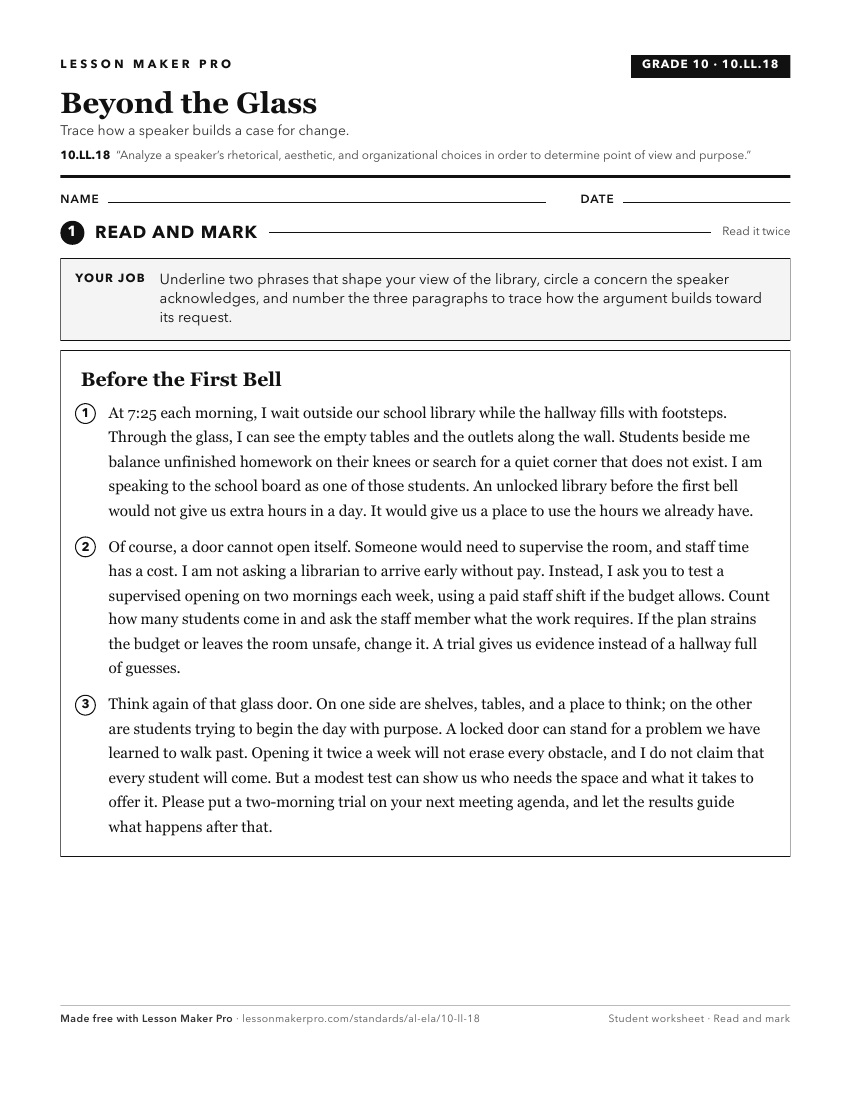
A ready-to-print activity worksheet aligned to 10.LL.18, with an answer key for the teacher on its own page. No account needed.
PDF, US Letter, prints cleanly in black and white.
Download the worksheetKeep exploring
Related Standards
- 9.LL.18
The 9th Grade version of this standard.
- 12.LL.21
Analyze a speaker's rhetorical, aesthetic, and organizational choices in order to determine point of view, purpose, and effectiveness.
- 11.LL.21
Analyze a speaker's rhetorical, aesthetic, and organizational choices in order to determine point of view, purpose, and effectiveness.
- 8.LL.19
Evaluate a speaker's rhetorical and organizational choices in order to determine point of view, purpose, and effectiveness.
Turn this exact standard into a lesson
Grade, subject, topic, and the complete standard are prefilled. Create one free, no account needed.
Also for this standard:Make a WorksheetMake a QuizMake a Sub Lesson