Wyoming Science MS-ESS3-3
The Standard
Apply scientific principles to design a method for monitoring, evaluating, and managing a human impact on the environment.
2023 Wyoming Science Content and Performance Standards · ESS3 Earth and Human Activity
Teacher's field guide
What This Standard Means
What Students Need to Do
- Students identify an environmental problem caused by people, such as soil washing off a worn schoolyard path. They plan how to measure the problem, try a way to reduce it, and use results to decide whether the change worked.
What Mastery Looks Like
- A student proposes measuring how cloudy runoff is after similar rainfalls, before and after covering the path with mulch. They explain that mulch can hold soil in place and say what they would change if the runoff stays cloudy.
Common Misconceptions
- Students may call an area clean because it looks better without measuring a change. They may compare runoff after a light rain with runoff after a storm and credit the mulch for the difference.
How to Assess It
- Exit ticket: A worn path sends muddy water toward a storm drain. Ask students what they would measure before and after adding mulch, when they would measure it, and what result would show the mulch worked.
Lesson moves
Ways to Teach It
Pour equal amounts of water over two soil trays, one bare and one covered with mulch, then compare the collected runoff.
Show a photo of a muddy school path and ask students to write where they would measure runoff and why.
Give pairs rainfall and runoff-clarity cards; have them match similar rainfalls and decide whether mulch reduced muddy runoff.
Walk the school grounds to find a worn path, then sketch a mulch plan and mark where to collect runoff samples.
Free download
Printable MS-ESS3-3 Worksheet
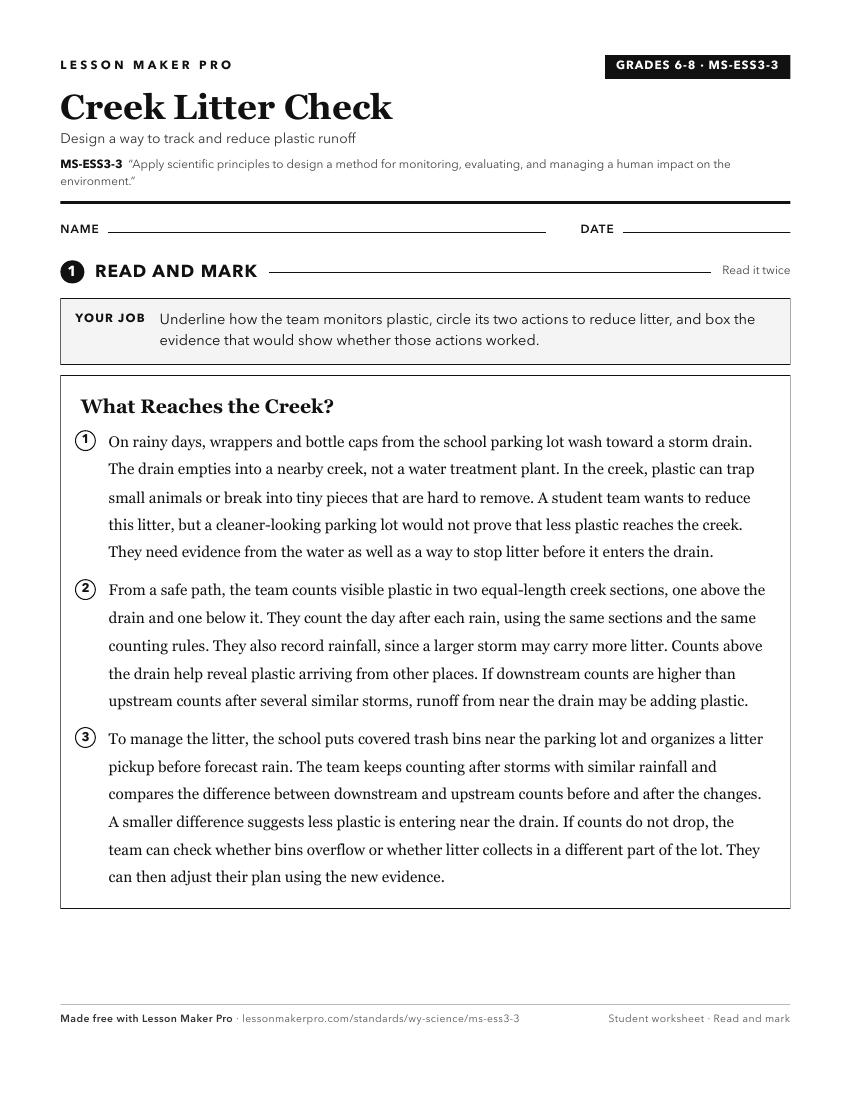
A ready-to-print activity worksheet aligned to MS-ESS3-3, with an answer key for the teacher on its own page. No account needed.
PDF, US Letter, prints cleanly in black and white.
Download the worksheetKeep exploring
Related Standards
- HS-ESS3-3
Use computational tools to illustrate the relationships among management of natural resources, the sustainability of human populations, and biodiversity.
- 5-ESS3-1
Obtain and combine information about ways individual communities use science ideas to conserve Earth’s resources and environment.
- HS-LS2-7
Evaluate and assess impacts on the environment and biodiversity in order to refine or design a solution for detrimental impacts or enhancement for positive impa...
- MS-ETS2-2
Develop a model defining and prioritizing the impacts of human activity on a particular aspect of the environment, identifying positive and negative consequence...
Turn this exact standard into a lesson
Grade, subject, topic, and the complete standard are prefilled. Create one free, no account needed.
Also for this standard:Make a WorksheetMake a QuizMake a Sub Lesson