Wyoming Science 5-ESS3-1
The Standard
Obtain and combine information about ways individual communities use science ideas to conserve Earth’s resources and environment.
2023 Wyoming Science Content and Performance Standards · ESS3 Earth and Human Activity
Teacher's field guide
What This Standard Means
What Students Need to Do
- Students read two sources about a town project, such as a rain garden. They combine facts to explain what the town does and how it protects water or land.
What Mastery Looks Like
- A student explains how a town’s rain garden absorbs stormwater before it carries pollution into a stream. They support the explanation with a detail from each source.
Common Misconceptions
- Students may think a rain garden creates water rather than absorbing runoff. They may name a project without explaining how it works or using facts from both sources.
How to Assess It
- Show a rain garden diagram and a town flyer about a new rain garden. Ask, “How does the garden help the stream? Use one detail from each source.”
Lesson moves
Ways to Teach It
Pour water over two trays, one with bare soil and one with grass, then compare runoff as a model for town streambank planting.
Read a town rain garden flyer and a runoff fact sheet, then write two sentences explaining why the town built the garden.
Match rain barrel, compost bin, and streamside tree cards with fact cards about runoff, decomposition, and soil erosion.
Time water running during handwashing at a school sink, then draft a schoolwide tap-off sign explaining how it saves treated water.
Free download
Printable 5-ESS3-1 Worksheet
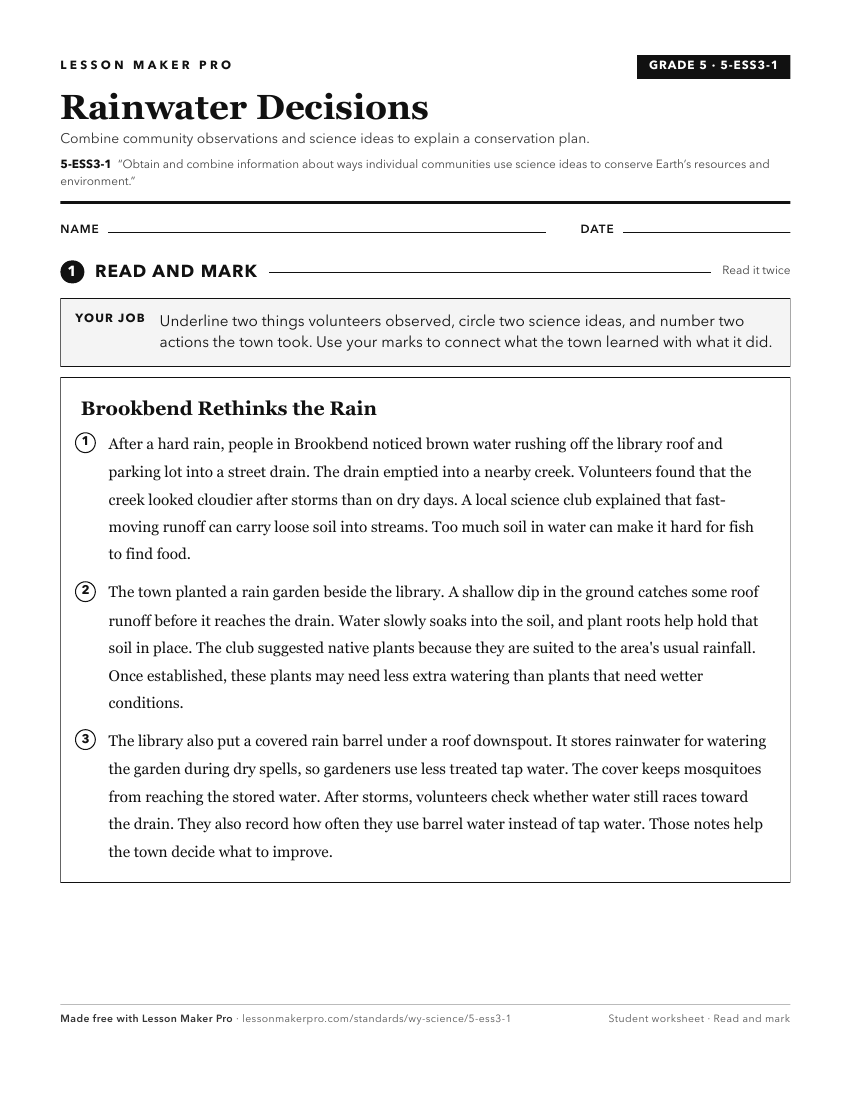
A ready-to-print activity worksheet aligned to 5-ESS3-1, with an answer key for the teacher on its own page. No account needed.
PDF, US Letter, prints cleanly in black and white.
Download the worksheetKeep exploring
Related Standards
- HS-ESS3-3
Use computational tools to illustrate the relationships among management of natural resources, the sustainability of human populations, and biodiversity.
- MS-ETS2-2
Develop a model defining and prioritizing the impacts of human activity on a particular aspect of the environment, identifying positive and negative consequence...
- MS-ESS3-3
Apply scientific principles to design a method for monitoring, evaluating, and managing a human impact on the environment.
Turn this exact standard into a lesson
Grade, subject, topic, and the complete standard are prefilled. Create one free, no account needed.
Also for this standard:Make a WorksheetMake a QuizMake a Sub Lesson