Virginia SOL K.7.c
The Standard
- K.7
- The student will investigate and understand that plants and animals have basic needs and life processes. Key ideas include
offspring of plants and animals are similar but not identical to their parents or to one another.
Virginia Standards of Learning for Science
Teacher's field guide
What This Standard Means
What Students Need to Do
- Students compare young plants or animals with their parents and siblings. They name visible features that are shared and features that differ.
What Mastery Looks Like
- Given a plant or animal family picture, a student identifies one shared feature and one different feature. The student uses details such as color, size, markings, or leaf shape.
Common Misconceptions
- Students may think every baby looks exactly like its parent. They may also think siblings must look alike, or that differences mean they are not related.
How to Assess It
- Show a picture of an adult dog and three puppies. Ask students to point out one feature they share and one feature that differs.
Lesson moves
Ways to Teach It
Give students adult and young animal picture cards, then have them match each family and name one shared and one different feature.
Show three puppies from one litter and ask, "How are they like their parents, and how are they different from each other?"
Play Same or Different with plant family cards, and have students sort each visible trait into the correct labeled hoop.
Have students compare classroom seedlings, noting shared leaf shapes and differences in height, color, or number of leaves.
Free download
Printable K.7.c Worksheet
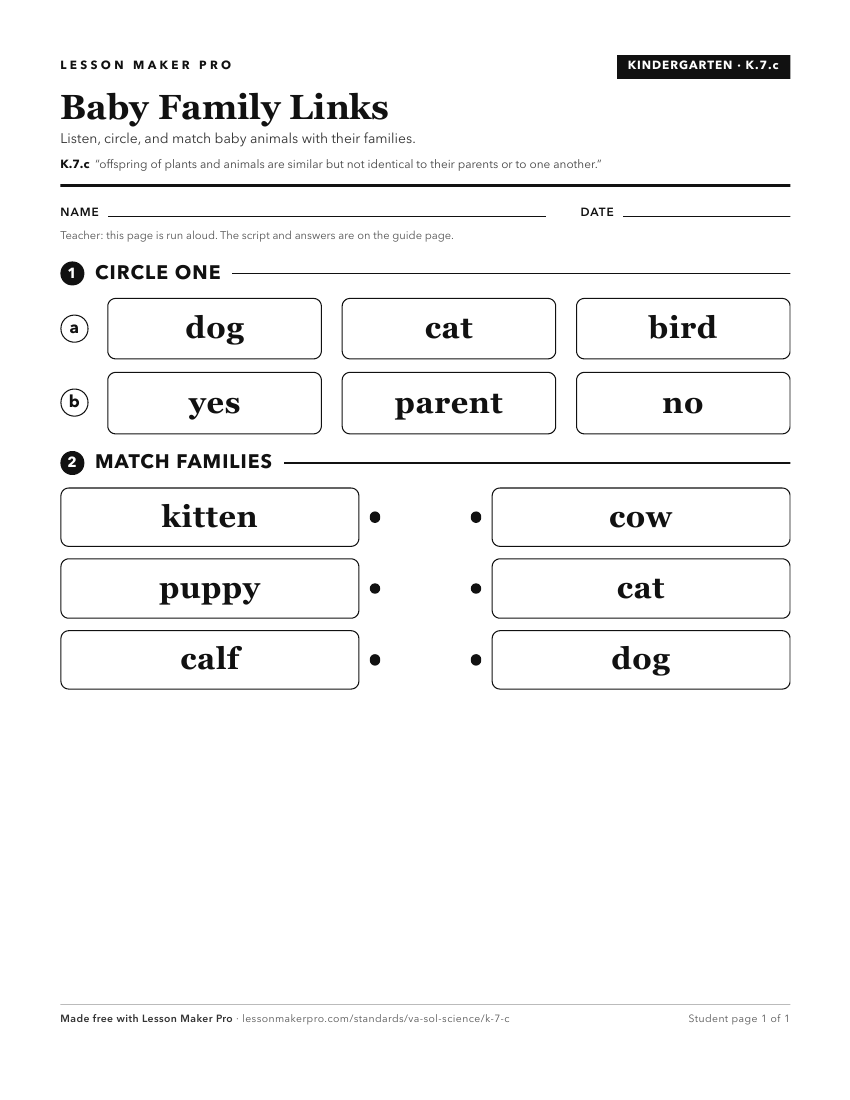
A ready-to-print activity worksheet aligned to K.7.c, with an answer key for the teacher on its own page. No account needed.
PDF, US Letter, prints cleanly in black and white.
Download the worksheetKeep exploring
Related Standards
Turn this exact standard into a lesson
Grade, subject, topic, and the complete standard are prefilled. Create one free, no account needed.
Also for this standard:Make a WorksheetMake a QuizMake a Sub Lesson