Virginia SOL K.7.b
The Standard
- K.7
- The student will investigate and understand that plants and animals have basic needs and life processes. Key ideas include
plants and animals have life cycles
Virginia Standards of Learning for Science
Teacher's field guide
What This Standard Means
What Students Need to Do
- Students recognize that a plant or animal changes through an ordered series of stages as it grows. They sequence simple stage pictures and describe what happens next.
What Mastery Looks Like
- Given familiar examples, a student correctly orders three or four stages from young to adult. The student names visible changes and explains that adults can begin a new cycle.
Common Misconceptions
- Students may order stages by picture size rather than by growth. They may think a seed is not alive, or that a young animal can grow into a different kind of animal.
How to Assess It
- Give each student four mixed picture cards showing a bean plant life cycle. Ask the student to order them and explain how they know.
Lesson moves
Ways to Teach It
Give pairs seed, sprout, young plant, and adult plant cards to order, then have them plant a bean seed in a clear cup.
Show pictures of a chick and hen; ask students to draw what comes between them and explain one change.
Play Life Cycle Relay: teams race to arrange four frog or bean plant stage cards, then explain what happens next.
Observe a classroom bean plant weekly, add dated drawings to a class chart, and predict the next visible change.
Free download
Printable K.7.b Worksheet
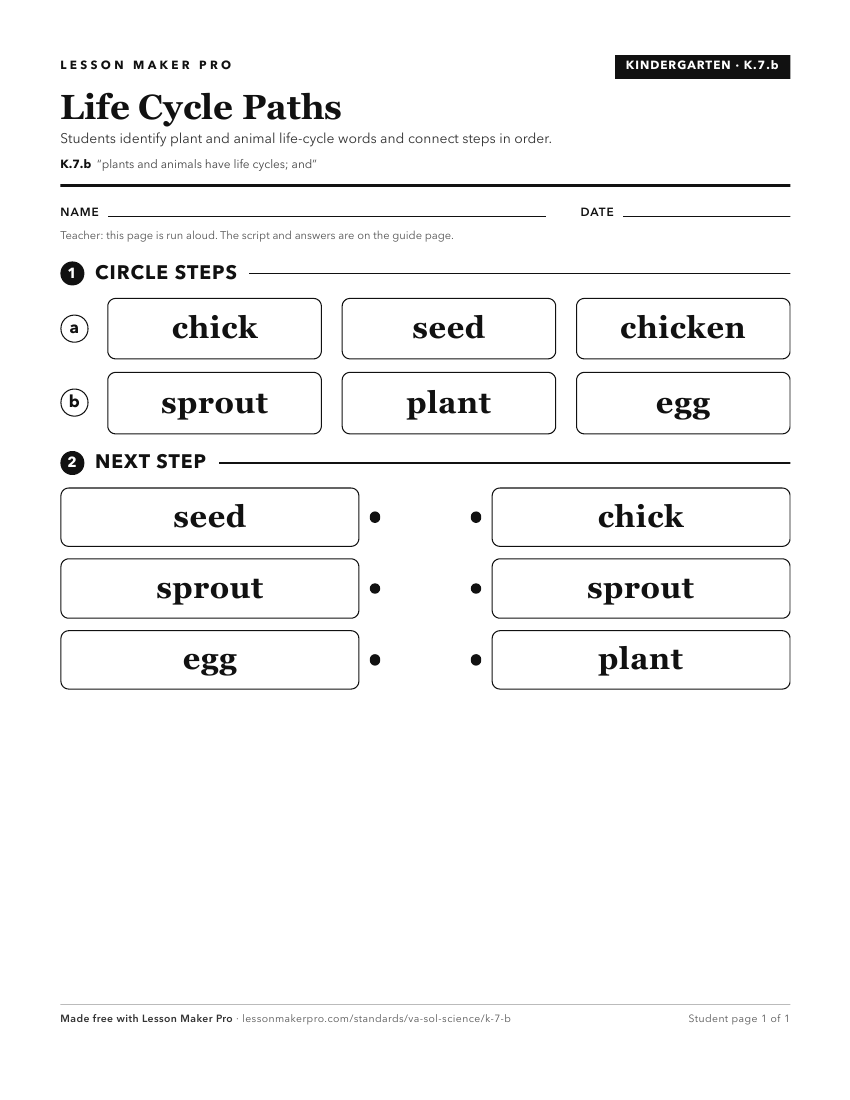
A ready-to-print activity worksheet aligned to K.7.b, with an answer key for the teacher on its own page. No account needed.
PDF, US Letter, prints cleanly in black and white.
Download the worksheetKeep exploring
Related Standards
Turn this exact standard into a lesson
Grade, subject, topic, and the complete standard are prefilled. Create one free, no account needed.
Also for this standard:Make a WorksheetMake a QuizMake a Sub Lesson