Virginia SOL 5.2.d
The Standard
- 5.2
- The student will investigate and understand that energy can take many forms. Key ideas include
energy is conserved.
Virginia Standards of Learning for Science
Teacher's field guide
What This Standard Means
What Students Need to Do
- Students track energy as it moves between objects and changes forms. They explain that the total amount stays the same, even when some becomes less noticeable thermal energy or sound.
What Mastery Looks Like
- Given a device or event, students identify the starting energy and trace where it goes. They account for motion, light, sound, and thermal energy without claiming energy disappeared.
Common Misconceptions
- Students often say energy is used up when a ball stops bouncing or a toy stops moving. They may also confuse conserving energy with simply saving electricity.
How to Assess It
- Give students this exit prompt: “A bouncing ball rises lower each time. Explain where its energy goes and why it does not disappear.”
Lesson moves
Ways to Teach It
Drop a ball from one meter, measure each rebound, then label where its motion energy transfers as sound and thermal energy.
Write an energy story for a flashlight, tracing energy from the battery to light and thermal energy.
Play energy-chain cards: teams arrange battery, electrical, motion, sound, light, and thermal cards to explain a device.
Inspect a playground swing and explain why it slows, including energy transferred to air, supports, sound, and warmer materials.
Free download
Printable 5.2.d Worksheet
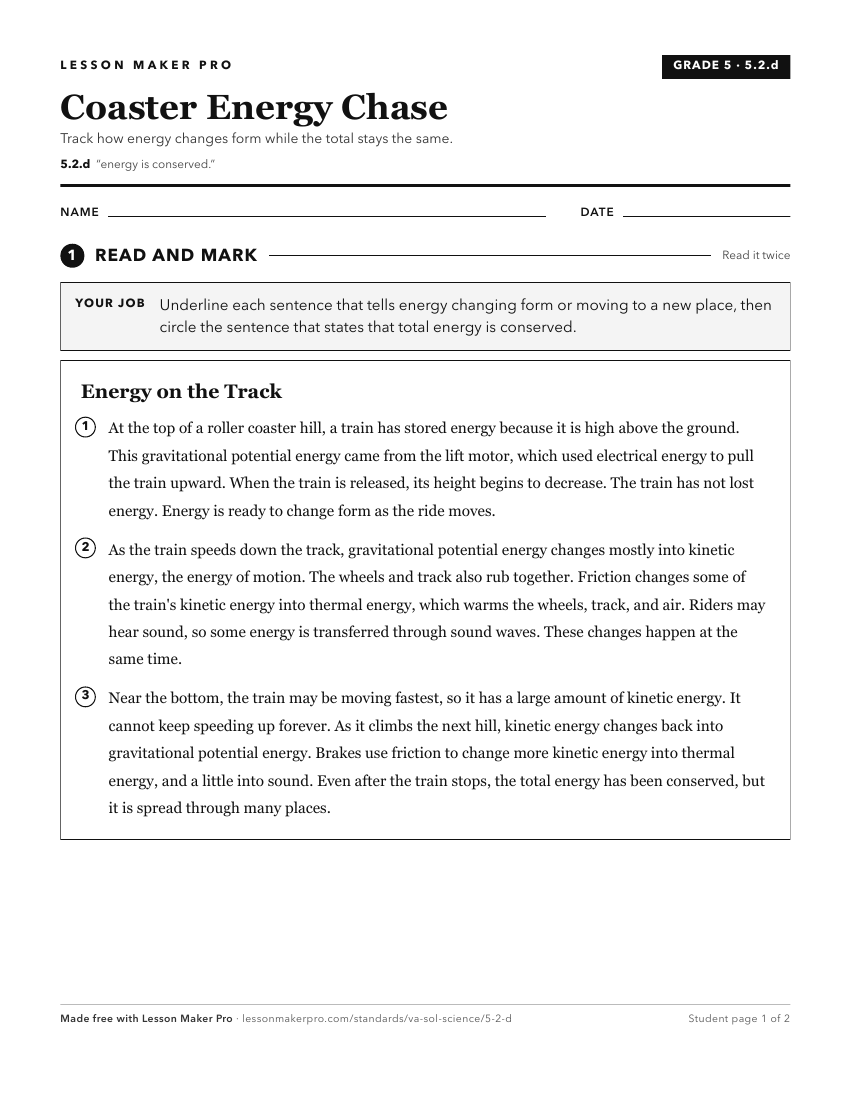
A ready-to-print activity worksheet aligned to 5.2.d, with an answer key for the teacher on its own page. No account needed.
PDF, US Letter, prints cleanly in black and white.
Download the worksheetKeep exploring
Related Standards
Turn this exact standard into a lesson
Grade, subject, topic, and the complete standard are prefilled. Create one free, no account needed.
Also for this standard:Make a WorksheetMake a QuizMake a Sub Lesson