Virginia SOL 2.1.d.iii
The Standard
- 2.1
- The student will demonstrate an understanding of scientific and engineering practices by
constructing and critiquing conclusions and explanations recognize unusual or unexpected results
Virginia Standards of Learning for Science · The student will demonstrate an understanding of scientific and engineering practices by
Teacher's field guide
What This Standard Means
What Students Need to Do
- Students compare results with their prediction and look for results that do not fit the pattern. They use the evidence to write a conclusion and decide whether any result needs to be checked again.
What Mastery Looks Like
- Students can point out an unusual result in a simple data set and explain why it stands out. They do not ignore it, and they suggest repeating the test or checking the measurement.
Common Misconceptions
- Students may think every result must match or that an unusual result is always wrong. They may erase, change, or ignore data that does not support their prediction.
How to Assess It
- Give students these plant heights: 5 cm, 6 cm, 5 cm, and 14 cm. Ask them to circle the unusual result, explain why, and name one next step.
Lesson moves
Ways to Teach It
Have groups drop the same ball four times, measure each bounce, and flag any height that differs greatly from the others.
Ask students to write: One result surprised me because it did not match the pattern. I would check it by...
Play Odd Result Detective with data cards, asking teams to find the result that does not fit and defend their choice.
Compare daily weather temperatures and discuss whether one unusually warm or cold day should change a claim about the whole week.
Free download
Printable 2.1.d.iii Worksheet
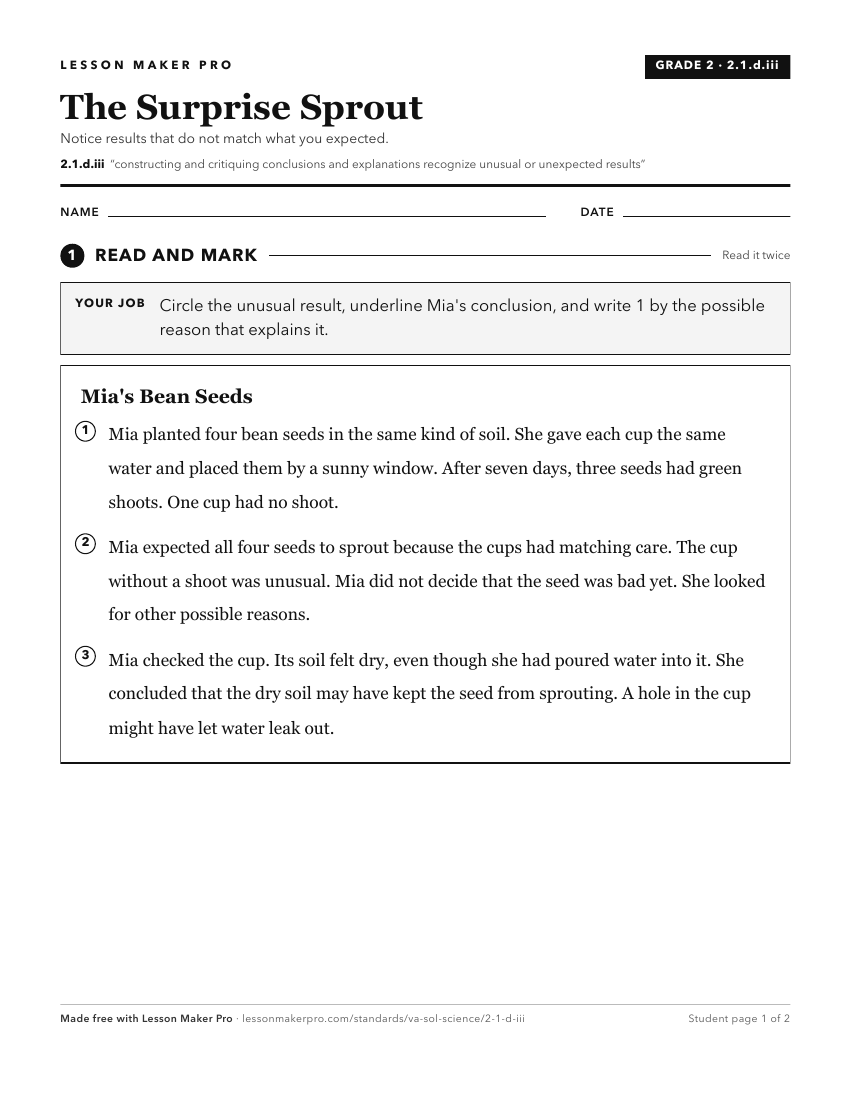
A ready-to-print activity worksheet aligned to 2.1.d.iii, with an answer key for the teacher on its own page. No account needed.
PDF, US Letter, prints cleanly in black and white.
Download the worksheetKeep exploring
Related Standards
Turn this exact standard into a lesson
Grade, subject, topic, and the complete standard are prefilled. Create one free, no account needed.
Also for this standard:Make a WorksheetMake a QuizMake a Sub Lesson