Virginia SOL VS.3.g
The Standard
- VS.3
- The student will apply history and social science skills to explain the causes and effects of events associated with the first permanent English settlement in North America by
identifying the significance of establishing the General Assembly (1619), the first representative legislative body in English America.
Virginia Standards of Learning for History and Social Science
Teacher's field guide
What This Standard Means
What Students Need to Do
- Students explain why the 1619 meeting changed how decisions were made in Virginia. They connect elected burgesses with settlers gaining a limited voice in local laws.
What Mastery Looks Like
- A student can describe voters choosing burgesses to speak and vote for them. The student explains that this began representative lawmaking while Virginia remained under English control.
Common Misconceptions
- Students may think every colonist voted or every assembly member was elected. They may also confuse the 1619 meeting with independence from England, which came much later.
How to Assess It
- Exit ticket: In two sentences, explain why the 1619 assembly mattered using burgesses, laws, and voice.
Lesson moves
Ways to Teach It
Assign 1619 role cards, let eligible voters elect burgesses, then have the burgesses debate and vote on a colony rule.
Write three sentences explaining how elected burgesses gave some colonists a voice and why that voice was limited.
Use a card sort to match 1619 facts with effects, including elected burgesses paired with colonists gaining a voice in local laws.
Compare a current Virginia delegate's role with a burgess's role, then name one shared feature and one difference.
Free download
Printable VS.3.g Worksheet
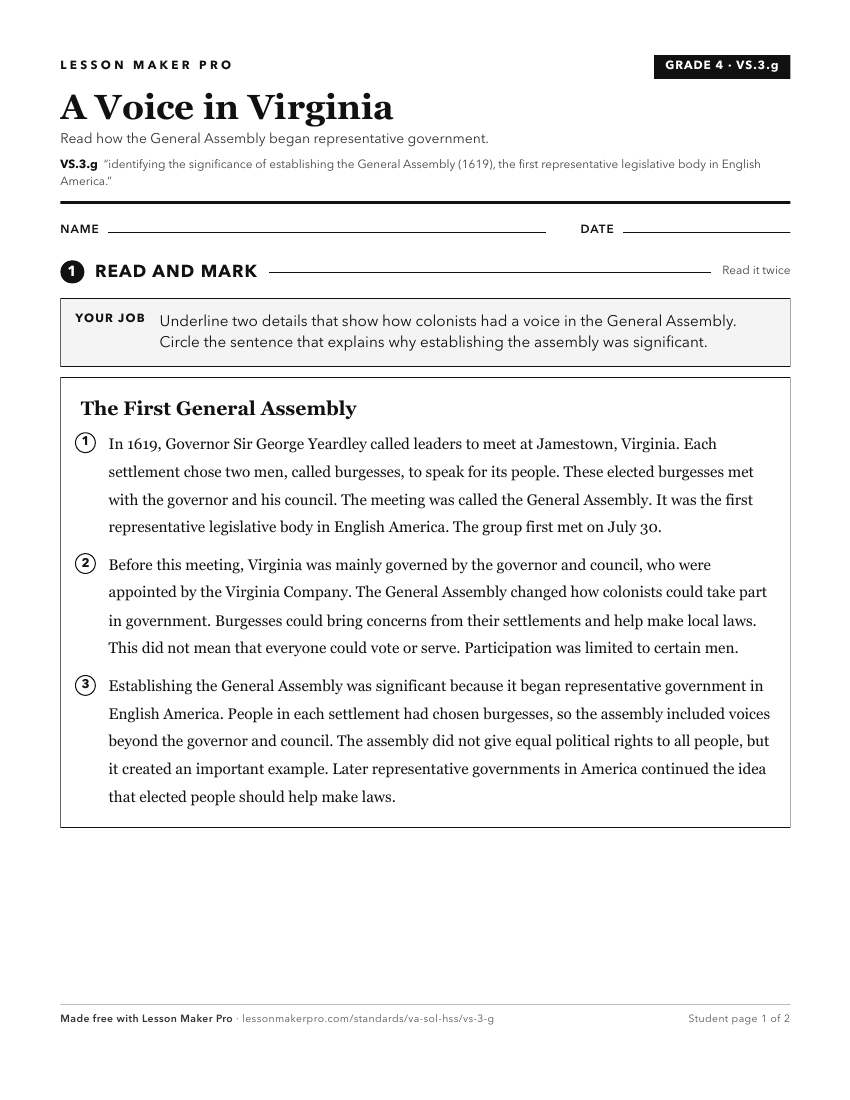
A ready-to-print activity worksheet aligned to VS.3.g, with an answer key for the teacher on its own page. No account needed.
PDF, US Letter, prints cleanly in black and white.
Download the worksheetKeep exploring
Related Standards
- VS.3
The student will apply history and social science skills to explain the causes and effects of events associated with the first permanent English settlement in N...
- 1.4.a
identifying and describing important events and locations throughout the early history of the Commonwealth including, but not limited to Werowocomoco and the fi...
- 2.8.a
identifying reasons for the settlement of the thirteen colonies
- VS.3.c
describing the importance of the Virginia Company of London Charter (April 10, 1606) in establishing the Jamestown colony
Turn this exact standard into a lesson
Grade, subject, topic, and the complete standard are prefilled. Create one free, no account needed.
Also for this standard:Make a WorksheetMake a QuizMake a Sub Lesson