Virginia SOL 3.9.c
The Standard
- 3.9
- The student will apply history and social science skills to explain the basic structure of the United States government by
identifying and describing the three branches of government
Virginia Standards of Learning for History and Social Science
Teacher's field guide
What This Standard Means
What Students Need to Do
- Students name the legislative, executive, and judicial branches and explain each branch’s main job. They connect making, carrying out, and interpreting laws to the correct branch.
What Mastery Looks Like
- Given a short government scenario, a student can identify the branch involved and explain why. The student consistently matches Congress, the president, and the courts to their roles.
Common Misconceptions
- Students may think the president makes laws or that courts carry them out. They may also confuse branches with federal, state, and local levels of government.
How to Assess It
- Use an exit ticket: “A new law is written, signed, and later reviewed in court. Name the branch responsible for each action.”
Lesson moves
Ways to Teach It
Give groups labeled branch folders and cards showing government actions, then have students sort each card into the correct folder.
Ask students to write: “Why should making laws, carrying out laws, and interpreting laws be separate jobs?”
Play Branch Match by having students pair official cards, such as Congress or courts, with matching job cards.
Read a child-friendly news article about a bill, then highlight where lawmakers, the president, or courts appear.
Free download
Printable 3.9.c Worksheet
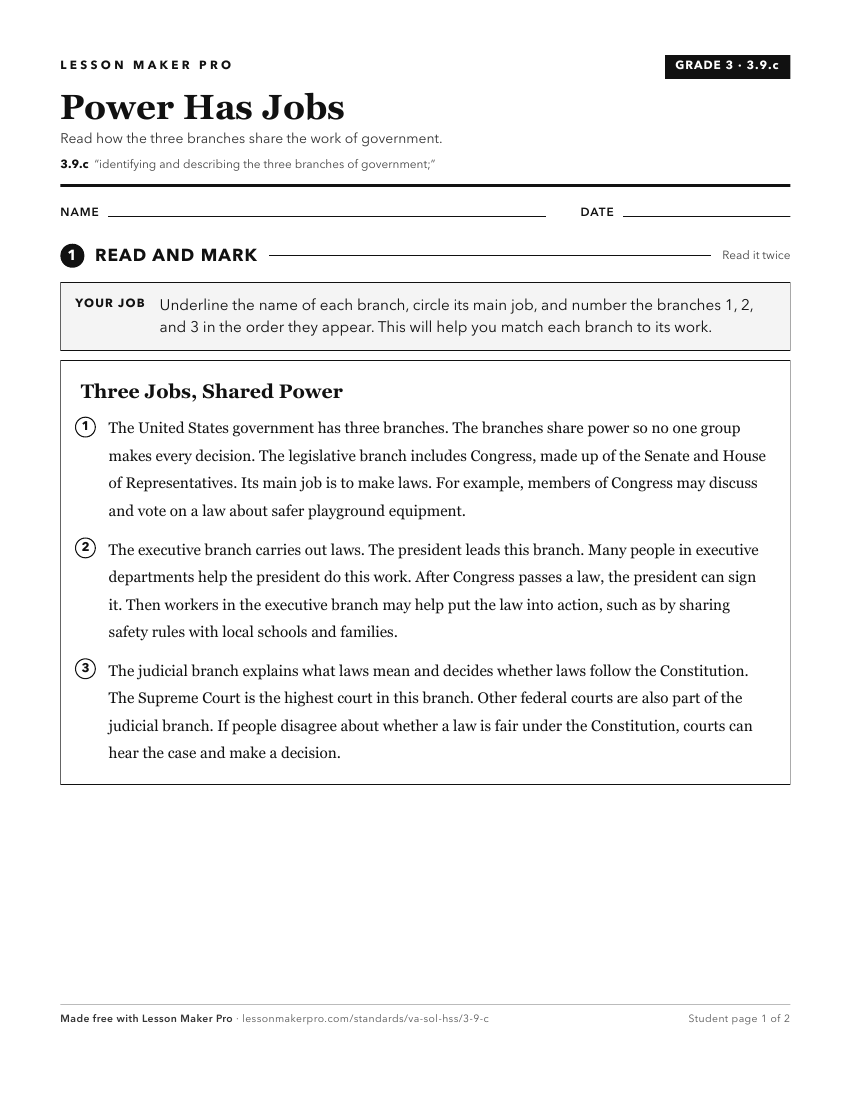
A ready-to-print activity worksheet aligned to 3.9.c, with an answer key for the teacher on its own page. No account needed.
PDF, US Letter, prints cleanly in black and white.
Download the worksheetKeep exploring
Related Standards
Turn this exact standard into a lesson
Grade, subject, topic, and the complete standard are prefilled. Create one free, no account needed.
Also for this standard:Make a WorksheetMake a QuizMake a Sub Lesson