Virginia SOL 3.7.c
The Standard
- 3.7
- The student will apply history and social science skills to describe the geographic, political, economic, and social structures and innovations of ancient Rome by
identifying and explaining representative democracy
Virginia Standards of Learning for History and Social Science
Teacher's field guide
What This Standard Means
What Students Need to Do
- Students describe how citizens choose leaders through elections to make government decisions for the community. They explain how citizens can share concerns and hold elected leaders responsible.
What Mastery Looks Like
- A student can explain the roles of voters and elected leaders using a clear example. The student can distinguish an election of representatives from a direct vote on an issue.
Common Misconceptions
- Students may think elected leaders can make any choice they want without listening to citizens. They may also confuse voting for a representative with citizens voting directly on every government decision.
How to Assess It
- Give students this exit prompt: “A town elects five people to make local laws. Explain how the citizens and the five elected people take part.”
Lesson moves
Ways to Teach It
Hold a class election for two representatives, then have them gather classmates’ views and choose between three recess equipment options.
Ask: Why might a large town elect representatives instead of having every person vote on every decision?
Play “Direct or Representative?” and have teams sort decision cards by whether citizens vote themselves or elected leaders decide.
Use a local council member’s webpage to identify who elected that person, one issue handled, and how citizens can share opinions.
Free download
Printable 3.7.c Worksheet
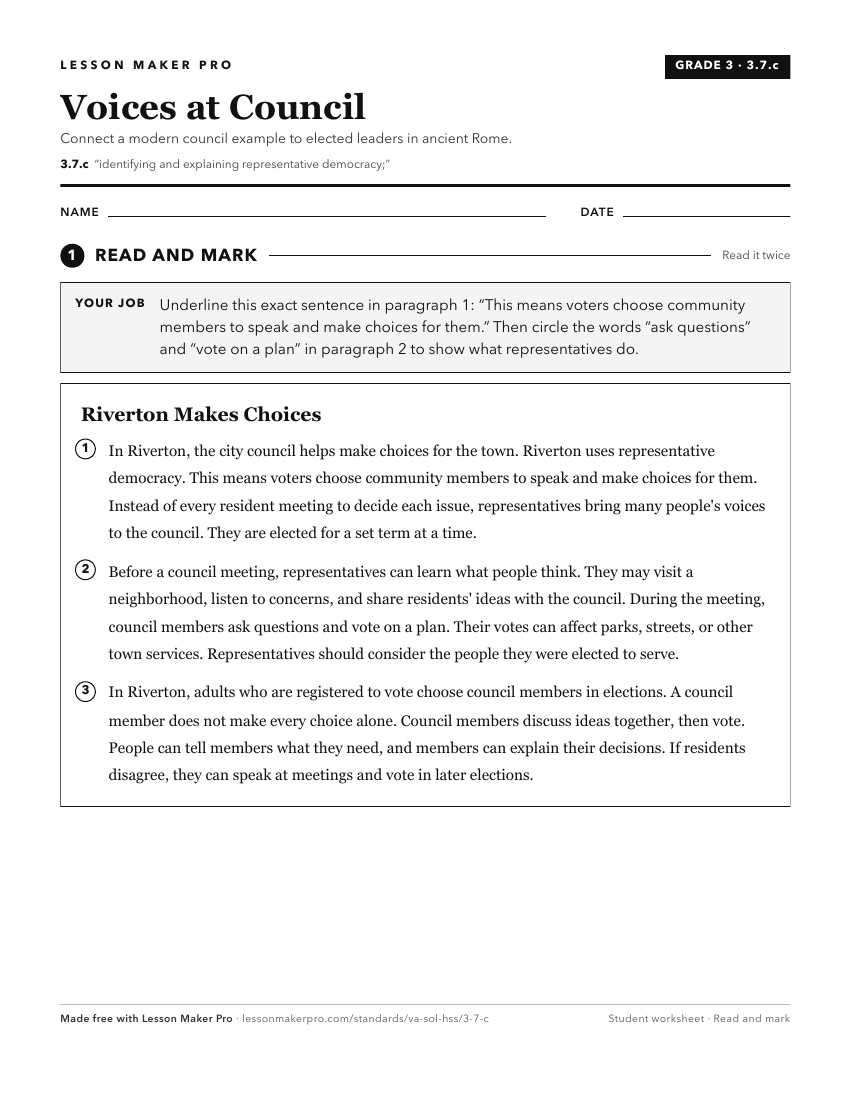
A ready-to-print activity worksheet aligned to 3.7.c, with an answer key for the teacher on its own page. No account needed.
PDF, US Letter, prints cleanly in black and white.
Download the worksheetKeep exploring
Related Standards
Turn this exact standard into a lesson
Grade, subject, topic, and the complete standard are prefilled. Create one free, no account needed.
Also for this standard:Make a WorksheetMake a QuizMake a Sub Lesson