Virginia SOL 3.6.c
The Standard
- 3.6
- The student will apply history and social science skills to describe the geographic, political, economic, and social structures and innovations of ancient Greece by
identifying and explaining direct democracy
Virginia Standards of Learning for History and Social Science
Teacher's field guide
What This Standard Means
What Students Need to Do
- Students explain that eligible citizens make government decisions by voting on issues themselves. They distinguish that process from electing representatives to decide for them.
What Mastery Looks Like
- A student can label a government scenario as direct democracy and explain why. They can state who votes and what decision the vote settles.
Common Misconceptions
- Students may think any election is direct democracy. They may confuse voting on an issue with voting for a representative. They may assume everyone in ancient Athens could participate.
How to Assess It
- Exit ticket: A town’s eligible citizens vote on whether to build a park. Is this direct or representative democracy? Explain who makes the decision.
Lesson moves
Ways to Teach It
Hold a class vote on two recess equipment choices, then name who made the final decision and how.
Ask students to write how voting directly on a class rule differs from electing a class representative.
Sort scenario cards into direct democracy and representative democracy, then defend one choice to a partner.
Show a sample local ballot question and have students explain how citizens would make the decision.
Free download
Printable 3.6.c Worksheet
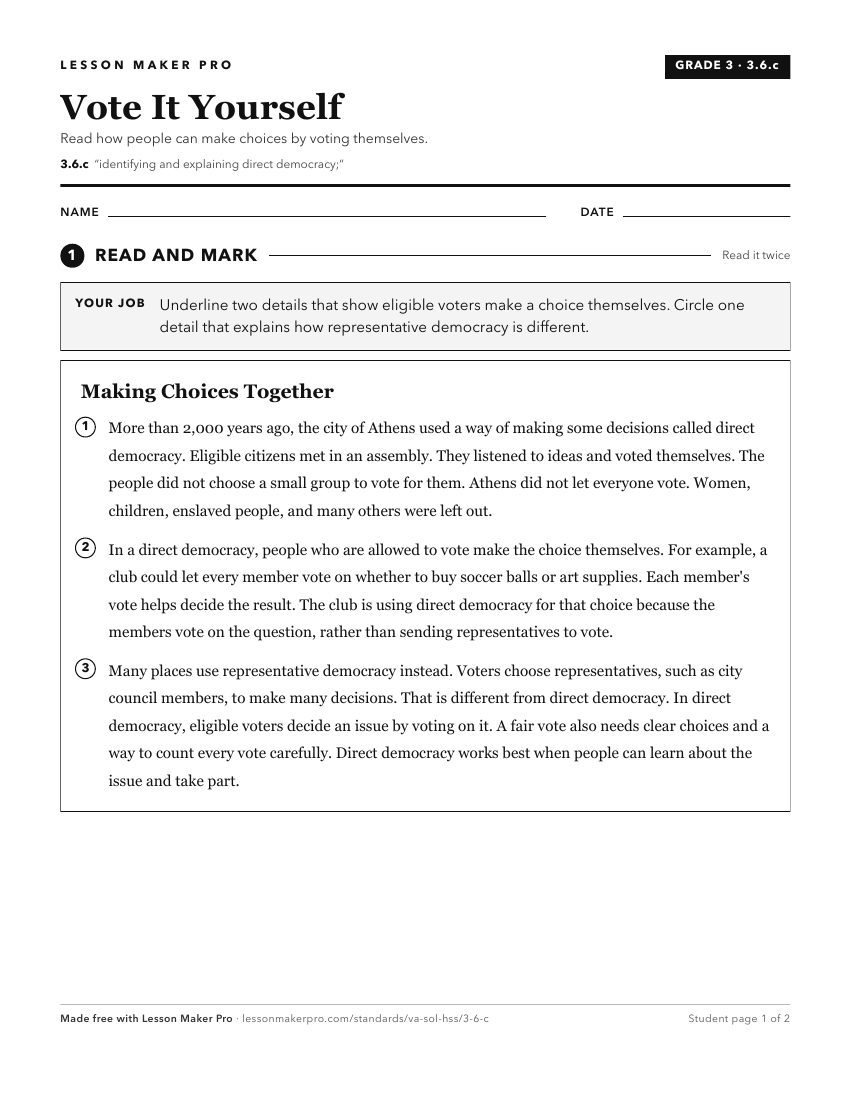
A ready-to-print activity worksheet aligned to 3.6.c, with an answer key for the teacher on its own page. No account needed.
PDF, US Letter, prints cleanly in black and white.
Download the worksheetKeep exploring
Related Standards
Turn this exact standard into a lesson
Grade, subject, topic, and the complete standard are prefilled. Create one free, no account needed.
Also for this standard:Make a WorksheetMake a QuizMake a Sub Lesson