Virginia SOL 2.8.b
The Standard
- 2.8
- The student will apply history and social science skills to understand the principles of American democracy and relate them to the founding of the nation by
explaining the relationships between the colonies and Great Britain
Virginia Standards of Learning for History and Social Science
Teacher's field guide
What This Standard Means
What Students Need to Do
- Students describe how Great Britain governed the colonies, collected taxes, controlled trade, and provided protection. They explain how disputes over laws and representation pushed many colonists toward independence.
What Mastery Looks Like
- Students can connect a British action, such as taxing tea, to a colonial response, such as protest or boycott. They use because and as a result to explain the link.
Common Misconceptions
- Students may think the colonies were always separate from Great Britain or that every colonist wanted independence. They may also think colonists opposed all taxes, rather than taxes imposed without colonial representation.
How to Assess It
- Give students this prompt: “Great Britain taxed the colonies, but colonists had no representatives in Parliament. Explain how colonists might respond and why.”
Lesson moves
Ways to Teach It
Give pairs British action and colonial response cards to match, then have them explain each match using because.
Ask students to write: “Was it fair for Parliament to tax colonists who had no representatives there? Why or why not?”
Play a cause-and-effect relay where teams match taxes, trade rules, protests, boycotts, and demands for independence.
Create a class rule without student input, then compare student reactions with colonial concerns about laws and representation.
Free download
Printable 2.8.b Worksheet
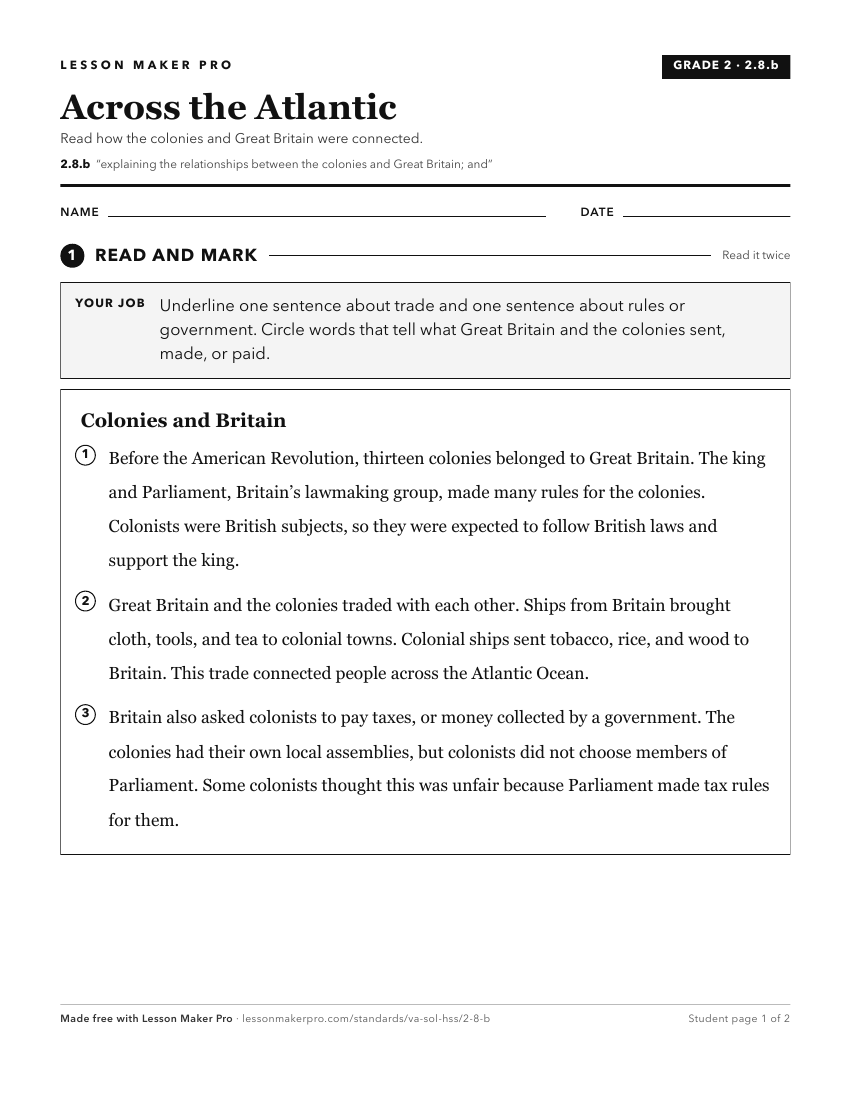
A ready-to-print activity worksheet aligned to 2.8.b, with an answer key for the teacher on its own page. No account needed.
PDF, US Letter, prints cleanly in black and white.
Download the worksheetKeep exploring
Related Standards
- USI.5.d
explaining the specialization and interdependence of the regions
- VS.5.a
explaining the principles and events that convinced the colonists to declare independence and go to war with Great Britain, as expressed in the Declaration of I...
- USI.7.d
explaining the Three-Fifths Compromise
- USI.5.e
explaining the changing political and economic relationships between the colonies and Great Britain including, but not limited to representative government and ...
Turn this exact standard into a lesson
Grade, subject, topic, and the complete standard are prefilled. Create one free, no account needed.
Also for this standard:Make a WorksheetMake a QuizMake a Sub Lesson