Virginia SOL 2.5.c
The Standard
- 2.5
- The student will use history and social science skills to identify the geographic location, use of resources, and contributions of Indigenous people past and present, including
Indigenous nations and tribes of the Southwest
Virginia Standards of Learning for History and Social Science
Teacher's field guide
What This Standard Means
What Students Need to Do
- Students identify Indigenous nations of the Southwest, such as the Pueblo peoples, Hopi, and Navajo. They explain how people used local land, water, and materials for homes, food, and daily life.
What Mastery Looks Like
- Students locate the Southwest on a map and connect the dry climate to farming methods and adobe homes. They recognize that these are distinct, living communities with traditions that continue today.
Common Misconceptions
- Students may think all Indigenous peoples lived in tipis or shared one culture. They may also speak only in the past tense or assume farming was impossible in a dry climate.
How to Assess It
- Show a picture of an adobe home and a Southwest map. Ask, “How does this home fit the environment, and who might live in this region?”
Lesson moves
Ways to Teach It
Build a small adobe-style home from clay blocks, then label the local materials and weather conditions it suits.
Compare historical and current photos of Pueblo communities, then write one thing that continued and one thing that changed.
Sort picture cards showing tipis, adobe homes, corn, bison, irrigation, and canoes into Southwest and not Southwest groups.
Use a current map to locate Hopi lands, the Navajo Nation, and Pueblo communities, noting that each is a distinct nation.
Free download
Printable 2.5.c Worksheet
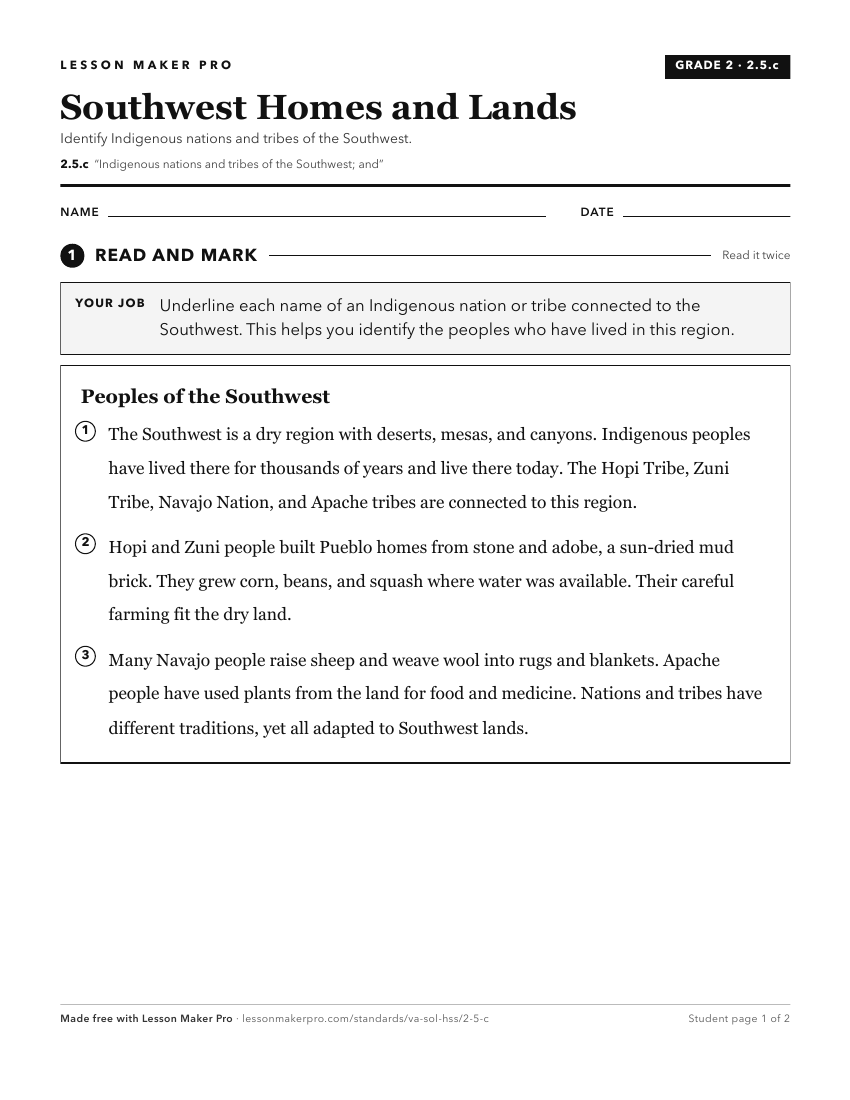
A ready-to-print activity worksheet aligned to 2.5.c, with an answer key for the teacher on its own page. No account needed.
PDF, US Letter, prints cleanly in black and white.
Download the worksheetKeep exploring
Related Standards
Turn this exact standard into a lesson
Grade, subject, topic, and the complete standard are prefilled. Create one free, no account needed.
Also for this standard:Make a WorksheetMake a QuizMake a Sub Lesson