Virginia SOL 2.3.e
The Standard
- 2.3
- The student will apply history and social science skills to explain how communities honor local and national traditions and recognize designated Virginia holidays including, but not limited to
Thanksgiving Day
Virginia Standards of Learning for History and Social Science
Teacher's field guide
What This Standard Means
What Students Need to Do
- Students explain why Americans observe Thanksgiving and connect the holiday to harvest gatherings, gratitude, and sharing. They distinguish the historical story from family traditions practiced today.
What Mastery Looks Like
- A student can give a simple account of the 1621 harvest gathering involving the Wampanoag and English colonists. The student can name modern traditions and explain how they may differ among families.
Common Misconceptions
- Students may call the 1621 gathering the first Thanksgiving or assume it looked like a modern holiday dinner. They may also think all families celebrate in the same way.
How to Assess It
- Give students this exit prompt: “Why do people observe Thanksgiving, and how is Thanksgiving today different from the 1621 harvest gathering?”
Lesson moves
Ways to Teach It
Sort picture cards showing harvest foods, shared meals, gratitude, and modern traditions into historical gathering or Thanksgiving today.
Ask students to write two sentences explaining how people can show gratitude without celebrating Thanksgiving in the same way.
Play a fact-or-tradition game using statements such as “The Wampanoag attended” and “Families watch football.”
Compare two grocery store Thanksgiving ads, then identify foods or customs that may not appear in every family celebration.
Free download
Printable 2.3.e Worksheet
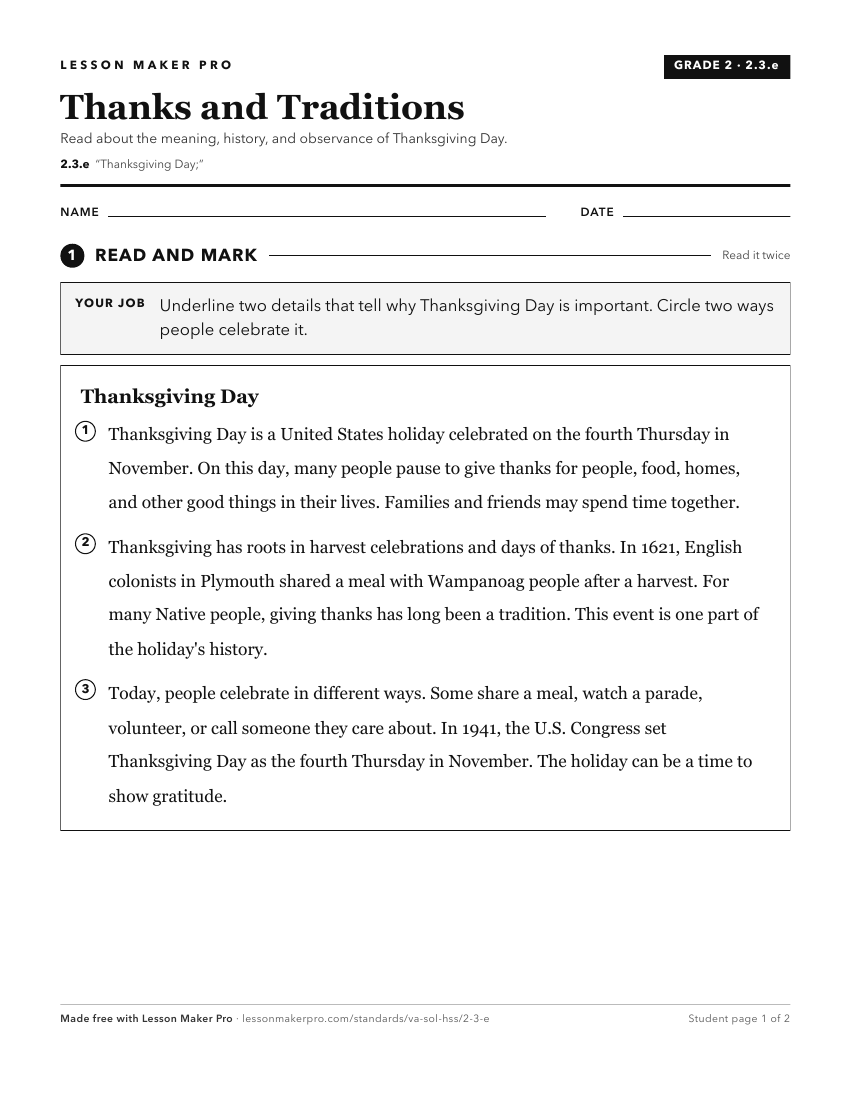
A ready-to-print activity worksheet aligned to 2.3.e, with an answer key for the teacher on its own page. No account needed.
PDF, US Letter, prints cleanly in black and white.
Download the worksheetKeep exploring
Related Standards
Turn this exact standard into a lesson
Grade, subject, topic, and the complete standard are prefilled. Create one free, no account needed.
Also for this standard:Make a WorksheetMake a QuizMake a Sub Lesson