Virginia SOL 9.RI.2.C
The Standard
Analyze how authors use rhetorical devices to create ethos, logos, and pathos and impact the reader.
Virginia Standards of Learning for English · Craft and Style
Teacher's field guide
What This Standard Means
What Students Need to Do
- Students identify rhetorical choices in informational texts and connect them to credibility, logic, or emotion. They explain how those choices influence a reader's response or judgment.
What Mastery Looks Like
- Students can point to specific wording, such as repetition, statistics, expert testimony, or loaded language. They connect that choice to an appeal and explain how it may shape trust, reasoning, or emotion.
Common Misconceptions
- Students may treat ethos, logos, and pathos as devices rather than types of appeals. They may label any fact as logos or any emotional word as pathos without explaining its effect. They may also assume a passage uses only one appeal.
How to Assess It
- Give students a short editorial paragraph. Ask them to identify one rhetorical device, name the appeal it supports, and explain its likely effect on readers.
Lesson moves
Ways to Teach It
Give groups quote cards to sort by appeal, then have them underline the device and write its likely effect on a reader.
Ask students to explain which appeal would best persuade their school principal to change a rule and why.
Play Rhetorical Device Match, where teams pair short passages with device cards and defend each match for a point.
Compare two advertisements for the same product, then mark how each uses credibility, evidence, and emotion to influence buyers.
Free download
Printable 9.RI.2.C Worksheet
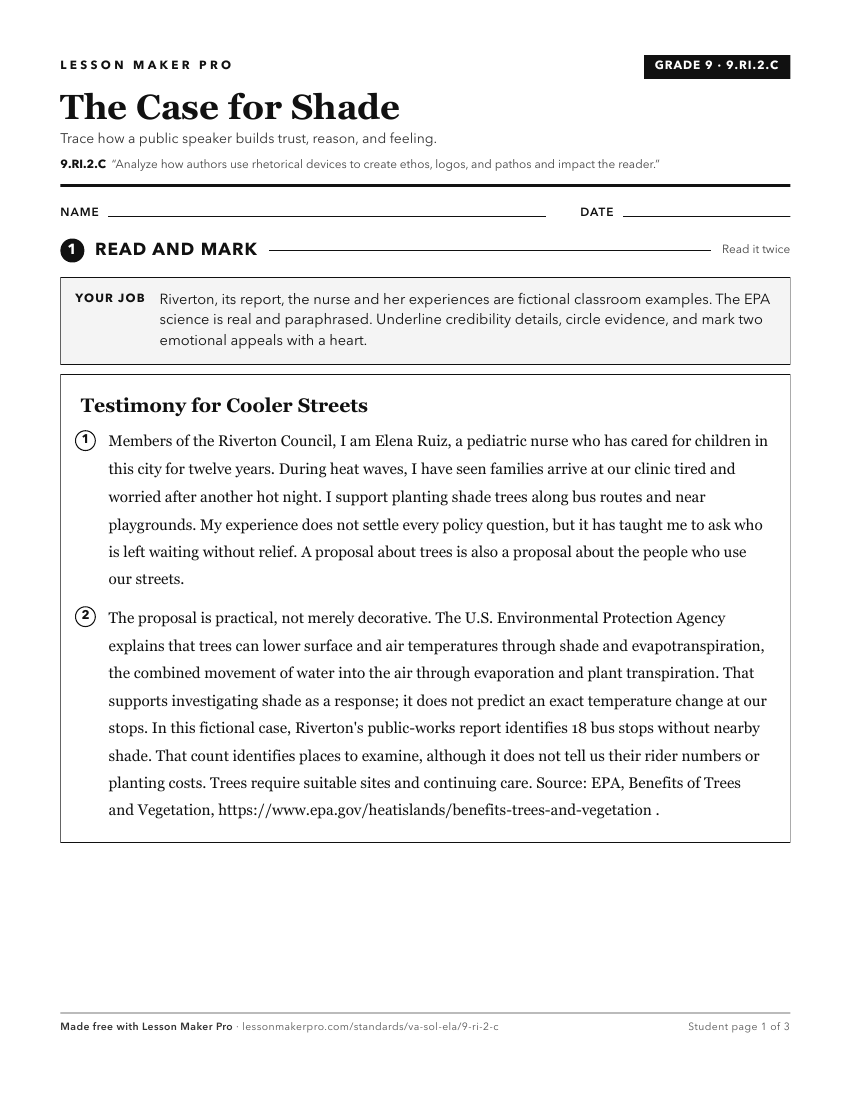
A ready-to-print activity worksheet aligned to 9.RI.2.C, with an answer key for the teacher on its own page. No account needed.
PDF, US Letter, prints cleanly in black and white.
Download the worksheetKeep exploring
Related Standards
- 10.RL.2.B
Analyze how authors use literary devices and figurative language, including allusion, allegory, and paradox to impact the meaning of the text.
- 9.RI.2.B
Analyze an author’s word choice and use of rhetorical devices to persuade or convince an audience.
- 12.RL.2.B
Interpret and analyze how authors create intended effects using diction and impact the tone and mood of the story, play, or poem.
- 10.RI.2.C
Analyze the author’s purpose and impact of literary techniques such as hyperbole, analogy, and paradox as they appear in texts.
Turn this exact standard into a lesson
Grade, subject, topic, and the complete standard are prefilled. Create one free, no account needed.
Also for this standard:Make a WorksheetMake a QuizMake a Sub Lesson