Virginia SOL 6.C.2.A.v
The Standard
Using nonverbal skills, such as proper posture and stance, gestures, and eye movement to enhance the overall message.
Virginia Standards of Learning for English · Speaking and Presentation of Ideas
Teacher's field guide
What This Standard Means
What Students Need to Do
- Students give a short report or opinion using body language that supports their words. They control posture, gestures, and where they look while speaking.
What Mastery Looks Like
- A student stands steadily, faces the audience, and looks up from notes regularly. Gestures match key points and make the message easier to follow.
Common Misconceptions
- Students may stare at notes, shift their weight, or use gestures that distract from the message. Some think strong delivery means constant eye contact or exaggerated movement.
How to Assess It
- Give students 45 seconds to present an opinion about school lunch. Check for steady posture, one purposeful gesture, and eye movement across the audience.
Lesson moves
Ways to Teach It
Have pairs record 30-second talks, then identify one posture, gesture, or eye movement that strengthened each message.
Show a silent presentation clip and ask students to write what the speaker’s body language communicates.
Play gesture match, where students draw message cards and choose one natural gesture to emphasize each idea.
Compare body language used by a weather reporter, coach, and student speaker, then explain how each adjusts for audience and purpose.
Free download
Printable 6.C.2.A.v Worksheet
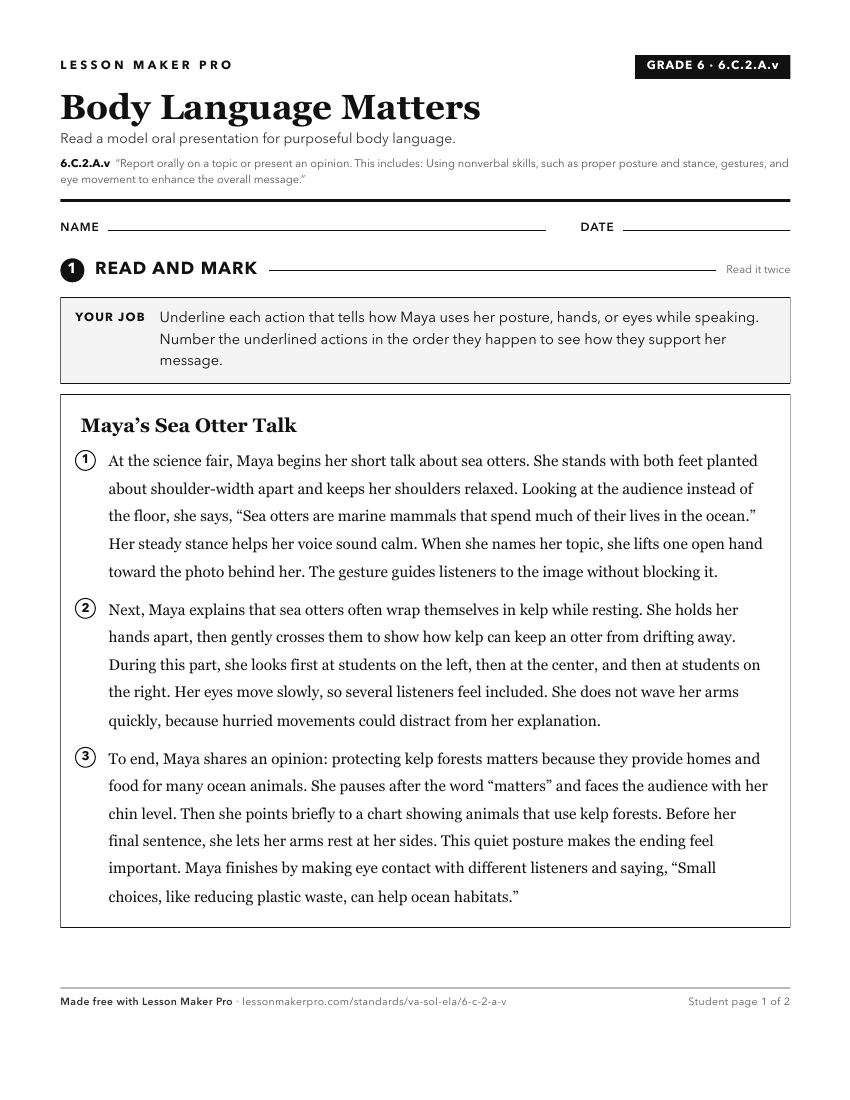
A ready-to-print activity worksheet aligned to 6.C.2.A.v, with an answer key for the teacher on its own page. No account needed.
PDF, US Letter, prints cleanly in black and white.
Download the worksheetKeep exploring
Related Standards
- 5.C.2.A.iii
Using facial expressions and gestures to support, accentuate, or dramatize the message during oral presentations.
- 6.C.2.A.iv
Using verbal communication skills, such as volume, tone, and enunciation to enhance the overall message.
- 10.C.2.A.ii
Using active listening and speaking strategies effectively with awareness of verbal and nonverbal cues (e.g., appropriate facial expressions and posture).
- 7.C.2.A.iii
Adjusting verbal and nonverbal communication skills appropriate to audience, topic, and purpose to enhance the overall message.
Turn this exact standard into a lesson
Grade, subject, topic, and the complete standard are prefilled. Create one free, no account needed.
Also for this standard:Make a WorksheetMake a QuizMake a Sub Lesson