Virginia SOL 3.R.1.E
The Standard
Avoid plagiarism, giving credit to sources of information (title and author when available).
Virginia Standards of Learning for English
Teacher's field guide
What This Standard Means
What Students Need to Do
- Students recognize when facts, words, or ideas come from another person or text. They put information into their own words and identify the source by title and author when available.
What Mastery Looks Like
- Students can tell which ideas came from a source and which ideas are their own. They paraphrase borrowed information and name the title and author when those details are available.
Common Misconceptions
- Students may think changing one or two words makes copied text their own. They may list only a website address, forget the author, or assume familiar facts never need source credit.
How to Assess It
- Give students a short nonfiction paragraph with a title and author. Ask them to write one fact in their own words and add a credit line naming the source.
Lesson moves
Ways to Teach It
Place fact cards beside book covers, then have students match each fact to its source and write a title-and-author credit line.
Ask students to explain in writing, "Why should a reader know where your information came from?"
Play Source Credit Fix-It by showing incomplete credit lines and awarding points when teams add the missing title or author.
Examine a museum sign, news article, or recipe page and identify how it names the person or source that supplied information.
Free download
Printable 3.R.1.E Worksheet
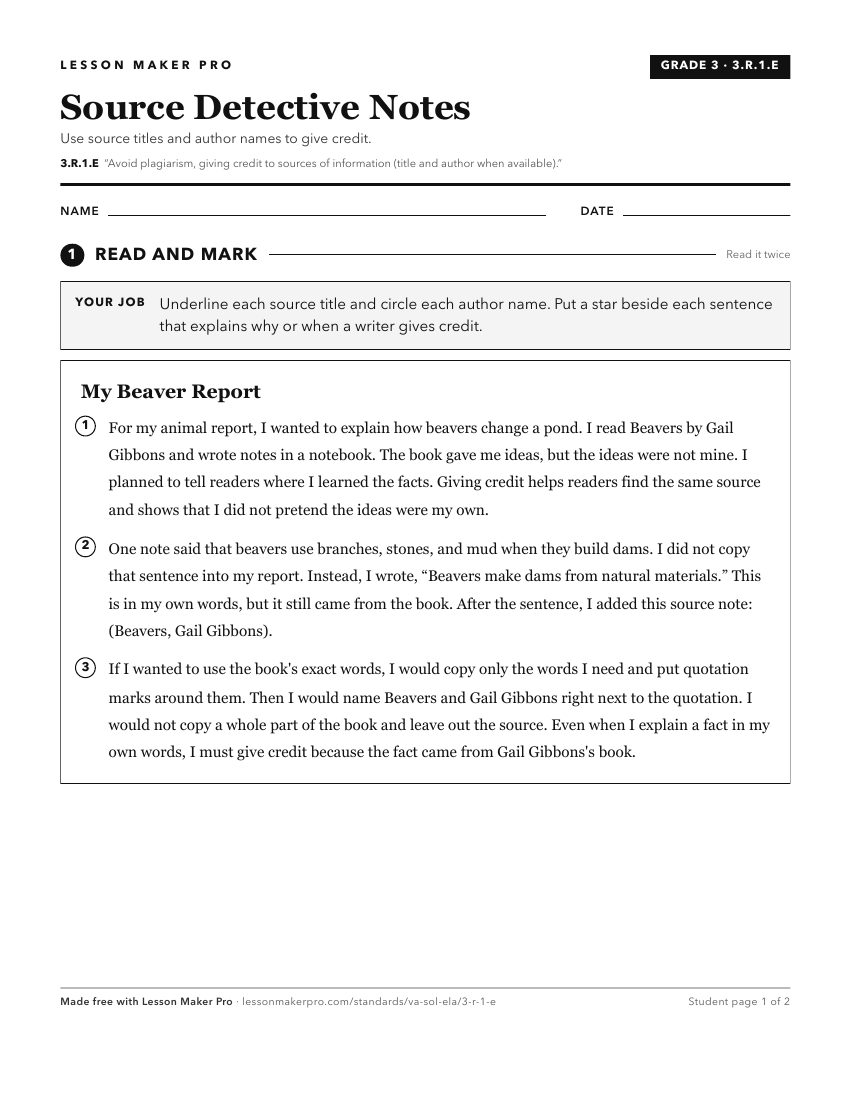
A ready-to-print activity worksheet aligned to 3.R.1.E, with an answer key for the teacher on its own page. No account needed.
PDF, US Letter, prints cleanly in black and white.
Download the worksheetKeep exploring
Related Standards
- 7.R.1.F
Give credit for information quoted or paraphrased, using standard citations (e.g., author, article title and webpage, and publication date).
- 4.R.1.F
Avoid plagiarism and give proper credit by providing citations whenever using another person’s media, facts, ideas, graphics, music, and direct quotations.
- 5.R.1.F
Avoid plagiarism and give proper credit by providing citations whenever using another person’s media, facts, ideas, graphics, music, and direct quotations.
- 6.R.1.F
Give credit for information quoted or paraphrased using standard citations (e.g., author, article title, webpage, and publication date).
Turn this exact standard into a lesson
Grade, subject, topic, and the complete standard are prefilled. Create one free, no account needed.
Also for this standard:Make a WorksheetMake a QuizMake a Sub Lesson