Virginia SOL 12.C.2
SOL Standard (Knowledge and Skills Cluster)
Speaking and Presentation of Ideas
Virginia Standards of Learning for English
Cluster contents
Knowledge and Skills in This Standard
12.C.2 is a Standards of Learning standard. These are the knowledge and skills expectations under it.
- 12.C.2.A.i
Selecting the modes and purposes for presentations and synthesizing multiple streams of information.
- 12.C.2.A.ii
Choosing appropriate vocabulary, language, and tone for a selected topic, purpose, context, and audience when speaking and presenting.
- 12.C.2.A.iii
Incorporating various rhetorical devices to enhance purpose and strengthening clarity of ideas.
- 12.C.2.A.iv
Anticipating and addressing alternative or opposing perspectives and counterclaims and rebuttals, as appropriate.
- 12.C.2.A.v
Monitoring audience engagement effectively and adjusting delivery accordingly during presentations.
- 12.C.2.A.vi
Evaluating the content and effectiveness of one's presentations, including the introduction, organization, strengths/weaknesses and evidence and reasoning, and ...
- 12.C.2.B
Memorize and recite an excerpt or monologue from a dramatic work portraying the emotions and motivations of the character through voice and body language that c...
Teacher's field guide
What This Cluster Means
What Students Need to Do
- Students plan and deliver oral presentations that combine evidence, visuals, and ideas from several sources. They match vocabulary, tone, rhetorical choices, and responses to the audience and purpose, then adjust when listeners seem confused or disengaged. They also memorize and perform a dramatic excerpt, then evaluate their own organization, evidence, delivery, and impact.
What Mastery Looks Like
- A student presents a focused claim with a clear opening, logical structure, relevant evidence, and a strong conclusion. The student responds to opposing views, adjusts after noticing audience reactions, and explains specific strengths and weaknesses afterward. In performance, voice, pacing, expression, and movement reveal the character’s emotions and motives.
Common Misconceptions
- Students may read slides aloud, use the same tone for every audience, or add visuals that do not support the message. They may mention a counterclaim without answering it, rush through memorized lines, or mistake volume for emotional expression.
How to Assess It
- Have students give a two-minute presentation with one visual, one rhetorical device, one counterclaim, and supporting evidence. Signal confusion midway, then note how they clarify and adjust.
Lesson moves
Ways to Teach It
Mark a printed monologue for pauses, emphasis, movement, and emotion, then rehearse it with a partner who gives feedback.
Write one minute of opening remarks for two audiences, classmates and school board members, then explain each language choice.
Play audience curveball cards during short presentations, requiring speakers to address confusion, disagreement, or lost attention without stopping.
Create a three-minute school improvement pitch using survey data, one visual, a counterclaim, and a direct request to administrators.
Free download
Printable 12.C.2 Worksheet
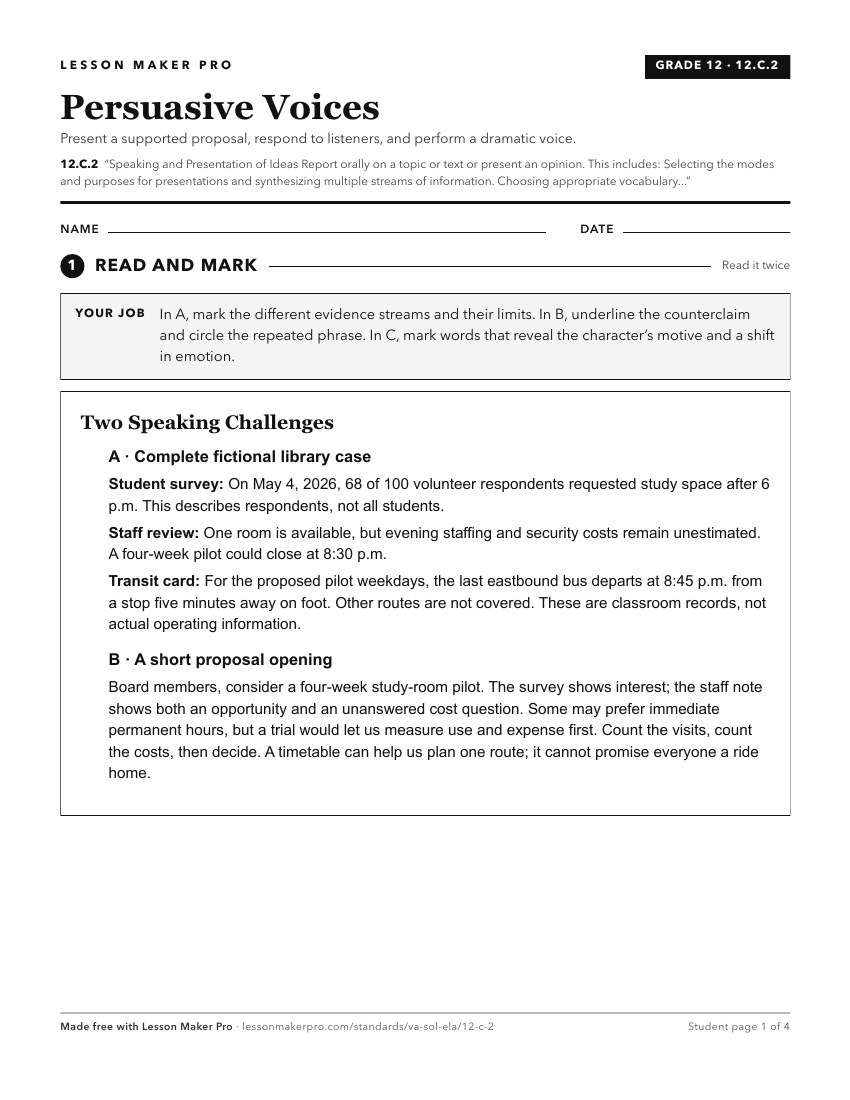
A ready-to-print activity worksheet aligned to 12.C.2, with an answer key for the teacher on its own page. No account needed.
PDF, US Letter, prints cleanly in black and white.
Download the worksheetKeep exploring
Related Standards
Turn this cluster into a lesson
Grade, subject, and topic are prefilled; the lesson picks the standards under this heading. Create one free, no account needed.
Also for this cluster:Make a WorksheetMake a QuizMake a Sub Lesson