Virginia SOL 11.C.2
SOL Standard (Knowledge and Skills Cluster)
Speaking and Presentation of Ideas
Virginia Standards of Learning for English
Cluster contents
Knowledge and Skills in This Standard
11.C.2 is a Standards of Learning standard. These are the knowledge and skills expectations under it.
- 11.C.2.A.i
Selecting the modes and purposes for presentations and synthesizing multiple streams of information.
- 11.C.2.A.ii
Choosing diction and tone appropriate to the topic, audience, and purpose.
- 11.C.2.A.iii
Using a variety of active listening and speaking strategies, with awareness of intent and impact of verbal and nonverbal cues.
- 11.C.2.A.iv
Utilizing rhetorical techniques (e.g., ethos, pathos, and logos), repetition, and figurative language to deliver a message.
- 11.C.2.A.v
Anticipating and addressing alternative or opposing perspectives and counterclaims using counter arguments and rebuttals, as appropriate.
- 11.C.2.A.vi
Evaluating the content and effectiveness of presentations; that includes the introduction, organization, strengths/weaknesses in evidence and reasoning, and con...
Teacher's field guide
What This Cluster Means
What Students Need to Do
- Students plan and deliver an oral report or argument for a defined audience and purpose. They combine information from multiple sources, choose an effective format, and control word choice, tone, pacing, gestures, and visuals. They use rhetorical techniques, address opposing views, listen actively, and judge how well presentations are organized and supported.
What Mastery Looks Like
- A student can blend information from several credible sources into a clear claim, organized points, and a purposeful conclusion. The student adjusts format, word choice, tone, and verbal and nonverbal delivery for a specific audience. The student uses rhetorical appeals accurately, answers likely objections with evidence, and gives specific feedback on another presentation's reasoning and delivery.
Common Misconceptions
- Students may treat strong speaking as confidence alone and overlook source quality, organization, and audience fit. They often confuse ethos with emotion, use figurative language as decoration, or name a counterclaim without answering it. Some read slides word for word and miss how pace, eye contact, posture, and listening affect meaning.
How to Assess It
- Give students five minutes to prepare a 90-second position on later school start times. Require one sourced fact, one rhetorical appeal, and one rebuttal, then score tone, organization, delivery, and evidence.
Lesson moves
Ways to Teach It
Give groups source cards, audience cards, and format cards, then have them build and deliver a two-minute presentation matched to all three.
Ask students which appeal and tone would persuade a skeptical school board, then have them defend their choices with examples.
Run a rebuttal relay where teams draw counterclaim cards and have 30 seconds to answer with evidence and respectful language.
Have students pitch a realistic school policy change to the principal using one slide, two sources, and a planned response to opposition.
Free download
Printable 11.C.2 Worksheet
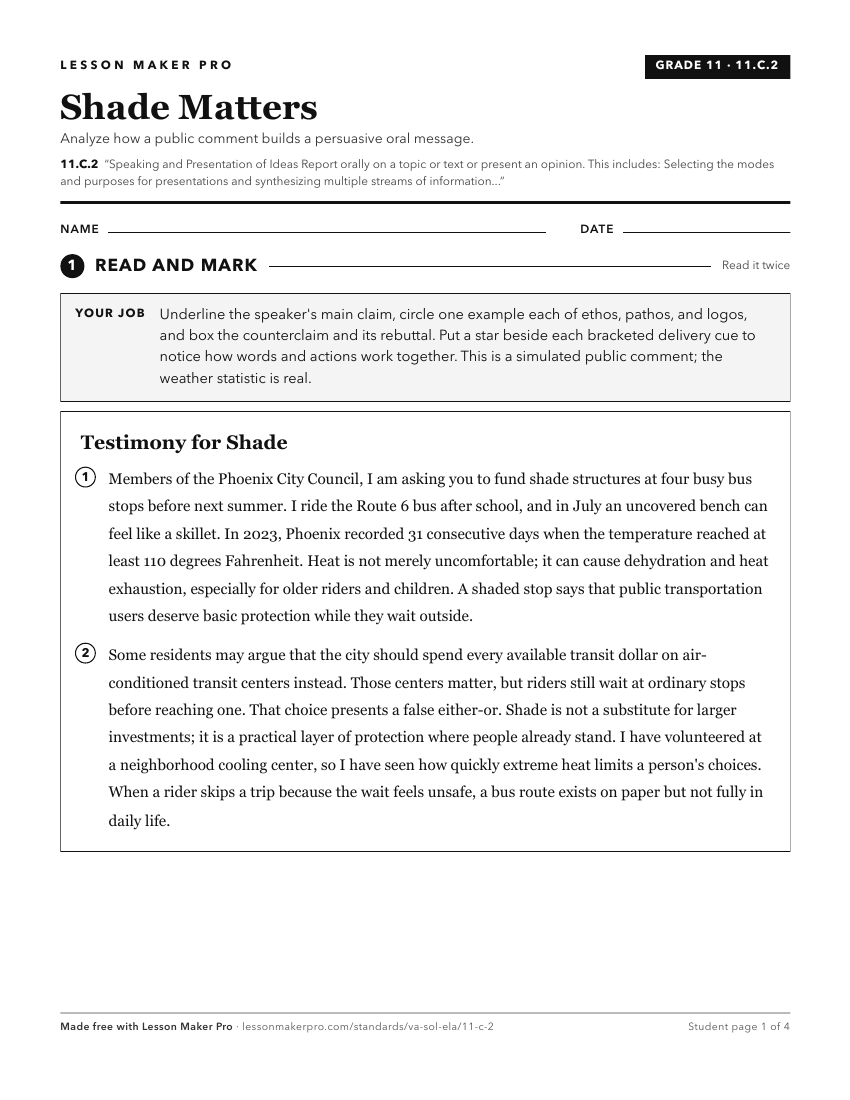
A ready-to-print activity worksheet aligned to 11.C.2, with an answer key for the teacher on its own page. No account needed.
PDF, US Letter, prints cleanly in black and white.
Download the worksheetKeep exploring
Related Standards
Turn this cluster into a lesson
Grade, subject, and topic are prefilled; the lesson picks the standards under this heading. Create one free, no account needed.
Also for this cluster:Make a WorksheetMake a QuizMake a Sub Lesson