Virginia SOL 10.RL.2.A
The Standard
Explain the overall structure of a poem, including how each successive part builds on earlier sections and how rhyme, rhythm, sound, and imagery convey a message and elicit a reader’s emotions.
Virginia Standards of Learning for English · Craft and Style
Teacher's field guide
What This Standard Means
What Students Need to Do
- Students trace how a poem develops from one section to the next. They explain how sound patterns, pacing, and images shape meaning and influence the reader’s feelings.
What Mastery Looks Like
- Students identify shifts in speaker, mood, setting, or idea across stanzas. They use specific lines to explain how structure and poetic choices develop the message and affect the reader.
Common Misconceptions
- Students may list rhyme, imagery, or repetition without explaining their effects. They may treat stanzas as separate pieces instead of tracking shifts and connections. They may also confuse the speaker’s feelings with the reader’s response.
How to Assess It
- Give students a short poem and ask: “How does the final stanza build on an earlier stanza, and how does one sound or image choice shape emotion?”
Lesson moves
Ways to Teach It
Cut a poem into stanza strips, then have pairs reorder it and mark clues showing how each stanza connects to the next.
Ask students to write which stanza changes the poem’s direction and cite one phrase that signals the shift.
Play technique-and-effect matching with cards showing rhyme, rhythm, repetition, imagery, mood, tension, and emphasis.
Compare a poem with a spoken-word performance, noting how pacing, pauses, and repeated sounds change the audience’s emotional response.
Free download
Printable 10.RL.2.A Worksheet
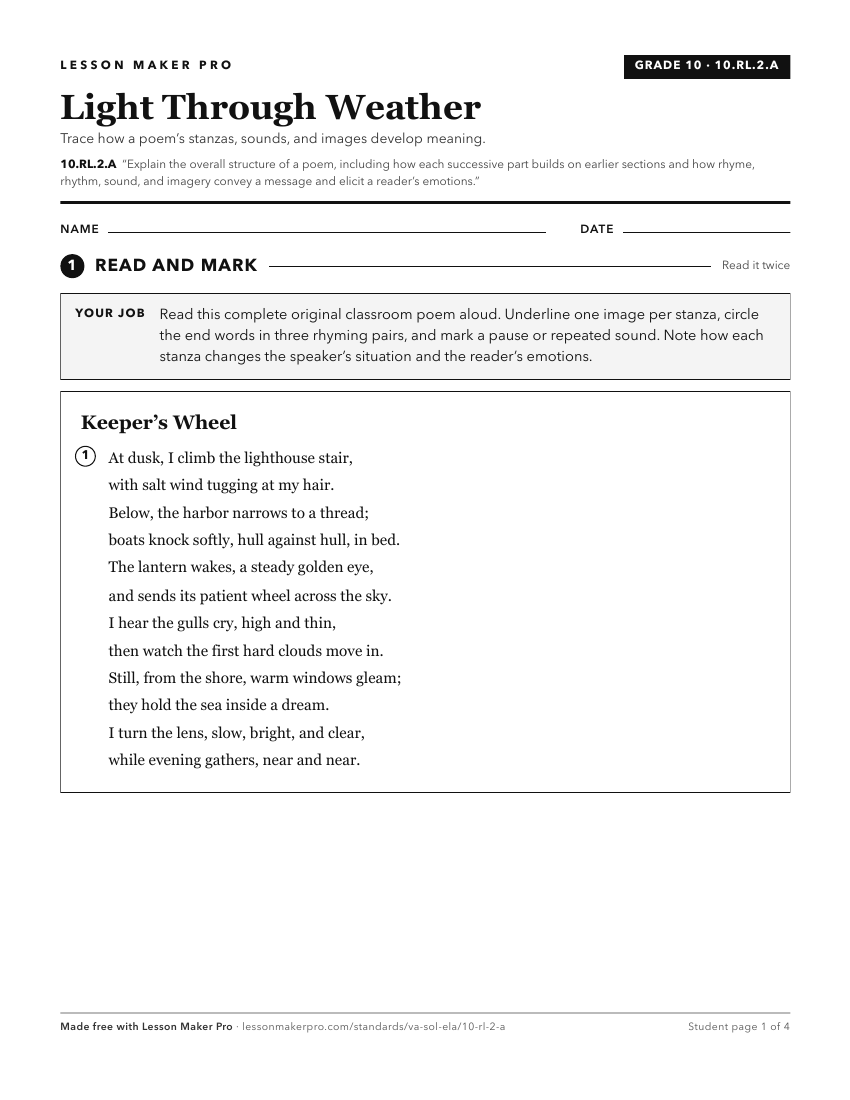
A ready-to-print activity worksheet aligned to 10.RL.2.A, with an answer key for the teacher on its own page. No account needed.
PDF, US Letter, prints cleanly in black and white.
Download the worksheetKeep exploring
Related Standards
- 5.RL.2.C
Analyze how the characteristics of a poem and the author’s use of patterns of sound (e.g., rhyme, rhythm, alliteration, consonance) impact meaning.
- 11.RL.2.A
Interpret and analyze how the sound and imagery of poetry support the subject, mood, form, and theme and appeal to the reader’s senses.
- 9.RL.2.A
Analyze the use of rhyme, rhythm, sound, imagery, and other literary devices in poetry to convey a message and elicit a reader’s emotions.
- 4.RL.3.C
Explain the overall structure of stories, poems, and plays and how each successive part builds on earlier sections.
Turn this exact standard into a lesson
Grade, subject, topic, and the complete standard are prefilled. Create one free, no account needed.
Also for this standard:Make a WorksheetMake a QuizMake a Sub Lesson