Virginia SOL 10.RL.2
SOL Standard (Knowledge and Skills Cluster)
- 10.RL
- The student will use textual evidence to demonstrate comprehension and build knowledge from a variety of grade-level complex literary texts read to include literary nonfiction (including world, British, and American literature), narratives, poetry, and drama, with an emphasis on world literature.
Craft and Style Explain the overall structure of a poem, including how each successive part builds on earlier sections and how rhyme, rhythm, sound, and imagery convey a message and elicit a reader’s emotions. Analyze how authors use literary devices and figurative language, including allusion, allegory, and paradox to impact the meaning of the text. Analyze how authors use specific word choices, syntax, tone, and voice to convey the author’s intent and viewpoint. Analyze point of view and distinguish between what is directly stated in a text from what is implied or intended because of the use of satire, irony, sarcasm, and understatement.
Virginia Standards of Learning for English
Cluster contents
Knowledge and Skills in This Standard
10.RL.2 is a Standards of Learning standard. These are the knowledge and skills expectations under it.
- 10.RL.2.A
Explain the overall structure of a poem, including how each successive part builds on earlier sections and how rhyme, rhythm, sound, and imagery convey a messag...
- 10.RL.2.B
Analyze how authors use literary devices and figurative language, including allusion, allegory, and paradox to impact the meaning of the text.
- 10.RL.2.C
Analyze how authors use specific word choices, syntax, tone, and voice to convey the author’s intent and viewpoint.
- 10.RL.2.D
Analyze point of view and distinguish between what is directly stated in a text from what is implied or intended because of the use of satire, irony, sarcasm, a...
Teacher's field guide
What This Cluster Means
What Students Need to Do
- Students explain how a poem’s sections build meaning from beginning to end. They analyze how sound, imagery, figurative language, word choice, syntax, tone, voice, and viewpoint shape a reader’s response. They also identify implied meaning created through satire, irony, sarcasm, and understatement.
What Mastery Looks Like
- Students trace how each stanza or section develops the poem’s message. They cite specific words, images, sounds, sentence patterns, and literary devices, then explain their effects. They also separate literal statements from implied meanings and support interpretations with evidence.
Common Misconceptions
- Students may treat the speaker’s views as the author’s views. They may label any contradiction as paradox or any reference as allusion without explaining its effect. They also confuse irony with sarcasm and overlook how stanza order, punctuation, and sentence length shape meaning.
How to Assess It
- Give students a short poem with numbered stanzas. Ask them to explain how the final stanza builds on an earlier one and how one craft choice shapes meaning or emotion.
Lesson moves
Ways to Teach It
Give pairs a poem cut into stanzas, then have them reconstruct its order and justify each placement using shifts in imagery, tone, and ideas.
Ask students to write: How does one word, sentence pattern, or literary device reveal the speaker’s viewpoint without stating it directly?
Run a device match game using excerpt cards and effect cards for allusion, allegory, paradox, irony, sarcasm, understatement, imagery, and sound.
Compare printed song lyrics with the recorded performance, noting how rhythm, repetition, pauses, and vocal tone change the message or emotional effect.
Free download
Printable 10.RL.2 Worksheet
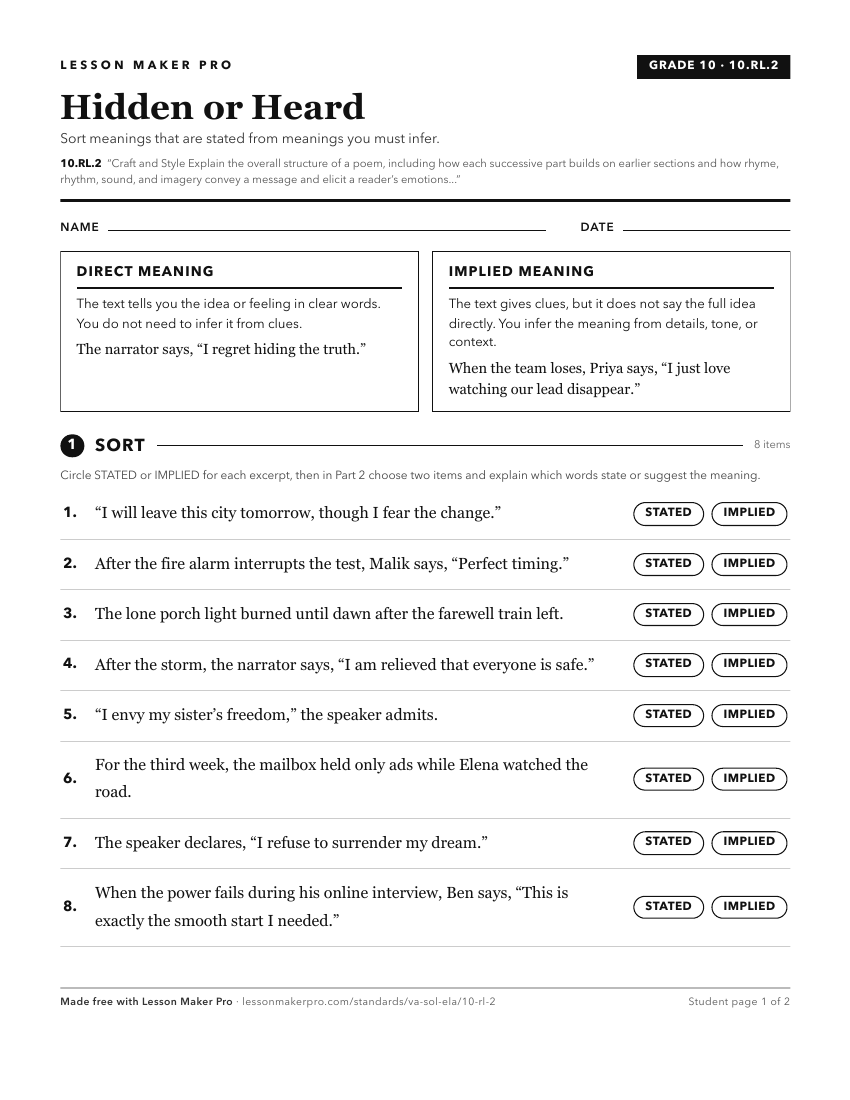
A ready-to-print activity worksheet aligned to 10.RL.2, with an answer key for the teacher on its own page. No account needed.
PDF, US Letter, prints cleanly in black and white.
Download the worksheetKeep exploring
Related Standards
Turn this cluster into a lesson
Grade, subject, and topic are prefilled; the lesson picks the standards under this heading. Create one free, no account needed.
Also for this cluster:Make a WorksheetMake a QuizMake a Sub Lesson