Texas TEKS 7.16.B
The Standard
- 7.16
- Citizenship. The student understands the importance of the expression of different points of view in a democratic society. The student is expected to:
describe the importance of free speech and press in a democratic society.
Texas Essential Knowledge and Skills for Social Studies
Teacher's field guide
What This Standard Means
What Students Need to Do
- Students explain how people sharing opinions and journalists reporting facts help voters make informed choices and hold leaders accountable. They connect these freedoms to public debate, peaceful criticism, and limits on government power.
What Mastery Looks Like
- Given a civic scenario, a student can identify whether public speech, news reporting, or both are involved. The student explains how protecting or restricting them affects citizens and government.
Common Misconceptions
- Students may think these freedoms protect every statement from consequences or make threats and false claims legal. They may confuse government censorship with a private publisher setting rules. They may also assume a free press is always accurate or neutral.
How to Assess It
- Exit ticket: A mayor blocks a newspaper report about city spending and removes a resident for peaceful criticism. Explain two ways these actions could weaken democracy.
Lesson moves
Ways to Teach It
Give groups civic action cards, then have them sort each under public speech, press reporting, both, or neither and defend one choice.
Ask students what could happen if residents could not criticize leaders or reporters could not investigate them.
Play a scenario card game where teams identify the freedom involved and name one benefit to democratic government.
Show a local news report and a city council public comment clip, then have students list how each can shape a community decision.
Free download
Printable 7.16.B Worksheet
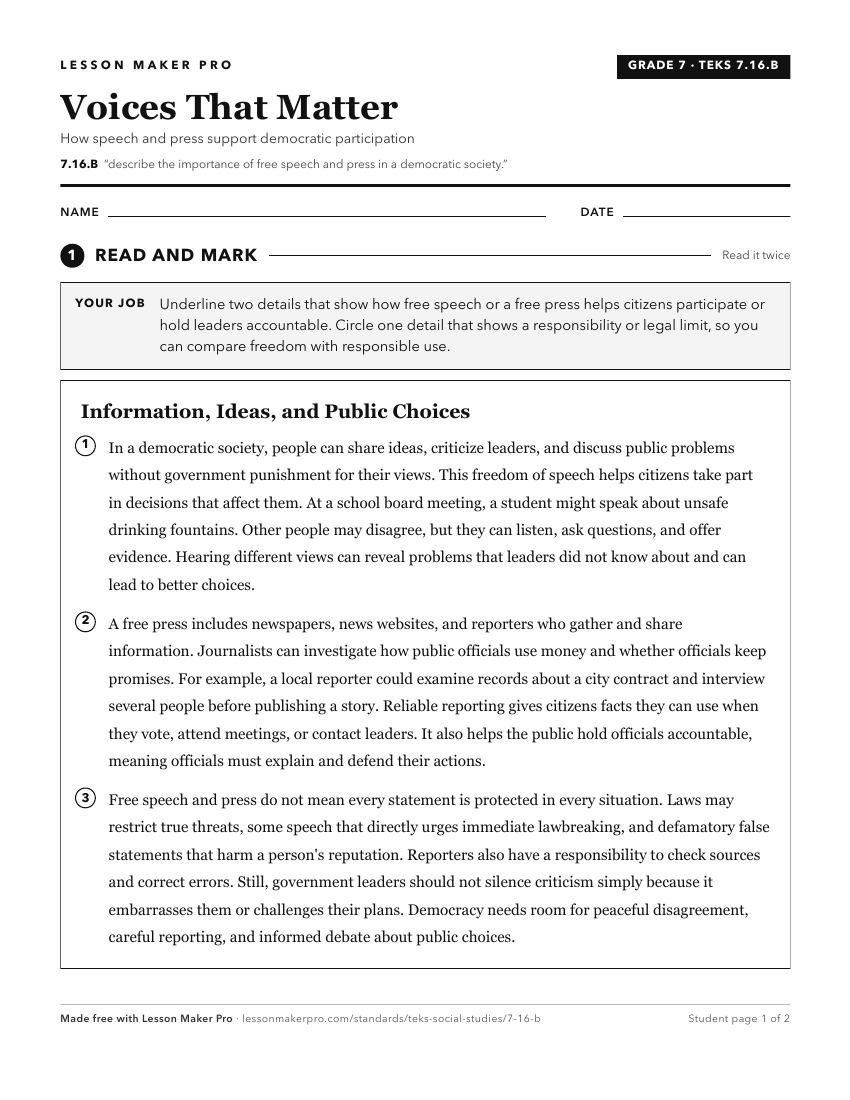
A ready-to-print activity worksheet aligned to 7.16.B, with an answer key for the teacher on its own page. No account needed.
PDF, US Letter, prints cleanly in black and white.
Download the worksheetKeep exploring
Related Standards
- 5.14.C
explain the reasons for the creation of the Bill of Rights and its importance.
- 6.12.A
identify and explain the duty of civic participation in societies with representative governments
- 7.16
Citizenship. The student understands the importance of the expression of different points of view in a democratic society. The student is expected to:
- 8.21.B
describe the importance of free speech and press in a constitutional republic
Turn this exact standard into a lesson
Grade, subject, topic, and the complete standard are prefilled. Create one free, no account needed.
Also for this standard:Make a WorksheetMake a QuizMake a Sub Lesson