Texas TEKS 2.1.G
The Standard
- 2.1
- Scientific and engineering practices. The student asks questions, identifies problems, and plans and safely conducts classroom, laboratory, and field investigations to answer questions, explain phenomena, or design solutions using appropriate tools and models. The student is expected to:
develop and use models to represent phenomena, objects, and processes or design a prototype for a solution to a problem.
Texas Essential Knowledge and Skills for Science
Teacher's field guide
What This Standard Means
What Students Need to Do
- Students build or draw a simple version of an object, event, or sequence. They use it to show how parts connect, explain what happens, or test a possible solution.
What Mastery Looks Like
- Students choose useful materials or symbols, include key parts, and explain what each part represents. They test a design and make a change based on what happened.
Common Misconceptions
- Students may treat a model as decoration or think it must look exactly like the real thing. They may omit key parts or assume the first prototype should work without changes.
How to Assess It
- Ask students to draw and label three stages of a seed sprouting. Have them use the drawing to predict what happens next.
Lesson moves
Ways to Teach It
Build a clay and straw model of a flowering plant, label each part, then use it to explain how water reaches the leaves.
Compare a toy car with a real car, then write which features help the toy act as a model and which do not.
Play Model Match by pairing picture cards of processes with models, then explain one match to a partner.
Design a foil roof for a paper house, test it with a spray bottle, and revise it to keep the inside dry.
Free download
Printable 2.1.G Worksheet
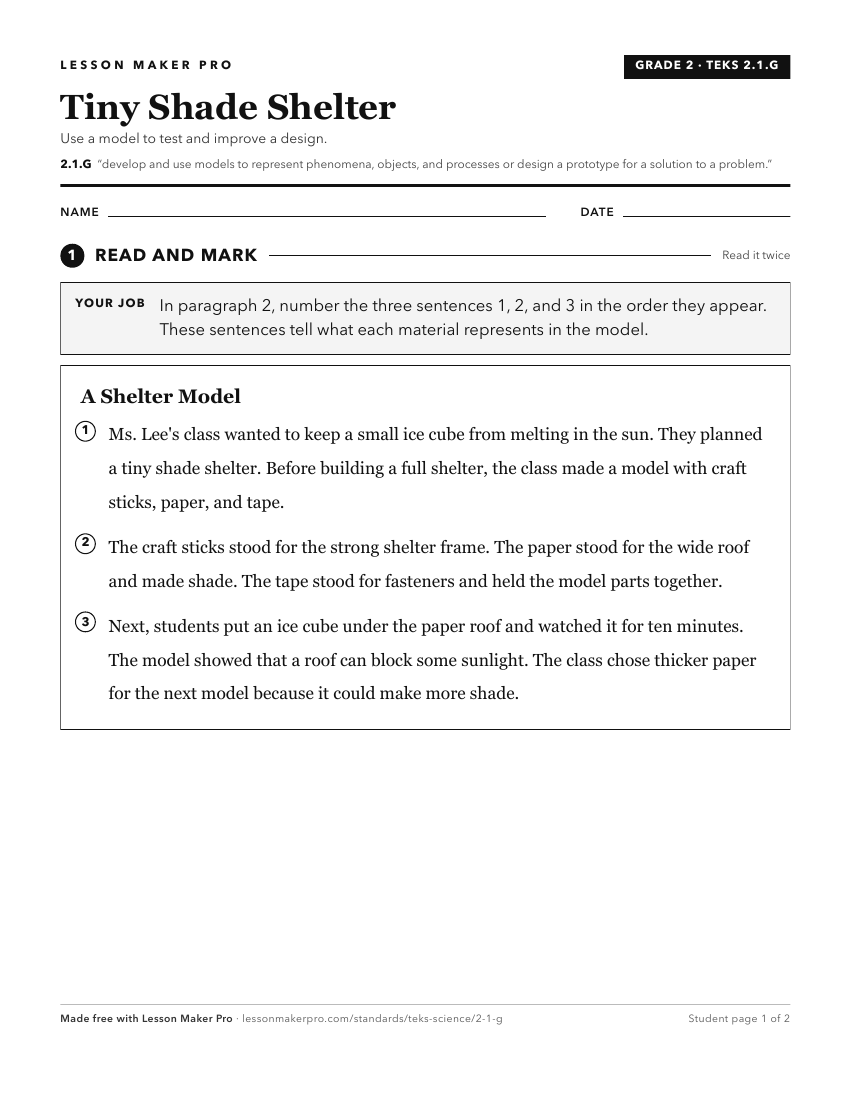
A ready-to-print activity worksheet aligned to 2.1.G, with an answer key for the teacher on its own page. No account needed.
PDF, US Letter, prints cleanly in black and white.
Download the worksheetKeep exploring
Related Standards
Turn this exact standard into a lesson
Grade, subject, topic, and the complete standard are prefilled. Create one free, no account needed.
Also for this standard:Make a WorksheetMake a QuizMake a Sub Lesson