TEKS ELAR K.8.E
The Standard
recognize characteristics of persuasive text with adult assistance and state what the author is trying to persuade the reader to think or do
Texas Essential Knowledge and Skills for English Language Arts and Reading
Teacher's field guide
What This Standard Means
What Students Need to Do
- Students listen to or examine a simple persuasive text and notice opinions, reasons, and action words. With adult help, they explain the message the author wants readers to accept or act on.
What Mastery Looks Like
- A student can point to words that show an opinion, a reason, or a requested action. With a prompt, the student can explain what the author wants the reader to believe or do.
Common Misconceptions
- Students may confuse giving information with trying to convince someone. They may name the topic instead of explaining the author’s message or requested action.
How to Assess It
- Read: “We should have extra recess because exercise keeps us healthy. Ask your teacher for more recess!” Ask, “What does the author want you to think or do?”
Lesson moves
Ways to Teach It
Have pairs sort picture cards and short texts into two groups: gives information or tries to convince.
Read a class request and ask, “What does the writer want us to do, and what reason does the writer give?”
Play Persuasion Detective by reading short statements while students hold up an opinion, reason, or action card.
Examine a cereal box or school poster and identify what it wants people to choose, believe, or do.
Free download
Printable K.8.E Worksheet
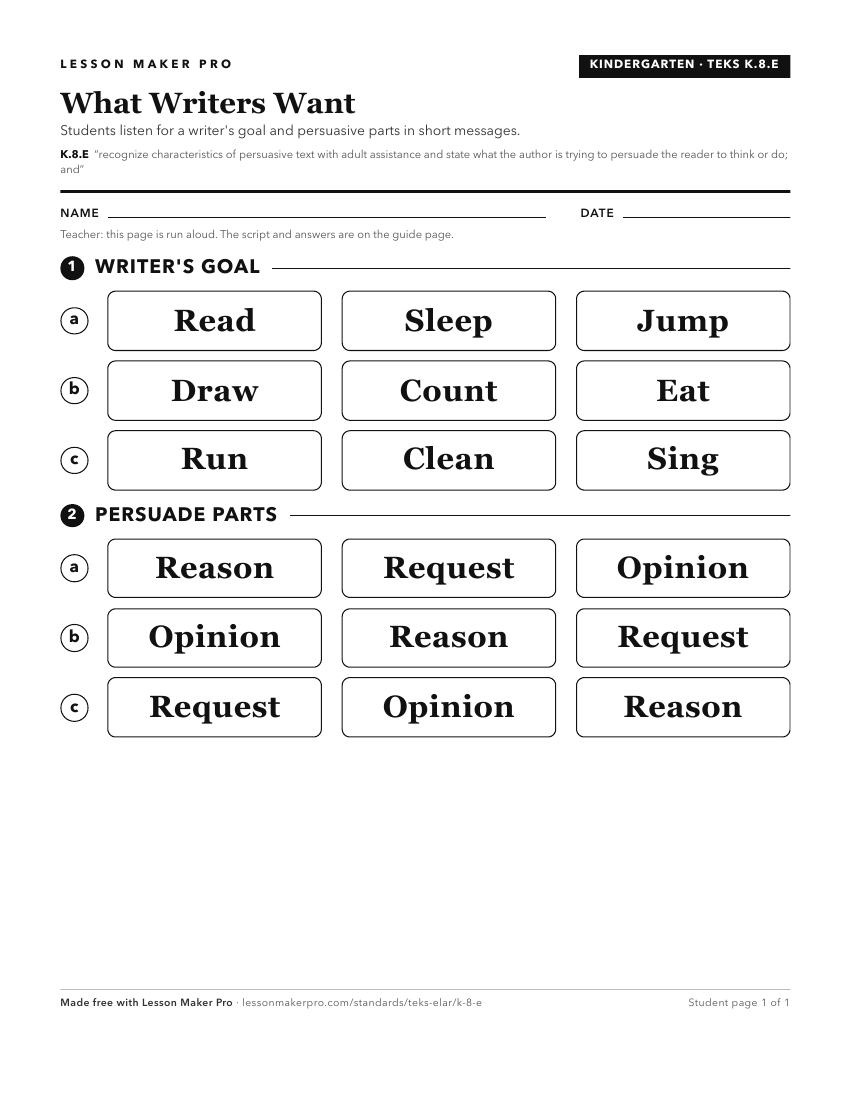
A ready-to-print activity worksheet aligned to K.8.E, with an answer key for the teacher on its own page. No account needed.
PDF, US Letter, prints cleanly in black and white.
Download the worksheetKeep exploring
Related Standards
- 2.9.E.i
stating what the author is trying to persuade the reader to think or do; and
- 1.9.E
The 1st Grade version of this standard.
- K.9.B
discuss with adult assistance how the use of text structure contributes to the author's purpose;
- K.9.A
discuss with adult assistance the author's purpose for writing text;
Turn this exact standard into a lesson
Grade, subject, topic, and the complete standard are prefilled. Create one free, no account needed.
Also for this standard:Make a WorksheetMake a QuizMake a Sub Lesson