TEKS ELAR K.9.A
The Standard
discuss with adult assistance the author's purpose for writing text
Texas Essential Knowledge and Skills for English Language Arts and Reading
Teacher's field guide
What This Standard Means
What Students Need to Do
- Students decide why a writer created a story or text. They use words and pictures as clues, then explain their thinking with adult prompts.
What Mastery Looks Like
- A student identifies whether a writer wants to tell a story, teach information, or convince the reader. With a prompt, the student points to a word or picture as evidence.
Common Misconceptions
- Students may name the topic instead of explaining why the author wrote. They may also assume every funny book is only for entertainment, even when it teaches facts.
How to Assess It
- Read a short animal fact page aloud. Ask, “Why did the writer make this page, and what word or picture helped you decide?”
Lesson moves
Ways to Teach It
Give pairs three picture books to sort under labels: tell a story, teach something, or change someone’s mind.
After a read-aloud, ask, “What did the writer want us to think, learn, or feel? What clue helped you?”
Play Purpose Detective by reading short text cards while students hold up story, information, or convince cards.
Examine a cereal box, safety sign, and party invitation, then name why each writer created it.
Free download
Printable K.9.A Worksheet
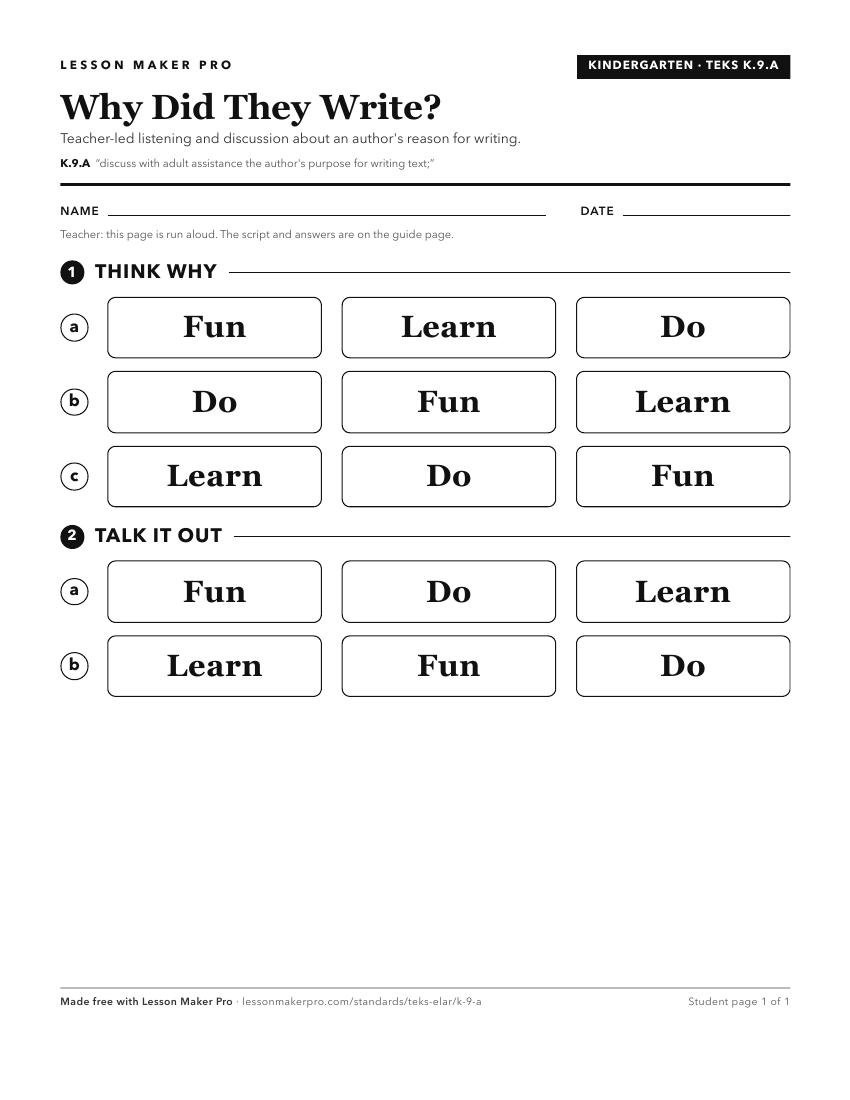
A ready-to-print activity worksheet aligned to K.9.A, with an answer key for the teacher on its own page. No account needed.
PDF, US Letter, prints cleanly in black and white.
Download the worksheetKeep exploring
Related Standards
- 1.10.C
discuss with adult assistance the author's use of print and graphic features to achieve specific purposes;
- 2.10.A
discuss the author's purpose for writing text;
- K.9.B
discuss with adult assistance how the use of text structure contributes to the author's purpose;
- 1.10.A
discuss the author's purpose for writing text;
Turn this exact standard into a lesson
Grade, subject, topic, and the complete standard are prefilled. Create one free, no account needed.
Also for this standard:Make a WorksheetMake a QuizMake a Sub Lesson