TEKS ELAR 8.6.B
The Standard
write responses that demonstrate understanding of texts, including comparing sources within and across genres
Texas Essential Knowledge and Skills for English Language Arts and Reading
Teacher's field guide
What This Standard Means
What Students Need to Do
- Students write about key ideas and details in two or more sources. They compare how sources within the same genre or across genres present a topic, idea, event, or theme.
What Mastery Looks Like
- Students identify a meaningful similarity and difference between two sources. They use accurate evidence from both sources and explain how genre, perspective, or presentation shapes the message.
Common Misconceptions
- Students may summarize each source separately without making a comparison. They may focus on surface features, confuse topic with genre, or support a claim with evidence from only one source.
How to Assess It
- After students read two short sources, ask them to write five sentences naming one shared idea, one difference in presentation, and one supporting detail from each source.
Lesson moves
Ways to Teach It
Give pairs evidence strips from two texts to sort under shared ideas, differences, and source-specific details, then have them justify each placement.
Ask students to write: How do the two authors present the same topic differently, and which detail best shows that difference?
Play Comparison Relay, where teams rotate through source pairs and add one supported similarity or difference without repeating earlier answers.
Compare a public service announcement and a news article about the same issue, then discuss how each format targets its audience.
Free download
Printable 8.6.B Worksheet
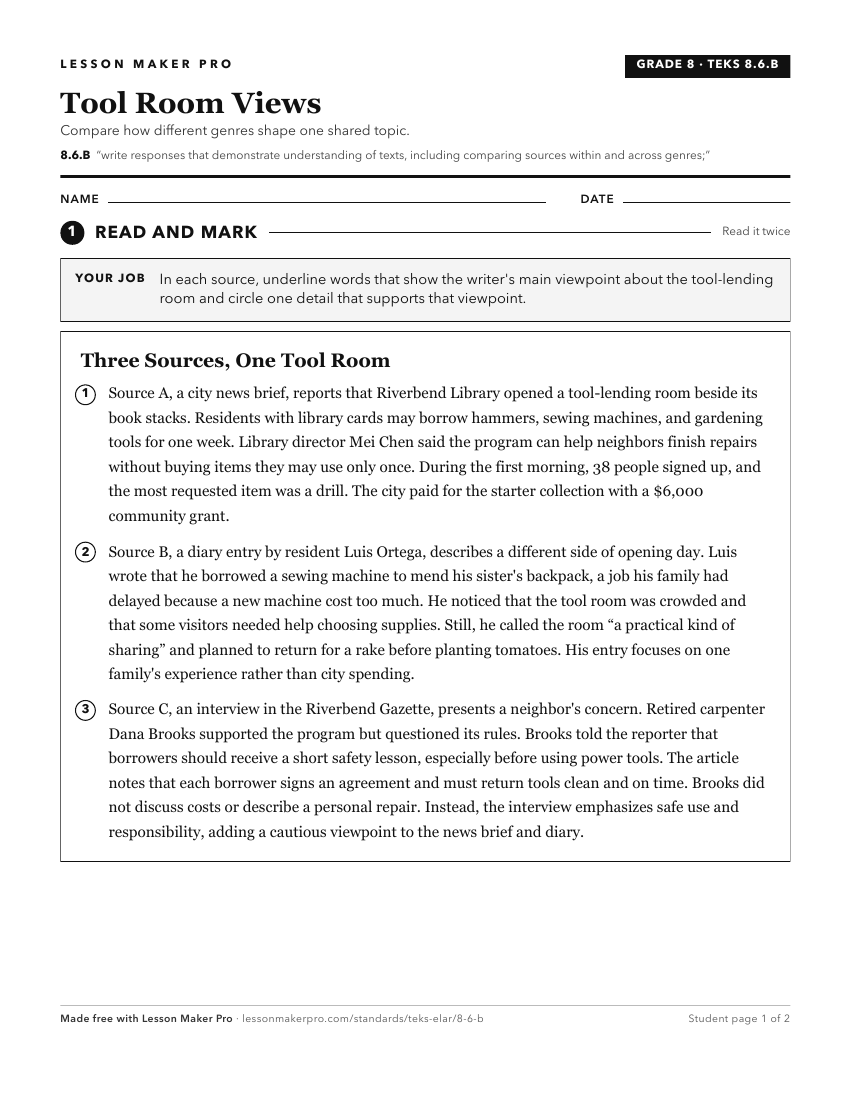
A ready-to-print activity worksheet aligned to 8.6.B, with an answer key for the teacher on its own page. No account needed.
PDF, US Letter, prints cleanly in black and white.
Download the worksheetKeep exploring
Related Standards
- 7.6.B
write responses that demonstrate understanding of texts, including comparing sources within and across genres
- 4.7.B
write responses that demonstrate understanding of texts, including comparing and contrasting ideas across a variety of sources;
- 5.7.B
write responses that demonstrate understanding of texts, including comparing and contrasting ideas across a variety of sources;
- 6.6.B
The 6th Grade version of this standard.
Turn this exact standard into a lesson
Grade, subject, topic, and the complete standard are prefilled. Create one free, no account needed.
Also for this standard:Make a WorksheetMake a QuizMake a Sub Lesson