TEKS ELAR 7.9.F
The Standard
analyze how the author's use of language contributes to mood, voice, and tone
Texas Essential Knowledge and Skills for English Language Arts and Reading · Author's purpose and craft: listening, speaking, reading, writing, and thinking using multiple texts
Teacher's field guide
What This Standard Means
What Students Need to Do
- Students identify language choices that shape mood, voice, and tone. They explain how specific diction, imagery, details, and sentence patterns affect the reader and reveal the author’s attitude or style.
What Mastery Looks Like
- Students accurately name the mood, tone, and voice of a passage. They cite precise words or phrases and explain how connotation, imagery, or sentence structure creates each effect.
Common Misconceptions
- Students often treat mood and tone as the same thing. They may name an emotion without citing words, or describe the plot instead of the language. Some confuse voice with a character’s spoken dialogue.
How to Assess It
- Exit ticket: Read, “The hallway swallowed Mara’s footsteps. Every locker seemed to watch her.” Identify the tone, mood, and voice, then explain how one phrase shapes each.
Lesson moves
Ways to Teach It
Give pairs a printed paragraph to color-code words that reveal mood, tone, and voice, then label each effect in the margins.
Ask students to rewrite a cheerful scene in a bitter voice, then explain three language changes they made.
Play a card sort matching short passages, language clues, and labels such as tense mood, sarcastic tone, or formal voice.
Compare two headlines about the same event and discuss how loaded words shape each writer’s tone and the reader’s mood.
Free download
Printable 7.9.F Worksheet
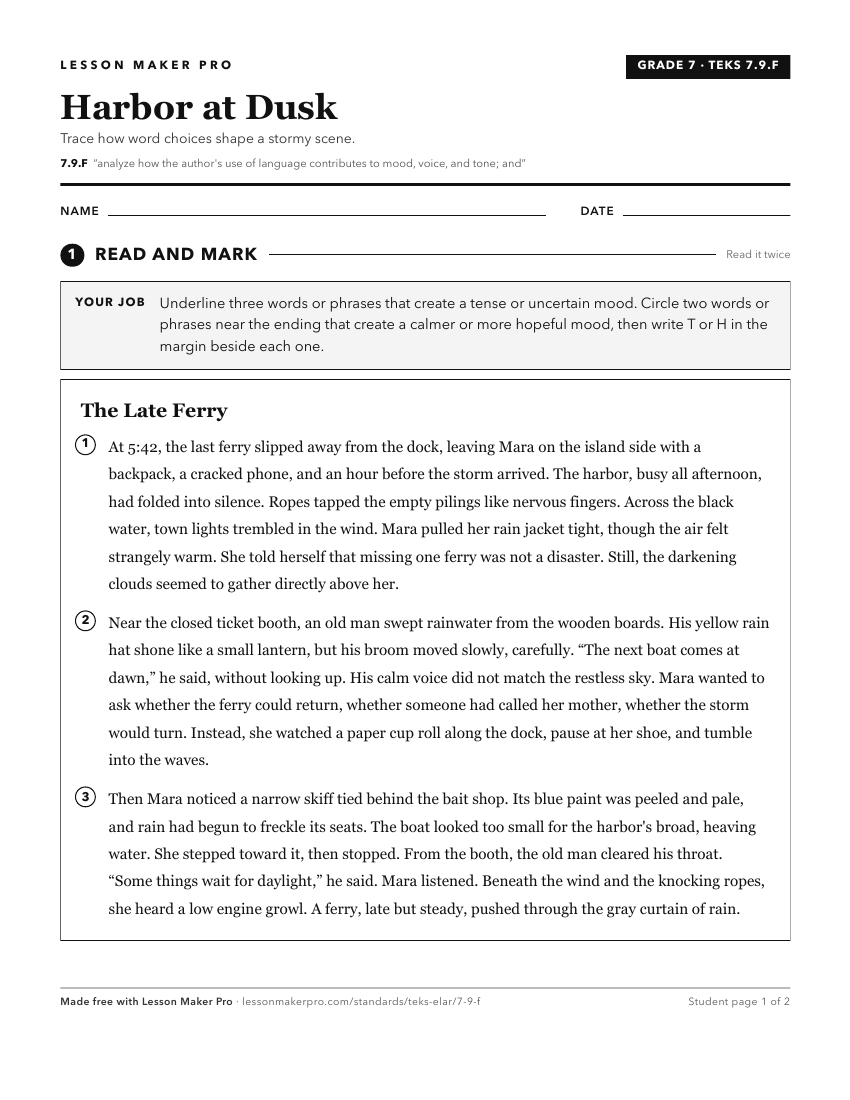
A ready-to-print activity worksheet aligned to 7.9.F, with an answer key for the teacher on its own page. No account needed.
PDF, US Letter, prints cleanly in black and white.
Download the worksheetKeep exploring
Related Standards
- 5.10.F
examine how the author's use of language contributes to voice; and
- 8.9.F
analyze how the author's use of language contributes to the mood, voice, and tone; and
- 6.9.F
analyze how the author's use of language contributes to mood and voice; and
- 4.10.F
discuss how the author's use of language contributes to voice; and
Turn this exact standard into a lesson
Grade, subject, topic, and the complete standard are prefilled. Create one free, no account needed.
Also for this standard:Make a WorksheetMake a QuizMake a Sub Lesson