TEKS ELAR 4.10.F
The Standard
discuss how the author's use of language contributes to voice
Texas Essential Knowledge and Skills for English Language Arts and Reading
Teacher's field guide
What This Standard Means
What Students Need to Do
- Students describe how a writer or narrator sounds, such as playful, angry, formal, or nervous. They identify specific words, phrases, sentence patterns, or punctuation that create that voice.
What Mastery Looks Like
- A student accurately describes the voice with a specific word, such as playful, formal, or impatient. The student cites words or phrases and explains how those choices shape the voice.
Common Misconceptions
- Students may name the mood instead of describing the speaker’s voice. They may label a voice as funny or serious without citing the words, sentence patterns, or punctuation that create it.
How to Assess It
- Give students a short passage and ask: “Describe the voice, then underline two language choices that create it and explain one choice.”
Lesson moves
Ways to Teach It
Give pairs two versions of one paragraph, then have them highlight words and punctuation that make each speaker sound different.
Ask students to write: “The speaker sounds ___ because the author uses ___,” using two details from a shared passage.
Play Voice Detective by reading short excerpts aloud while teams name the voice and earn points for exact text evidence.
Compare two restaurant reviews of the same meal and identify how each writer’s word choices reveal a different attitude.
Free download
Printable 4.10.F Worksheet
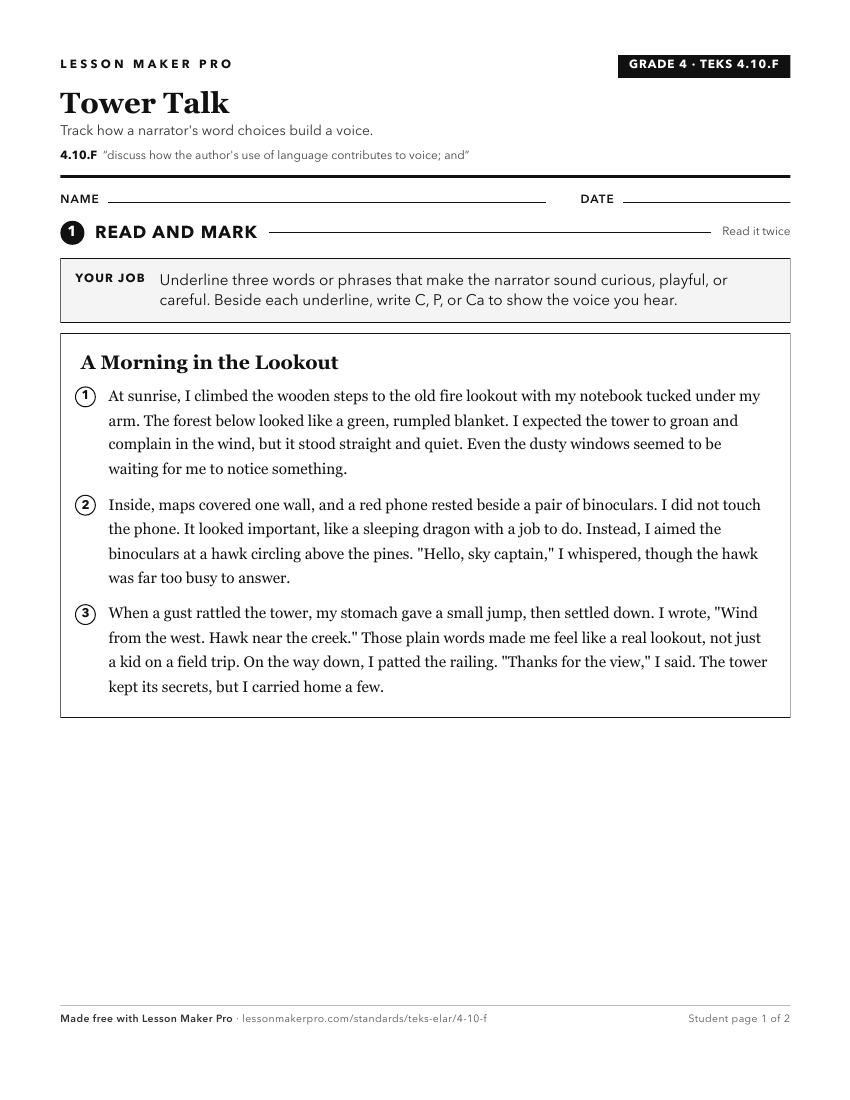
A ready-to-print activity worksheet aligned to 4.10.F, with an answer key for the teacher on its own page. No account needed.
PDF, US Letter, prints cleanly in black and white.
Download the worksheetKeep exploring
Related Standards
Turn this exact standard into a lesson
Grade, subject, topic, and the complete standard are prefilled. Create one free, no account needed.
Also for this standard:Make a WorksheetMake a QuizMake a Sub Lesson