TEKS ELAR 7.12.C
The Standard
refine the major research question, if necessary, guided by the answers to a secondary set of questions
Texas Essential Knowledge and Skills for English Language Arts and Reading
Teacher's field guide
What This Standard Means
What Students Need to Do
- Students use answers from smaller research questions to reconsider the focus of a larger question. They narrow, broaden, or clarify that question when the evidence points in a better direction.
What Mastery Looks Like
- Students can show an original and revised major question, then identify which findings led to the change. Their revised question is focused, researchable, and aligned with the evidence they found.
Common Misconceptions
- Students may treat the first major question as fixed, even when their research suggests a different focus. They may rewrite it without using evidence from their smaller questions. Some make the question too broad, too narrow, or answerable with one fact.
How to Assess It
- Exit ticket: Write your original major question, revise it using two findings from your secondary questions, and explain why the revision improves the focus.
Lesson moves
Ways to Teach It
Give groups sticky notes with secondary findings, then have them sort the notes and rewrite a major question to match the strongest pattern.
Ask students to write: Which answer changed your thinking most, and how should your major question change because of it?
Play Question Clinic: pairs diagnose sample research questions as too broad, too narrow, or unclear, then revise each using provided findings.
Use reviews of a local park, restaurant, or school event to build smaller questions, examine answers, and refine one larger research question.
Free download
Printable 7.12.C Worksheet
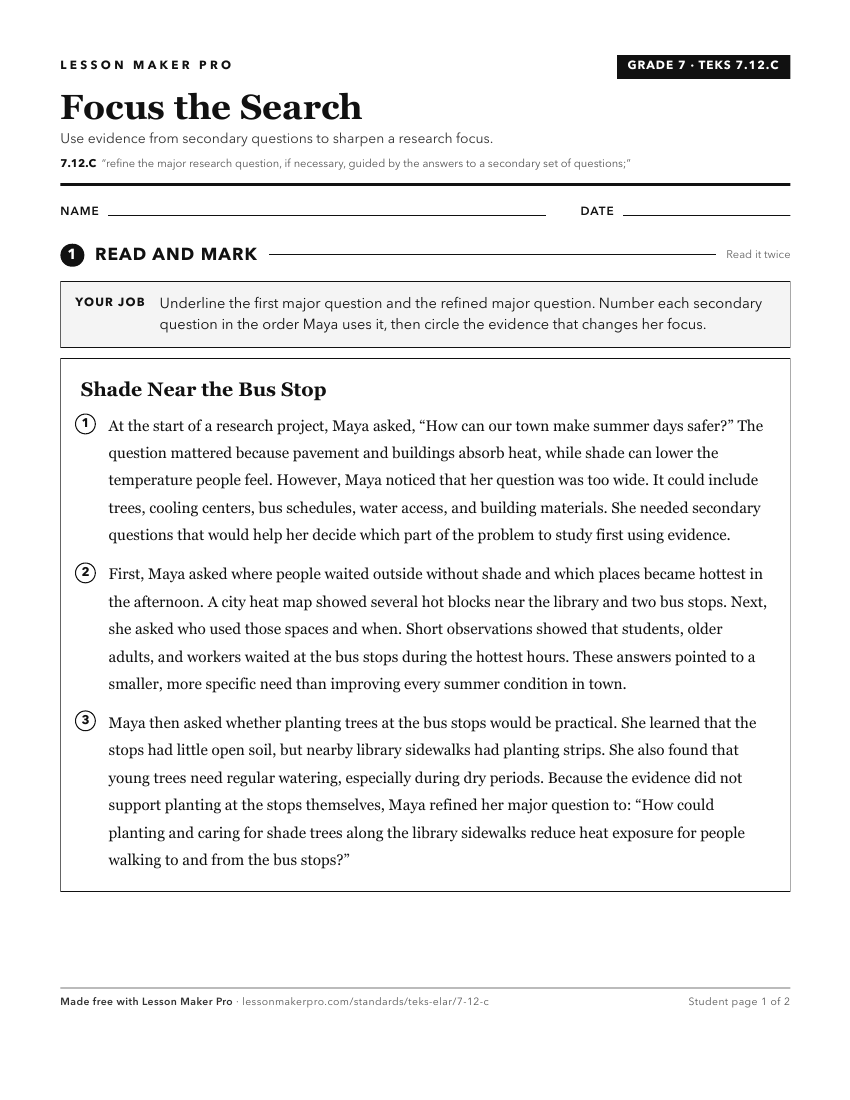
A ready-to-print activity worksheet aligned to 7.12.C, with an answer key for the teacher on its own page. No account needed.
PDF, US Letter, prints cleanly in black and white.
Download the worksheetKeep exploring
Related Standards
- 6.12.C
refine the major research question, if necessary, guided by the answers to a secondary set of questions;
- 2.13.C
identify and gather relevant sources and information to answer the questions;
- 4.13.A
generate and clarify questions on a topic for formal and informal inquiry;
- 8.12.C
refine the major research question, if necessary, guided by the answers to a secondary set of questions;
Turn this exact standard into a lesson
Grade, subject, topic, and the complete standard are prefilled. Create one free, no account needed.
Also for this standard:Make a WorksheetMake a QuizMake a Sub Lesson