TEKS ELAR 7.1.A
The Standard
listen actively to interpret a message and ask clarifying questions that build on others' ideas
Texas Essential Knowledge and Skills for English Language Arts and Reading · Developing and sustaining foundational language skills: listening, speaking, discussion, and thinking
Teacher's field guide
What This Standard Means
What Students Need to Do
- Students listen for a speaker’s main point, details, and intended meaning. They ask specific follow-up questions that clear up confusion and extend the speaker’s idea.
What Mastery Looks Like
- Students can accurately summarize a speaker’s main point and supporting details. They ask focused follow-up questions that request evidence, examples, explanations, or connections.
Common Misconceptions
- Students may confuse active listening with staying quiet or making eye contact. They may ask vague questions, repeat answered questions, or change the topic instead of building on the speaker’s idea.
How to Assess It
- Have a partner explain a school issue for one minute. The listener writes a one-sentence summary and asks one specific question about an unclear detail.
Lesson moves
Ways to Teach It
In pairs, one student describes a block structure while the listener asks questions, builds it unseen, then compares the two structures.
After a classmate shares an opinion, students write: “You said ___. Can you explain or give an example of ___?”
Play Question Builder: students earn a point when their follow-up question mentions a detail from the previous speaker’s comment.
Use a mock student council meeting where students listen to proposals and ask questions about costs, benefits, and possible problems.
Free download
Printable 7.1.A Worksheet
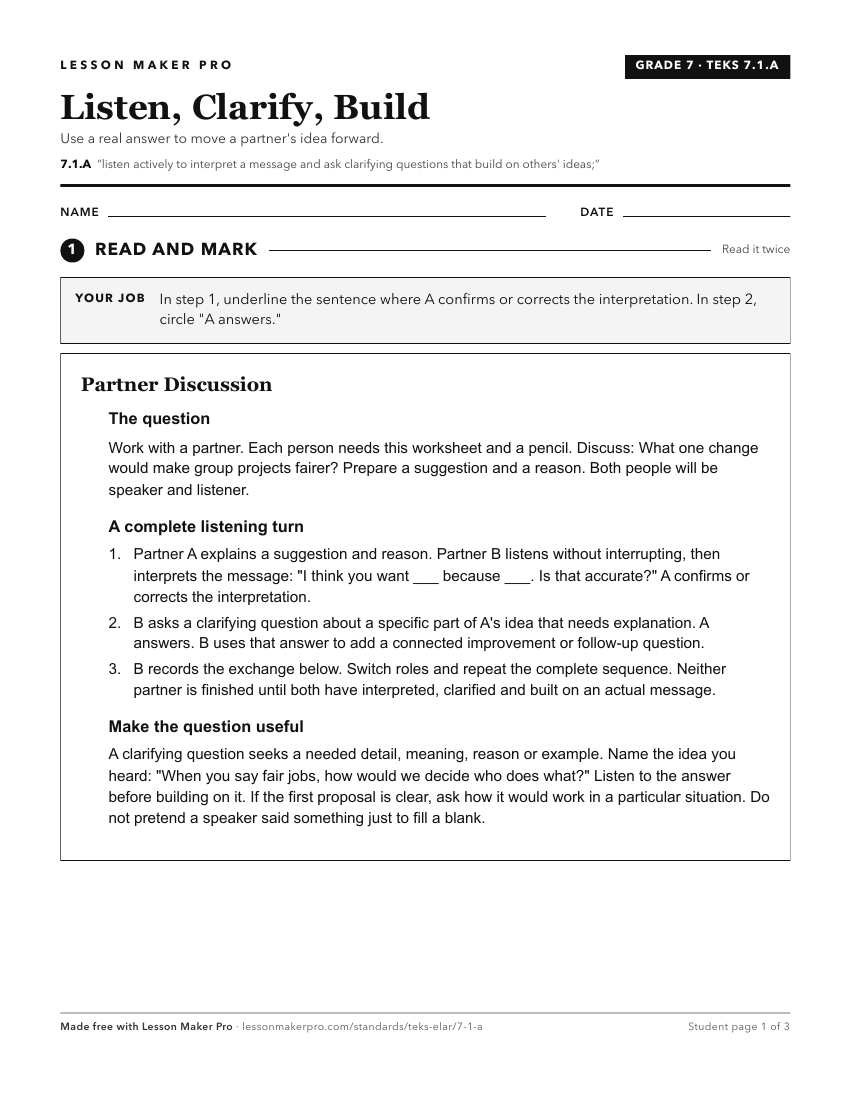
A ready-to-print activity worksheet aligned to 7.1.A, with an answer key for the teacher on its own page. No account needed.
PDF, US Letter, prints cleanly in black and white.
Download the worksheetKeep exploring
Related Standards
- 6.1.A
listen actively to interpret a message, ask clarifying questions, and respond appropriately;
- 3.1.A
listen actively, ask relevant questions to clarify information, and make pertinent comments;
- 8.1.A
listen actively to interpret a message by summarizing, asking questions, and making comments;
- 4.1.A
listen actively, ask relevant questions to clarify information, and make pertinent comments;
Turn this exact standard into a lesson
Grade, subject, topic, and the complete standard are prefilled. Create one free, no account needed.
Also for this standard:Make a WorksheetMake a QuizMake a Sub Lesson