TEKS ELAR 6.9.E
The Standard
identify the use of literary devices, including omniscient and limited point of view, to achieve a specific purpose
Texas Essential Knowledge and Skills for English Language Arts and Reading
Teacher's field guide
What This Standard Means
What Students Need to Do
- Students identify literary devices in a text, with close attention to omniscient and limited point of view. They explain what each device helps the writer accomplish, using text evidence.
What Mastery Looks Like
- Students accurately identify literary devices and distinguish omniscient narration from limited narration. They cite specific words or details and explain how the device shapes information, mood, suspense, or reader understanding.
Common Misconceptions
- Students may confuse the narrator with the author or assume first person always means limited point of view. They may name a device correctly but fail to explain how it creates suspense, humor, contrast, or another effect.
How to Assess It
- Give students a short passage and ask them to identify one literary device, cite evidence, and explain its purpose. Require them to label the viewpoint as omniscient or limited.
Lesson moves
Ways to Teach It
Give pairs a printed scene and two highlighters to mark each character’s thoughts, then label the viewpoint and explain its effect.
Ask: How would suspense change if the narrator revealed every character’s thoughts instead of only one character’s thoughts?
Play Point of View Sort with passage cards, requiring teams to name omniscient or limited and defend each choice with evidence.
Have students rewrite a school event from one attendee’s limited view, then as an all-knowing narrator, and compare the information revealed.
Free download
Printable 6.9.E Worksheet
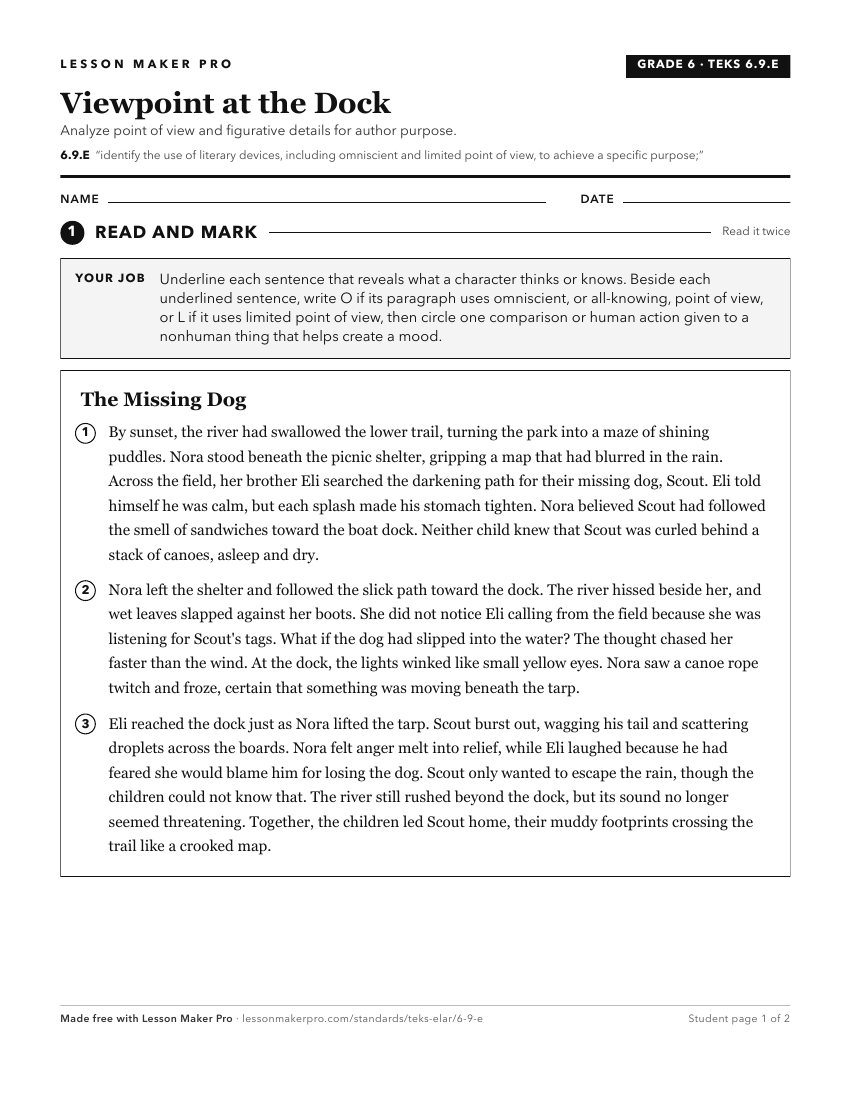
A ready-to-print activity worksheet aligned to 6.9.E, with an answer key for the teacher on its own page. No account needed.
PDF, US Letter, prints cleanly in black and white.
Download the worksheetKeep exploring
Related Standards
- 5.10.E
identify and understand the use of literary devices, including first- or third-person point of view;
- 7.9.E
identify the use of literary devices, including subjective and objective point of view
- 3.10.E
identify the use of literary devices, including first- or third-person point of view;
- 4.10.E
identify and understand the use of literary devices, including first- or third-person point of view;
Turn this exact standard into a lesson
Grade, subject, topic, and the complete standard are prefilled. Create one free, no account needed.
Also for this standard:Make a WorksheetMake a QuizMake a Sub Lesson