TEKS ELAR 6.9.C
The Standard
analyze the author's use of print and graphic features to achieve specific purposes
Texas Essential Knowledge and Skills for English Language Arts and Reading
Teacher's field guide
What This Standard Means
What Students Need to Do
- Students examine headings, fonts, captions, photographs, diagrams, charts, and other page elements. They explain why the author chose each feature and how it shapes understanding.
What Mastery Looks Like
- Given an article page, students can point to a heading, caption, diagram, chart, or bold term and explain its job. They connect the feature to the author’s purpose using details from the page.
Common Misconceptions
- Students may name a feature without explaining its purpose. They may say every photo is decorative or use vague claims such as “it gets attention” without citing what readers learn.
How to Assess It
- Give students a page with a heading, bold term, and chart. Ask: “Choose one feature and explain why the author included it and how it helps the reader.”
Lesson moves
Ways to Teach It
Give pairs a printed magazine page and sticky notes; students label three features, then explain what each helps the reader understand.
Ask, “Why did the author use this caption instead of adding the information to the paragraph?” Students write and discuss two reasons.
Play Feature-Purpose Match with cards showing headings, bold words, maps, and captions paired with possible author goals; students defend each match.
Compare a weather app screen with a written forecast, and have students explain how icons, color, and layout support quick decisions.
Free download
Printable 6.9.C Worksheet
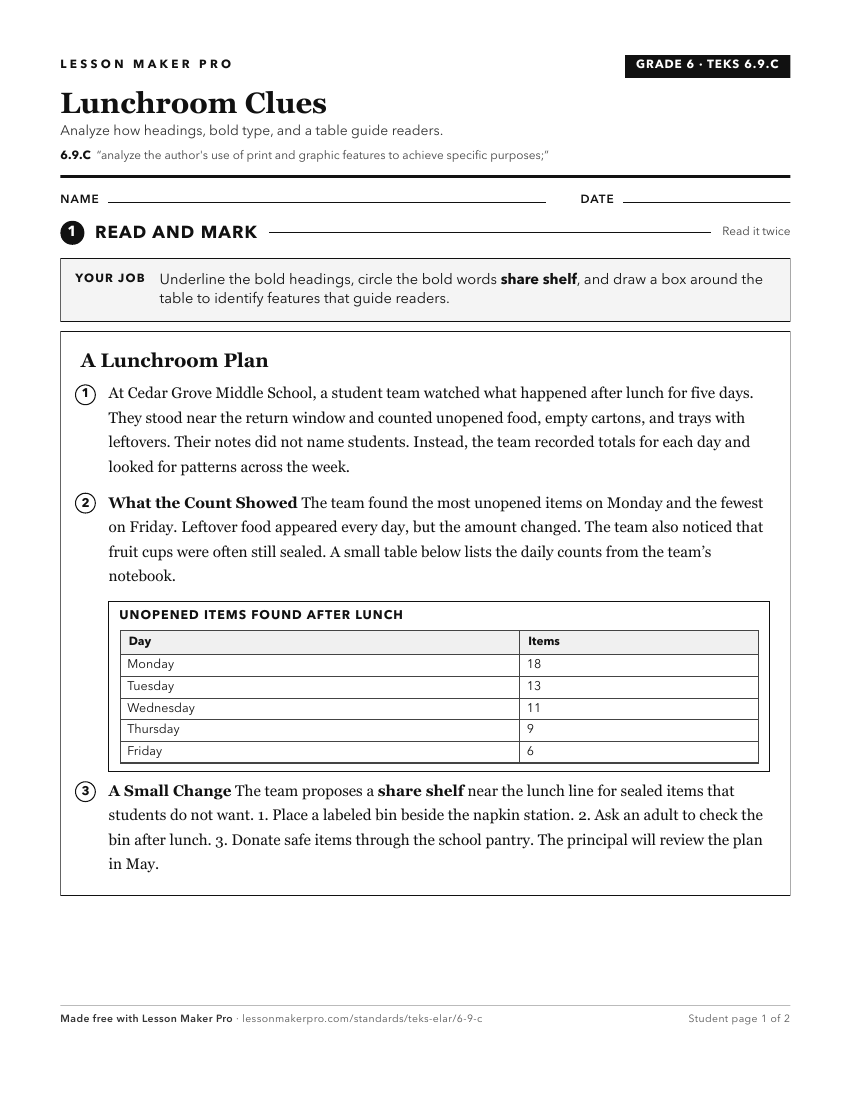
A ready-to-print activity worksheet aligned to 6.9.C, with an answer key for the teacher on its own page. No account needed.
PDF, US Letter, prints cleanly in black and white.
Download the worksheetKeep exploring
Related Standards
Turn this exact standard into a lesson
Grade, subject, topic, and the complete standard are prefilled. Create one free, no account needed.
Also for this standard:Make a WorksheetMake a QuizMake a Sub Lesson