TEKS ELAR 6.6.A
The Standard
describe personal connections to a variety of sources, including self-selected texts
Texas Essential Knowledge and Skills for English Language Arts and Reading
Teacher's field guide
What This Standard Means
What Students Need to Do
- Students connect specific details from texts, audio, or visuals to their own experiences, feelings, beliefs, or questions. They explain those connections clearly, including with materials they choose themselves.
What Mastery Looks Like
- Students point to a specific detail and connect it to an experience, belief, feeling, or question. They clearly explain how that connection affects their understanding or reaction.
Common Misconceptions
- Students may summarize the source instead of making a personal connection. They may write vague comments such as “I relate” without naming a detail or explaining the link.
How to Assess It
- Use this exit ticket: “Name one detail from your chosen source, connect it to your life, and explain how the connection shaped your understanding.”
Lesson moves
Ways to Teach It
Give students sticky notes to mark one source detail, one personal connection, and one sentence explaining the link.
Ask, “Which moment felt familiar or meaningful to you, and how did that connection change your response?”
Play a card sort where students match source details with sample connections, then revise weak matches to make them specific.
Show a local public service announcement and have students connect its message to an experience at home, school, or in the community.
Free download
Printable 6.6.A Worksheet
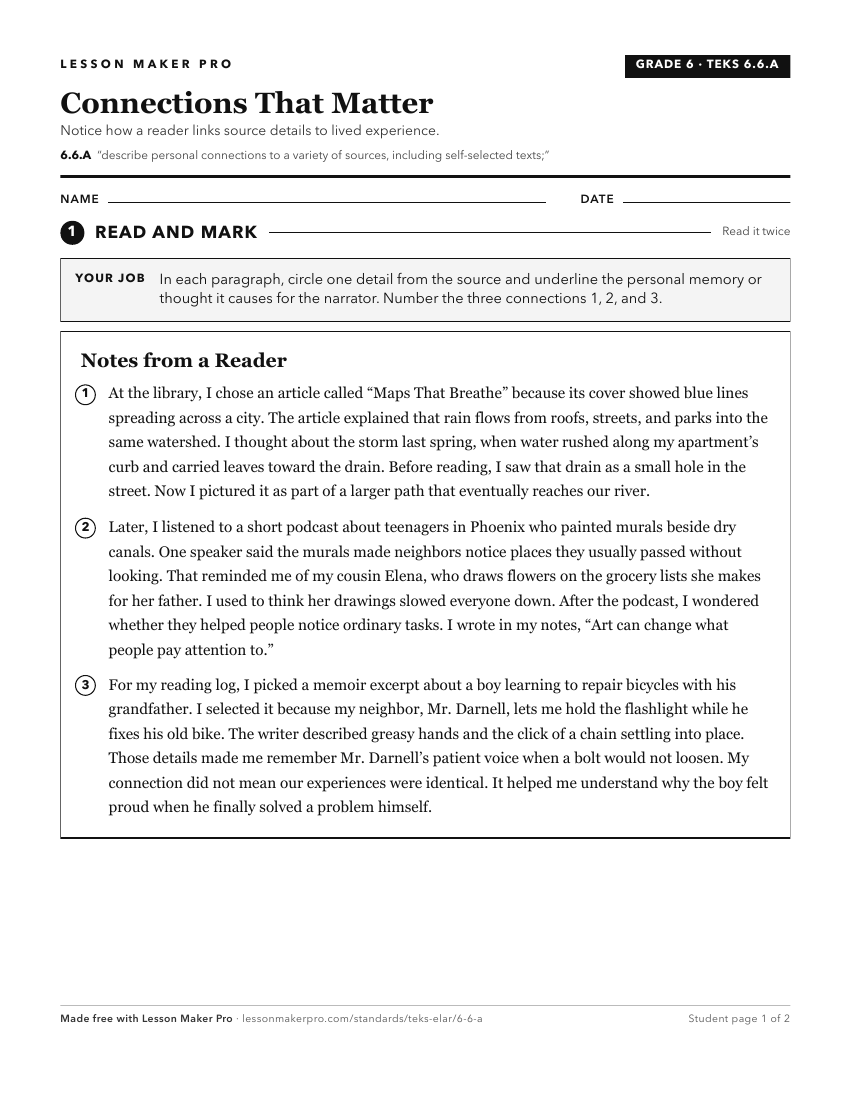
A ready-to-print activity worksheet aligned to 6.6.A, with an answer key for the teacher on its own page. No account needed.
PDF, US Letter, prints cleanly in black and white.
Download the worksheetKeep exploring
Related Standards
Turn this exact standard into a lesson
Grade, subject, topic, and the complete standard are prefilled. Create one free, no account needed.
Also for this standard:Make a WorksheetMake a QuizMake a Sub Lesson