TEKS ELAR 4.7.A
The Standard
describe personal connections to a variety of sources, including self-selected texts
Texas Essential Knowledge and Skills for English Language Arts and Reading
Teacher's field guide
What This Standard Means
What Students Need to Do
- Students connect details from something they read, hear, or view to their own experiences, feelings, or prior knowledge. They explain the connection using a specific detail from the source.
What Mastery Looks Like
- After reading, listening, or viewing, a student names a clear personal connection and identifies the source detail that prompted it. The student explains why the connection is meaningful or helpful.
Common Misconceptions
- Students may retell the source instead of making a personal connection. They may share an unrelated story, give a vague response, or think their experience must exactly match the source.
How to Assess It
- Exit ticket: Choose one detail from today’s source. Write what it reminds you of and explain how that connection helps you understand the source.
Lesson moves
Ways to Teach It
Give students sticky notes to mark one source detail, then place each note beside a drawing or object representing a personal connection.
Ask, “Which moment reminded you of your life, and how did that memory change your understanding?”
Play Connection Match: students draw a source-detail card, share a relevant personal link, and earn a point for explaining the link.
After viewing a weather report, students connect one forecast detail to a past weather experience and explain a choice they would make.
Free download
Printable 4.7.A Worksheet
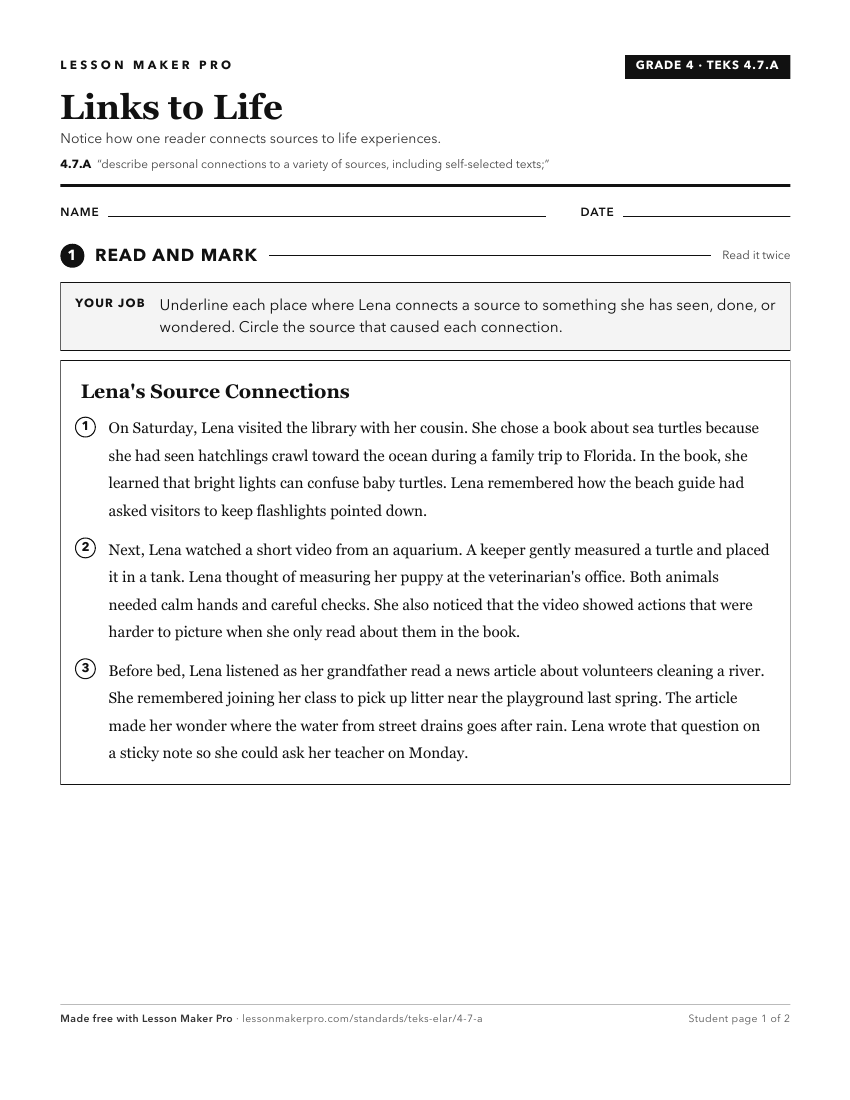
A ready-to-print activity worksheet aligned to 4.7.A, with an answer key for the teacher on its own page. No account needed.
PDF, US Letter, prints cleanly in black and white.
Download the worksheetKeep exploring
Related Standards
Turn this exact standard into a lesson
Grade, subject, topic, and the complete standard are prefilled. Create one free, no account needed.
Also for this standard:Make a WorksheetMake a QuizMake a Sub Lesson