TEKS ELAR 6.5.G
The Standard
evaluate details read to determine key ideas
Texas Essential Knowledge and Skills for English Language Arts and Reading
Teacher's field guide
What This Standard Means
What Students Need to Do
- Students decide which details carry the most meaning in a text. They connect those details to state a key idea and leave out minor information.
What Mastery Looks Like
- Students select two or three details that point to the same key idea. They state that idea in their own words and explain why the chosen details matter.
Common Misconceptions
- Students may confuse the general topic with the key idea. They may choose an interesting minor detail, rely only on repeated words, or copy one sentence without considering the whole text.
How to Assess It
- Give students a six-sentence paragraph and ask: “Underline two details that matter most, then write the key idea they support.”
Lesson moves
Ways to Teach It
Give pairs sentence strips from a short passage to sort into key details and minor details, then compare their choices.
Ask students to write: “Which detail most changed or clarified your understanding of the text, and why?”
Play Detail Detective by reading clues from a passage while teams identify the key idea and defend it with two clues.
Read a school announcement and have students identify which details they need to remember to act on the message.
Free download
Printable 6.5.G Worksheet
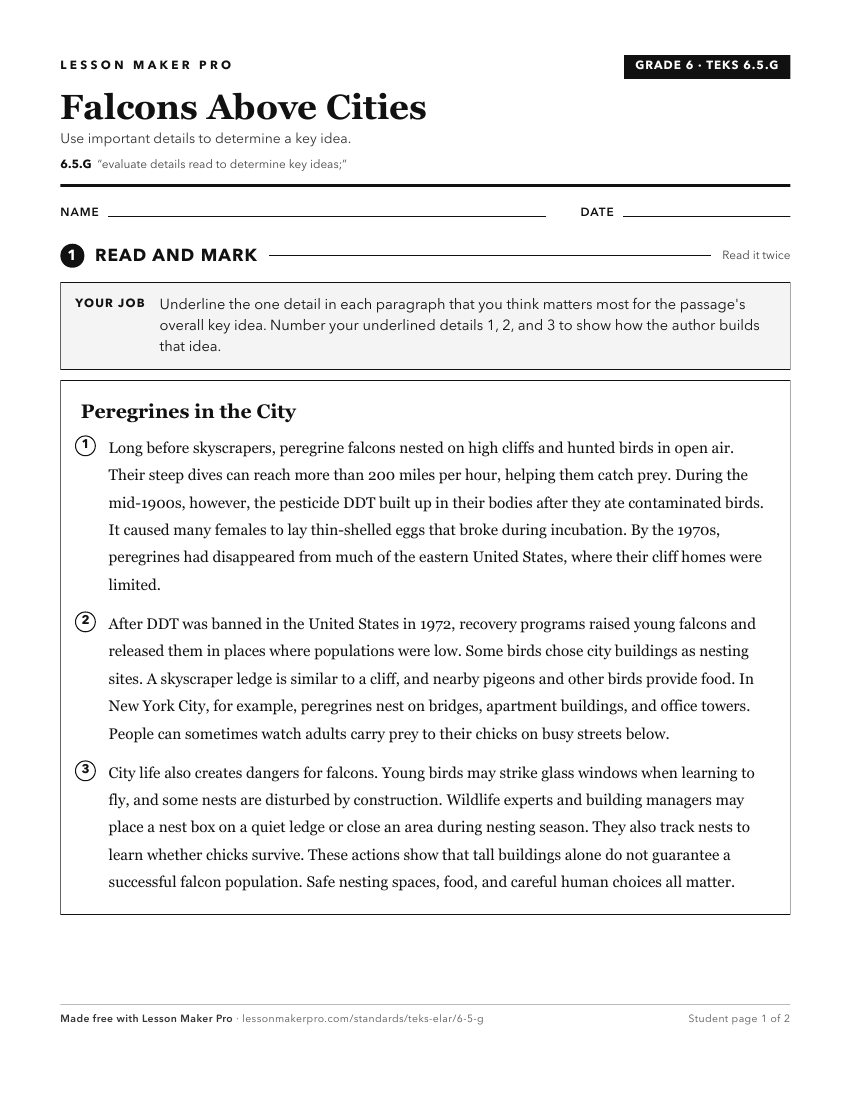
A ready-to-print activity worksheet aligned to 6.5.G, with an answer key for the teacher on its own page. No account needed.
PDF, US Letter, prints cleanly in black and white.
Download the worksheetKeep exploring
Related Standards
Turn this exact standard into a lesson
Grade, subject, topic, and the complete standard are prefilled. Create one free, no account needed.
Also for this standard:Make a WorksheetMake a QuizMake a Sub Lesson