TEKS ELAR 5.11.D.xi
The Standard
correct spelling of words with grade-appropriate orthographic patterns and rules and high-frequency words
Texas Essential Knowledge and Skills for English Language Arts and Reading · The student uses the writing process recursively to compose multiple texts that are legible and uses appropriate conventions.
Teacher's field guide
What This Standard Means
What Students Need to Do
- Students reread drafts to find and correct misspelled words. They apply familiar spelling patterns and rules, then check uncertain words with a reliable reference.
What Mastery Looks Like
- Students correct spelling errors in their own drafts, including common words and words with familiar patterns. They use a dictionary or digital reference when they are unsure.
Common Misconceptions
- Students may spell words only by sound or assume spellcheck catches every error. They often forget changes such as doubling consonants, dropping silent e, or changing y to i before adding endings.
How to Assess It
- Give students a short paragraph with six spelling errors. Ask them to correct each word and name the spelling rule used for two corrections.
Lesson moves
Ways to Teach It
Sort word cards by doubling the final consonant, dropping silent e, or changing y to i, then add endings and check each spelling.
Compare “hoped” and “hopped” in sentences, then write a rule explaining why each spelling is correct.
Run an editing relay where teams correct one misspelled word at a time and cite a pattern, rule, or reference.
Proofread a mock school newsletter for spelling errors, then produce a clean copy ready to send to families.
Free download
Printable 5.11.D.xi Worksheet
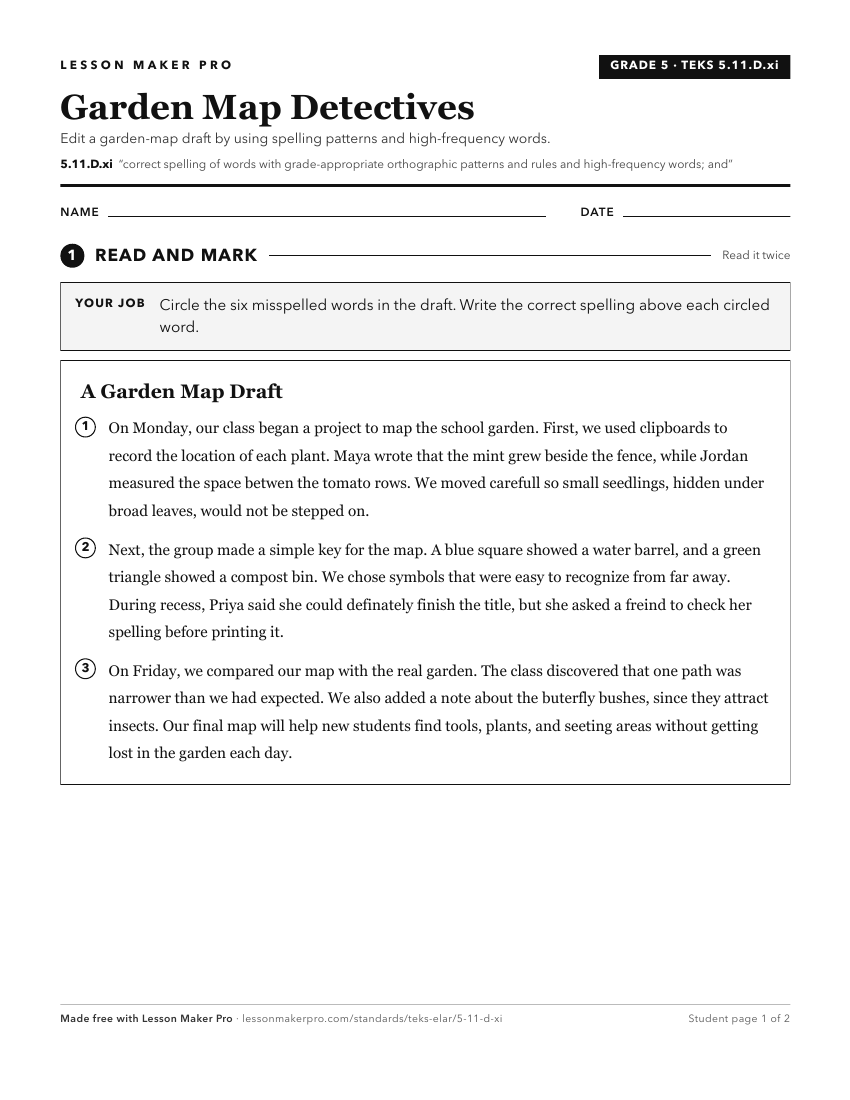
A ready-to-print activity worksheet aligned to 5.11.D.xi, with an answer key for the teacher on its own page. No account needed.
PDF, US Letter, prints cleanly in black and white.
Download the worksheetKeep exploring
Related Standards
Turn this exact standard into a lesson
Grade, subject, topic, and the complete standard are prefilled. Create one free, no account needed.
Also for this standard:Make a WorksheetMake a QuizMake a Sub Lesson